Luke Harris
Luke Harris Facebook ad: “This tool would have saved my sugarcane”
Ran for 7 days, from February 19 to February 26, 2026, the last day Crush saw it.
Run by Luke Harris on Facebook. Crush is not the advertiser and does not verify its claims. See this ad in Meta's Ad Library(opens in a new tab)
Want an ad like this for your product?
Crush makes new ad images for your product from this ad: your logo, your product photo, your offer.
Trials from $19.95 USD, then $79.95 USD a month. Cancel anytime.
About this ad
- Meta Ad Library ID
- 1960056538264896
- Platforms
- Facebook, Instagram, Audience Network, Messenger and Threads
- Relaunches
- 0
Ad text
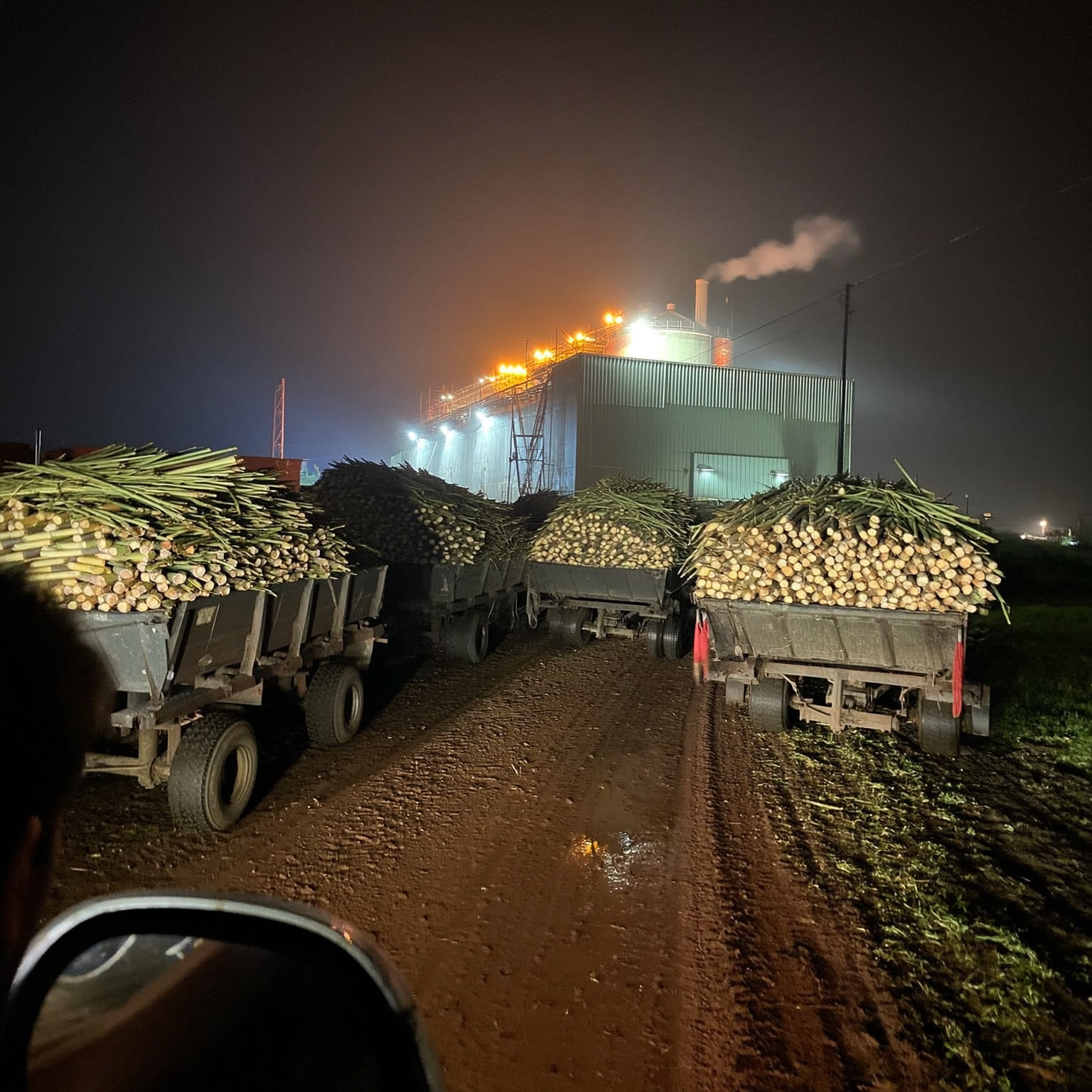
When your son walks away from a petroleum engineering career in Houston to come home and grow sugarcane, and you find him standing beside a dead harvester at 2 AM with eight hundred acres of standing cane and a killing freeze thirty six hours from turning every stalk on this farm into brown mush, you don't want him thinking about the office in the Galleria where the thermostat was always set to seventy two. Let me tell you what happened. We grow about 1,400 acres of sugarcane in Iberia Parish, south Louisiana. West of New Iberia where the bayou country flattens out into the black alluvial soil along Bayou Teche and the cane fields run unbroken from the road to the treeline like green walls eight feet tall by September. Fourth generation. My great grandfather planted his first cane here in 1931, a Cajun trapper's son who figured out that the same ground that grew cypress and crawfish could grow sugar if a man was willing to ditch it and drain it and fight the water every year of his life. He was right. My grandfather built the operation through the mechanization years. My mother held it together through the sugar price crash of the early '80s when Iberia Parish lost forty percent of its cane farmers in three seasons. I took over at twenty five when my mother's back gave out from thirty years of walking cane rows in mud that pulls at your boots like it's trying to keep you. My son Eli went to LSU. Petroleum engineering. Graduated magna cum laude. Had an offer from an exploration company in Houston before his capstone project was reviewed. Starting salary and signing bonus that in his first year would have equaled what this farm netted in its best year minus the lean ones that came before and after it. He took it. Worked there two years and seven months. Called me on a Tuesday night in September, sitting in his truck in the parking garage of a glass tower on Westheimer Road after a twelve hour day building reservoir simulation models for an offshore platform he would never visit, and said, "Dad, I model things underground that I'll never see for people who've never stood on dirt. I want to stand on dirt. I want to come home." He was in the cane field by Saturday morning. Didn't wait for his project phase to close out, which in petroleum engineering is the equivalent of walking off a well site. Told his manager the truth, that he'd spent two years modeling reservoirs beneath the ocean floor and realized the only ground he wanted to understand was the ground he grew up on. Drove the four hours east from Houston, crossed the Atchafalaya Basin on I-10 at sunrise, and was standing in the stubble cane by the time I'd finished my coffee. Spent that first morning walking every field on the farm with a soil probe he'd bought at the ag supply in Jeanerette, pulling cores at thirty yard intervals, mapping soil moisture and compaction across all 1,400 acres with a methodology he'd adapted from subsurface reservoir characterization. Found a drainage failure in the south forty that had been waterlogging the root zone for three seasons, reducing tonnage by fifteen percent on our highest yielding ground. A collapsed culvert under the turn row that I'd been driving over every day without noticing because the water backed up underground where you couldn't see it. Eli saw it in the soil data before he saw it with his eyes. Had the culvert replaced by the following week. That field's tonnage came back to full the next season. That's Eli. Reads what's underground. Finds the failure you can't see. Here's what you need to understand about sugarcane in Louisiana. Sugarcane is not harvested like corn or cotton or soybeans. It's not combined. It's cut. A cane harvester moves through the field at three to four miles per hour, cuts the stalks at the base, chops them into billets, cleans the leaf trash with extractor fans, and loads the billets into a wagon running alongside. The billets go to the sugar mill, where they're crushed, the juice is extracted, and the juice is processed into raw sugar. From field to mill to sugar. Every step is time sensitive because the moment you cut the stalk, the sucrose inside begins to degrade. Cut cane loses roughly one percent of its sugar content for every twenty four hours it sits before milling. A field cut Monday and milled Wednesday is worth measurably less than a field cut Monday and milled Monday. But the real vulnerability is temperature. Sugarcane is a tropical grass. It has zero tolerance for freezing temperatures. A hard freeze, anything below twenty six degrees sustained for four hours or more, kills the growing point of the stalk. The leaf canopy dies. The stalk itself begins to deteriorate within hours as the cellular structure collapses and bacteria invade the damaged tissue. The sucrose inside the stalk starts converting to dextran, a polysaccharide that clogs the mill's processing equipment and renders the juice nearly worthless. A field of standing cane worth $1,200 per acre on Monday can be worth $400 per acre by Friday after a hard freeze, and worth nothing two weeks later if the deterioration advances far enough. And unlike a grain crop, you can't just leave it in the field and come back later. Freeze damaged cane rots. Standing. In the field. The stalks turn brown, then black, then collapse under their own weight into a tangled mat of decomposing vegetable matter that smells like vinegar and molasses and defeat. A sugarcane field after a hard freeze looks like someone napalmed it. The only defense is cutting. Get the cane to the mill before the freeze hits. Every stalk cut and milled before the temperature drops is a stalk that makes sugar. Every stalk standing when the freeze arrives is a stalk that makes compost. Last November, we were in the middle of grinding season. That's what Louisiana calls the harvest, grinding, because the mill grinds the cane. The season runs from late September through December, and every farm has a delivery schedule with the mill. You cut when the mill tells you to cut, and you deliver when the mill tells you to deliver, because the mill runs twenty four hours a day seven days a week during grinding and its capacity is allocated across every farm in the parish. We had 800 acres of standing cane left to cut. Our schedule had us finishing by the second week of December. Plenty of time in a normal year. Then the forecast updated Monday afternoon. An arctic front was plunging south out of the central Plains, driven by a jet stream pattern that was funneling polar air straight down the Mississippi Valley into the Gulf Coast. Not the typical Louisiana cool snap where the temperature drops to thirty five and the cane shivers but survives. A hard freeze. Low temperatures of twenty two to twenty four degrees forecast for Wednesday night into Thursday morning, with sustained below freezing conditions for eight to ten hours. The kind of cold that south Louisiana sees maybe once every four or five years. The kind that kills cane. Every sugarcane farmer in the parish heard the same forecast at the same time. And every one of them had standing cane. And there was one mill. The mill announced extended receiving hours. Twenty four hour delivery. Cut everything you can. Bring it in. We'll grind it. But the mill can only grind so much tonnage per day, and if every farm in the parish is cutting at once, the delivery queue backs up, and the cut cane sits in wagons losing sugar while it waits to be milled. We had two days. Two harvesters, ours and one we'd hired from a custom operator out of St. Martinville. Running both, we could cut about 200 acres per day. Two days meant 400 acres if everything ran clean. We'd have to leave 400 acres standing and hope the freeze wasn't as bad as forecast, which in south Louisiana in November is the agricultural equivalent of hoping the hurricane turns, a prayer everyone makes and nobody believes. Monday night at 11 PM, Eli was already running our harvester. A Cameco / John Deere CH570. Running it in the dark under the work lights, cutting the priority fields first, the ones nearest maturity, the ones with the highest Brix readings, the cane that was worth the most per ton at the mill. At 11:40 PM, the base cutter stopped turning. The CH570's base cutter is the pair of rotating disc blades at the front of the harvester that sever the cane stalks at ground level. Without the base cutter, the harvester can't cut cane. It's like a combine without a header, a machine rolling through the field accomplishing nothing. The base cutter gearbox had a drive shaft coupling bolt that had worked loose from the torsional shock loading of cutting eight hundred tons of cane per day for the last six weeks. Every stalk is an impact event. The base cutter disc hits the stalk at the base, which on a mature Louisiana sugarcane plant is as hard and dense as a green oak branch two inches in diameter. Eight hundred tons per day means roughly 120,000 individual stalk impacts, each one transmitting a shock pulse through the disc, through the shaft, through the coupling, into the gearbox. The bolt backed out far enough that the coupling lost alignment, the shaft slipped on the key, and the base cutter discs coasted to a stop while the harvester was mid row with cane falling against the feed rollers with nowhere to go. Not a gearbox failure. Not a cracked disc or a blown seal. A single coupling bolt. Seat it, torque it, and the shaft re engages, the coupling locks, and the base cutter turns. Eli had the bolt. He always had the bolt. The month he came home, he inventoried every critical fastener on both harvesters, the wagons, the cane loader, the tractor fleet, and the water pump stations on the drainage system. Built the inventory in a reservoir engineering data model because two and a half years of petroleum engineering had made that the only organizational framework his brain would accept. Every bolt had a well log, he actually called them well logs, with thread specification, torque value, material grade, fatigue cycle estimate based on seasonal tonnage, and a probability of failure curve he'd generated from our maintenance records. The base cutter coupling bolt had the second highest probability of failure on the harvester for any season exceeding 15,000 tons. We'd already cut 18,000 tons this season. The bolt was overdue. He'd ordered replacements in October. They were in a labeled sample bag on the parts shelf in the equipment shed, catalogued in the system, ready to deploy. Petroleum engineer's discipline. He organized critical parts the way he organized a wellbore casing program, redundant, sequential, and rated for the conditions they'd face. The bolt sat in a pocket between the base cutter gearbox housing and the harvester's main frame. Less than an inch of clearance. Gearbox casting on one side. Frame rail on the other. Cutter disc guard bolted across the front. Hydraulic lines for the knockdown roller and the feed roller system routed along the bottom. And everything was coated in a crust of sugarcane residue, a compound of cane fiber, juice, mud, and the sticky dark syrup that forms when raw sugarcane juice dries on hot metal, which is essentially the same compound as the molasses it will eventually become, only less refined and infinitely more hostile to any tool you attempt to slide through it. Eli could see the bolt hole. Could start the bolt one and a half turns with his fingertip. He spent five hours on it alone. Five hours. In the dark. In a Louisiana November night that was already cool enough to remind every living thing in the parish that something colder was coming. That's Eli. At LSU, he once spent an entire week hand calibrating a reservoir simulation model that his professor said could be adequately approximated with the default parameters. Eli said default parameters are what you use when you've decided accuracy doesn't matter. Calibrated the model against thirty years of production data. His simulation predicted the next quarter's output within 0.3 percent. Professor used it as the department's case study for the next three years. Same refusal to accept the approximate when the precise is achievable that makes a great petroleum engineer makes a son who will stand in a cane field in the dark for five hours covered in juice and mud before he walks to the equipment shed. He walked in at 5 AM. Clothes soaked with cane juice and dew. Hands black with gearbox grease and stained amber from the juice, which gets into every crack in your skin and stays there for days. A deep gash across three knuckles on his right hand from the cutter disc guard. Cane fiber in his hair, on his neck, on his jacket, in places that cane fiber should not be able to reach. Voice level. Controlled. The tone he used presenting a drilling plan that had problems nobody wanted to hear about. "Base cutter coupling bolt. I can thread it. Can't get a tool behind the frame to torque it. Everything's caked with juice and trash." I was at the harvester in ten minutes. Full socket set, headlamp, can of degreaser to cut through the cane residue, every extension and adapter I owned. Tried everything Eli had tried. Tried things from twenty eight years of cutting cane in Iberia Parish that petroleum engineering doesn't cover. Standard ratchet. Handle hit the frame rail before the socket reached the bolt. And the handle was coated in cane syrup, which has a coefficient of friction that alternates between sandpaper and ice depending on whether it's wet or dry, and in the dew of a Louisiana November night it was the wet kind. Stubby ratchet. Got into the pocket. Couldn't reach the bolt depth. Short by two inches. Sprayed degreaser. The cane residue loosened into a brown slurry that made the entire interior of the pocket essentially a swamp. Flex head ratchet. Flexed into the cutter disc guard the instant I loaded it. No engagement. The flex joint was gummed with cane fiber and dried juice. Deep socket on a long extension. Extension too wide for the gap between the gearbox and the frame. Would not enter the space. Wobble socket on a shorter extension. The wobble, combined with the syrup slurry on every surface, meant the socket slid off the bolt hex like it was greased. Which it essentially was. With sugar. Four attempts. Each one the socket skated off the bolt and stuck to the gearbox housing. Universal joint adapter. Torque scattered in every direction. The adapter was coated in residue, the drive was coated in residue, my hands were coated in residue. Working completely blind behind the frame rail while cane juice dripped from the feed roller housing above onto the back of my neck. Crow foot wrench. Wrong profile. Body hit the gearbox casting before the jaws reached the bolt. Cut my forearm on the cutter disc guard. Scraped both wrists raw on the frame rail. Pinched my thumb between the gearbox and the hydraulic fitting. The cane juice got into every cut and scrape, which burns, because raw sugarcane juice is mildly acidic and your body knows it immediately when it hits broken skin. Eli stood beside me through every attempt. Handing tools in sequence. Methodical. Each tool passed the way he handed data to a project manager, organized, annotated, knowing the result before the test but running the test because the process requires it. Ratchet. Extension. Stubby. Flex. Wobble. Universal. Crow foot. All tested. All failed. All logged. Reservoir of solutions depleted. None of them worked. By 10 AM Tuesday, we had nine combined hours on one bolt. And in the field behind us, eight hundred acres of sugarcane stood. Tall. Dense. Full of sucrose. The leaves rustling in the November wind with the sound that only a mature cane field makes, a dry whisper that sounds like the field is talking to itself, which every cane farmer has heard so many times it's become the background frequency of their life. Eight hundred acres of standing sugar waiting for a harvester that couldn't cut. That's when Eli stepped back from the machine. Wiped his hands on his jeans, which smeared the cane juice into the grease into the denim into a pattern that looked like an abstract painting of frustration. Sat on the harvester step. Looked out across the field. And that's when I saw it. Not on his face. Eli doesn't show things on his face. He learned that on the rig floor, where the company man reads your face for confidence and the drilling crew reads it for fear and showing either one at the wrong time costs money or lives. I saw it in the way he sat. The way his hands hung between his knees. The way he looked at the cane without seeing it, looking through the field at something farther away. The kind of thing only a father reads. He'd turned down Houston. Walked away from the company. Left the salary and the bonus structure and the trajectory that had him managing his own drilling program by thirty. Left the apartment in Montrose where the restaurants were good and the bars were full and nobody smelled like sugarcane juice and mud at the end of the day. Left the woman he'd been seeing, a chemical engineer at a refinery in Deer Park who understood seventy hour weeks and never asked him to explain why he drove four hours to Louisiana every grinding season to run the cane wagon. Left because he believed this dirt and this cane and this bayou were worth more than any reservoir he would ever model beneath the Gulf of Mexico. Because he believed his hands and his mind and his willingness to stand in a cane field at 2 AM could keep this operation running for one more generation in a parish that had lost half its sugarcane farms in his lifetime. And here he was. Nine hours into a bolt he couldn't turn. Watching his father bleed on the same one. Eight hundred acres of cane standing full of sugar. And an arctic front dropping down the Mississippi Valley, twenty two degrees by Wednesday night, every stalk still standing when the cold hit about to turn brown and rot where it stood. Called the John Deere dealer in Thibodaux. "Every harvester in the parish is running. Our techs are all deployed. Maybe Thursday or Friday." The freeze was coming Wednesday night. Called two independent mechanics who worked on cane harvesters. First one was already on a harvester at a farm near Jeanerette doing the same pre freeze panic repair. Said maybe Wednesday. Second one had his phone off. His wife said he was cutting his own cane and wouldn't stop until it was done or the freeze hit, whichever came first. That's when the old white Chevy with the American Sugar Cane League sticker on the tailgate and the mud caked up past the fender wells the way trucks look in Iberia Parish from October to January pulled off the road and came down the field lane. Tee Boy Broussard. Eighty years old. Cut sugarcane in Iberia Parish for fifty four years before his hip replacement and his wife's declaration that she'd outlived two tractors, one hurricane, and his first heart attack but she was not going to outlive him freezing to death in a cane field at 3 AM, and he believed her because in fifty four years of marriage she had never once been wrong about anything that mattered. Still drove out every grinding season to ride the turn rows and check the fields and tell anyone who'd listen that they were cutting too high, or their extractor fans were blowing out good cane with the trash, or the mill was grinding too slow for the tonnage coming in. Somebody at the co op weigh station told him our harvester was sitting. He got out of his truck the way old Cajun cane farmers get out of trucks, slowly, because everything hurts, but completely, because sitting in the truck while cane is standing is not something his generation can tolerate. Walked down the row the way old cane men walk rows, looking at the stalk diameter, checking the internode length, reaching out and snapping a leaf sheath to check maturity, reading the field the way his grandfather read the bayou, by touch and smell and the accumulated knowledge of a family that has lived on this ground since before Louisiana was a state. Looked at the harvester. Looked at the pocket. Looked at the tools laid out on the harvester platform, every one of them stained amber with cane juice like artifacts from a failed dig. Stopped. Listened. The sound of the cane field in the November wind. Looked at Eli. "LSU?" he asked, squinting at the purple and gold on Eli's cap, which was barely visible under the cane juice and grime. "Petroleum engineering. Almost three years in Houston. Came home last spring." Tee Boy nodded. The slow nod of a man who has watched young people leave Iberia Parish for six decades, most of them to Houston, and counts the ones who come back the way a farmer counts rain days, each one rare enough to remember. "Oil men always know what's underground. Just don't always carry what reaches where the cane breaks down." Walked back to his truck. Came back with a flat steel tool. About 15 inches long. Thin as a ruler. Socket fitting on one end. Square drive on the other. Housing stained dark amber from years of cane juice, mud, and the particular brown patina that accumulates on any tool that lives in a sugarcane operation, a color between molasses and rust that you can't replicate and that tells another cane farmer exactly where this tool has been. A strip of old sugar kettle rope knotted around the middle where the original grip had worn through, because Cajun farmers fix everything with whatever they have, and Tee Boy had always had sugar kettle rope. "Offset extension wrench," he said. "Fellow I used to trade seed cane with, runs a big operation over in Assumption Parish, he put one of these in my hand back in 2013. Used it on every machine I touched for the last eleven years I cut cane. Doesn't matter if it's sticky, doesn't matter if it's dark, doesn't matter if every surface is caked in juice and mud and cane trash. Goes in, seats, turns. In a cane field in November with a freeze coming, cher, that's the only thing that matters." He stepped to the harvester the way old cane men step to any piece of equipment that's standing between a farmer and his crop, with the focused, unhurried authority of a man who has been solving problems in cane fields since before the interstate was built through Iberia Parish. Angled the socket end into the pocket between the gearbox housing and the frame. Past the disc guard. Under the hydraulic lines. Into the counterbore where the bolt sat in its crust of cane juice and mud and impossibility. Smooth and deliberate, the socket pushing through the residue with the certainty of a man who has spent fifty four years learning that sugarcane will test you in every way a crop can test a human being, and the only response that works is steady hands and the right tool. Socket seated on the bolt head. Through the juice. Through the residue. Solid. He looked at Eli. "Your cane. Your bolt." Eli took the drive end. Applied rotation. Steady. Measured. The same incremental, calibrated force he used setting casing in a wellbore, controlled torque, verified feedback, trusting the tool to transfer what his hands were giving it. No sudden movement. No forcing. Bolt seated. Coupling engaged. Shaft locked. Base cutter turned. Discs spun. Fifty seconds. Fifty seconds for a bolt we'd spent nine hours fighting. In a cane field. In Iberia Parish. In November. Eli held the tool for a long moment. Turned it over in his juice stained hands. Felt the internal chain transfer the rotation from one end to the other. Ran his thumb along the housing, reading the mechanism the way he read a wellbore log, tracing the energy path from input to output and verifying nothing was lost in transmission. "Chain driven parallel transfer. One to one torque ratio. Zero arc at the output." Tee Boy laughed from the turn row, leaning against the harvester tire, which was taller than he was, looking like a man who had just heard his bayou explained in university English. "Son, I've been calling it mon sauveur for eleven years. That's the first time anyone told me what's actually happening inside." Harvester was running by 10:30 AM. We ran the rest of Tuesday. Into Tuesday night. Through Wednesday morning. Both harvesters cutting, Eli on ours, the custom operator on the hired machine. The wagons running back and forth to the mill in a relay that Eli scheduled on his phone, timing the round trips so a full wagon was always arriving at the harvester the moment the empty one pulled away, zero downtime, the kind of logistical optimization a petroleum engineer does instinctively because in drilling, rig time is the most expensive clock in the world and you learn to never let it stop. I ran the cane loader at the mill, watching the tonnage numbers, watching the Brix readings, watching the sucrose quality reports come back from the mill lab. Brought Eli food at midnight. He ate it in the operator's seat while the harvester never stopped moving. Brought him coffee at 4 AM. He drank it standing on the step, watching the field lights of the hired harvester working the adjacent field a half mile away, two machines cutting toward each other in the dark like they were racing the same clock, which they were. He cut that cane like a man drilling through a pay zone. Like every row was a producing interval and every stalk was a barrel and leaving anything in the ground was a reservoir engineer's unforgivable sin. Like the cane field was a well and the freeze was the abandonment date and his only job was to extract every ounce of value before the operation was plugged. I think he proved something that night. Something about the difference between modeling a reservoir on a screen and standing in the reservoir itself, the dirt, the crop, the living system, pulling the value out with his own hands. I think he proved it. But we didn't finish. The freeze arrived Wednesday night. Right on the forecast. Temperature started dropping through the forties at sunset. Hit thirty two at 10 PM. Twenty eight by midnight. Bottomed at twenty three degrees Thursday at 4 AM and held below freezing until 9 AM. Nine hours of sustained killing cold. We still had 340 acres of standing cane. Our best ground. The deep black alluvial soil along Bayou Teche, the field my great grandfather planted first, the ground that consistently produces the highest tonnage and the highest sucrose on the farm. Also the last field in the cutting rotation because it was the farthest from the equipment shed and the heaviest cane to cut. The freeze killed it standing. Every leaf went brown overnight. The growing points died. The cellular structure in the upper portion of the stalks collapsed within hours. By Friday morning, the field looked like it had been burned. Brown. Wilted. The cane leaning at odd angles where the frozen tissue had lost its rigidity. We cut it anyway. You have to. Freeze damaged cane will still make some sugar if you get it to the mill fast enough. The lower portions of the stalk, closer to the ground where the insulation of the dense cane row held the temperature a few degrees higher, retained some viable sucrose. But the quality degraded by the hour as dextran formed in the damaged tissue. The mill docked us on every load. Brix readings down. Purity down. Recoverable sugar per ton down. Final damage on those 340 acres: roughly $47,000 in lost sugar value when you compare what the cane would have been worth at normal harvest quality versus what the mill actually paid on the freeze damaged tonnage. Plus approximately $6,000 in additional cutting and hauling costs because freeze damaged cane is harder to cut, harder to feed through the harvester, and produces more trash tonnage at the mill that we were charged back for. Fifty three thousand dollars. From one bolt we couldn't turn for nine hours on a Monday night while the arctic front organized over Oklahoma. That weekend, Eli ordered the same tool Tee Boy had brought. Ordered seven. One for each harvester. One for the cane loader. One for each tractor. One for the water pump station. One for the equipment shed wall, mounted on a stainless bracket he fabricated from flat bar with the part number engraved below it and sealed in marine epoxy, because Louisiana humidity and cane juice and bayou moisture will eat any other label material before the grinding season ends. Eighty nine dollars each. Adapters not included, runs a standard half inch square drive, you use your own sockets. Since then, we've used them more times than either of us can count. Three times on the harvester. That same base cutter coupling bolt again mid season. A chopper drum bearing retainer bolt buried behind the chopper housing in a space that the harvester manufacturer apparently designed assuming cane farmers have forearms the diameter of seed cane billets. And an extractor fan drive bolt recessed behind the fan housing where the manual says to remove the entire extractor assembly, a half day job that Eli did in twenty five minutes in the field between loads. Twice on the cane loader. Boom cylinder pin bolt wedged between the boom arm and the frame. Grapple rotation motor bolt crammed behind the grapple housing in a gap that fills with cane trash and mud until the bolt becomes part of the landscape. Once on the water pump. Impeller shaft coupling bolt tucked behind the pump housing and the motor mount. Would have been a shop job. Eli did it on the pump station platform in fifteen minutes during the spring drainage cycle. Once on the wagon. Dump cylinder pin bolt buried behind the wagon frame and the hinge bracket. Bolt vibrated loose during a haul. Wagon wouldn't dump at the mill. Six wagons behind us in the delivery queue. Eli had it tightened before the mill operator noticed. Once on my truck. Starter bolt on the old Power Stroke that sits between the block and the bellhousing in a space Ford apparently designed for a mechanic who has accepted that maintenance is an act of suffering. And two weeks ago, a young man who'd just leased his first cane ground west of us near Delcambre called the equipment shed. First grinding season on his own. Twenty three years old. His harvester's feed roller drive bolt had backed out mid cut. Cane standing. Weather in the forecast. His voice was steady but there was something under it. The sound of a young Cajun standing in a cane field doing the math on a machine he can't fix and a crop he can't afford to lose and a lease payment that's due whether the cane makes the mill or not. Eli didn't ask a question. Pulled the wrench off the equipment shed wall. Said "Where you at" and was in his truck before the kid finished answering. Drove over. Bolt seated in under ninety seconds. The kid stood in the turn row looking at the tool. Then at Eli. Then at his harvester, already idling, the base cutter turning, the cane waiting. "Comment ca se fait that every cane farmer in the parish don't have one of these?" Eli texted him the link from the truck before he pulled back onto the parish road. Clean. No speech. Engineer's efficiency, deliver the solution, move to the next well. Kid ordered five that night. Here's what nobody tells you when your child gives up their career to come home. This equipment isn't built for a cane field. It's engineered in climate controlled facilities and tested in clean, level, well lit dealer shops by technicians who charge $210 an hour and are booked solid during the exact three week window when every sugarcane harvester in the parish is running twenty hours a day because the mill is grinding and the freeze is coming and your entire year's sugar, your entire year's income, is standing in a field eight feet tall waiting to be cut and every hour that harvester sits dead is another hour the arctic air pushes south and the cane stands there getting closer to the cold that will kill it. Every bolt that matters is buried behind a gearbox, a frame rail, or a guard. Every breakdown during grinding season is a race between your toolbox and the thermometer. And every hour you can't fix it is another hour your son sits on the harvester step, hands between his knees, looking out across a cane field he can hear whispering in the wind, silently measuring the distance between the career he left and the one that just stopped him with a bolt he can see but cannot turn while the temperature drops degree by degree toward the number that kills everything he came home to build. But when you've got something that reaches into those impossible pockets. Something thin enough to slide past the housing and the guard and the frame and the hydraulic lines. Something with a chain drive inside that transfers real torque without needing swing room or an arc. Something that works through cane juice, works through mud, works in the dark, works at 2 AM in a cane field in November when the season is running out and the freeze is running in. Those "pull the gearbox, tow it to the dealer, wait a week" disasters become twenty minute field fixes. And field fixes mean the base cutter turns. The cane falls. The wagons roll to the mill. And your kid sees the problem solved. Sees the harvester running. Sees the cane falling into the feed rollers row after row. Sees that the decision to come home, the company he walked away from, the career he left, the future he traded for bayou mud and cane juice and the chance to keep his great grandfather's ground in sugar for one more generation, all of it was right. It's called the PRO Offset Extension Wrench. About 15 inches long. Half an inch thick. Chain drive inside transfers rotation where ratchets can't swing. Adapters not included, runs a standard half inch square drive, you use your own sockets. Eighty nine dollars. Less than a single load of seed cane. Less than fifteen minutes of dealer shop labor. Less than two tenths of one percent of what that freeze cost us on the bayou ground. I'm not going to tell you this tool will save your grinding. But there's going to come a night. Probably the worst night of the tightest grinding of the season. When your son walks into the shed at 2 AM with cane juice on his hands and a photo of a bolt he can't reach. Or your daughter calls from the harvester with the base cutter stopped. Or you're standing in a cane field alone under a work light, bleeding from your knuckles, reaching into some gap behind a gearbox that mocks every tool in your box, while the temperature drops and the cane whispers and everything, the sugar, the cold, the money, the future, the kid who chose this life over the one that was waiting for him, all of it comes down to one bolt in one impossible space. When that night comes, you either have the tool or you don't. We didn't. Now we do. Every harvester. Every tractor. Every toolbox on the operation. Mounted, labeled, and exactly where you can grab it at 2 AM when the freeze is thirty six hours out and one bolt is all that's standing between you and getting the cane to the mill. Link's below. I hope you never need it the way we did.
Where the ad sends people
thesavary.com
This tool would have saved my sugarcane 👆
Savary
Shop now: thesavary.com(opens in a new tab)