
Inactive· since Sep 1, 2026
- 10
- days it ran
- 1
- relaunches
- 656
- EU reach
Ad copy
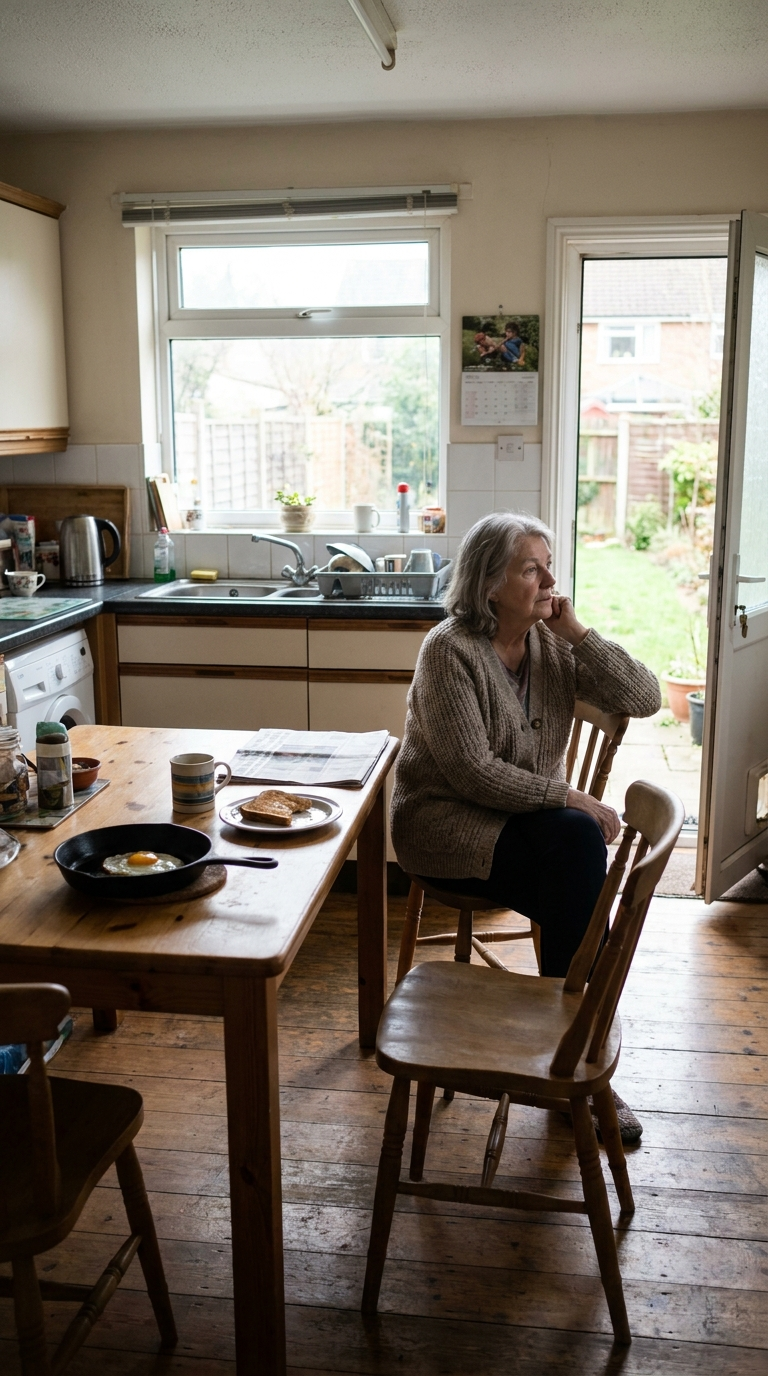
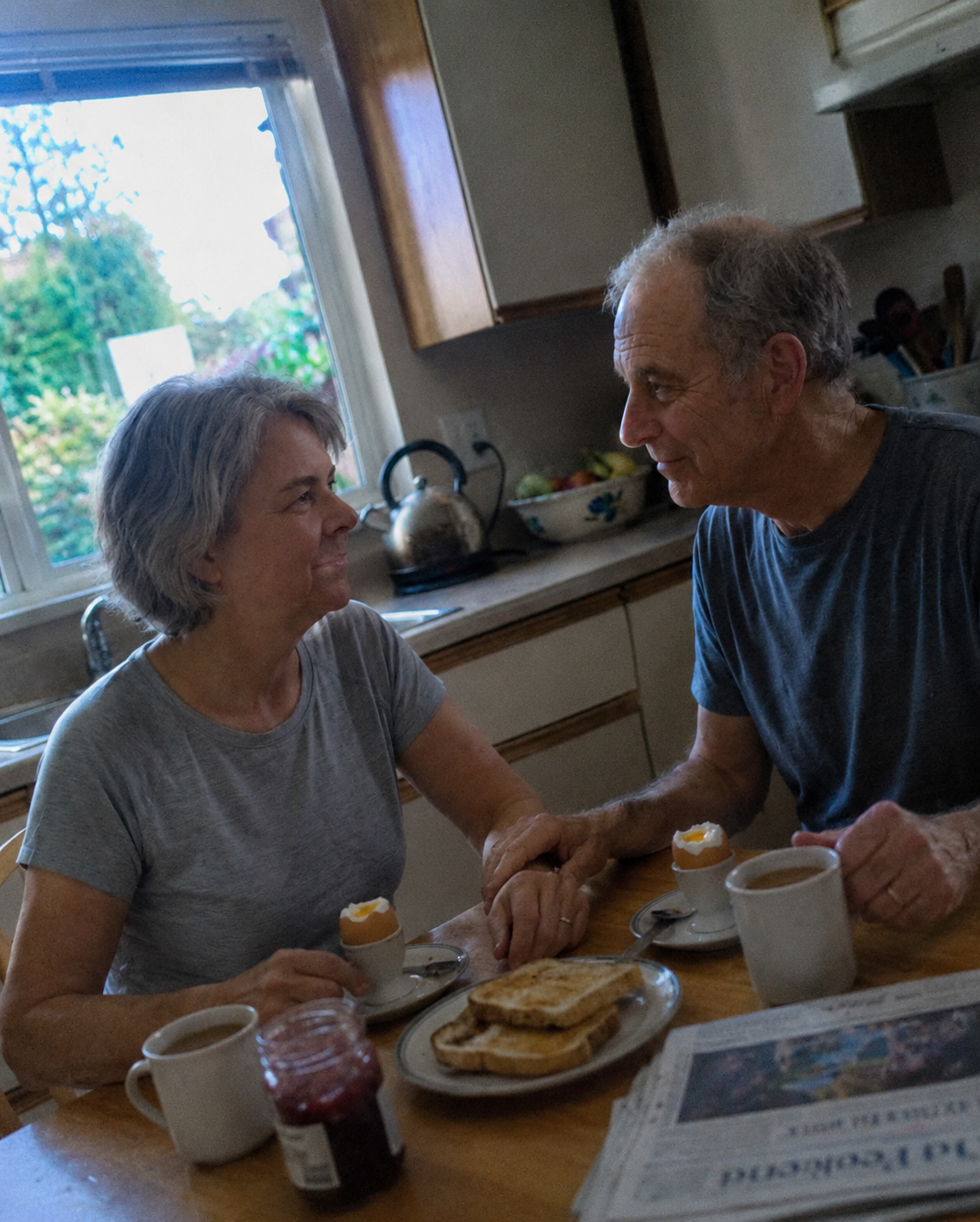
Nobody Quits Beets. They Quit Roasting. — On the Quiet Way Good Routines End, and the Only Kind That Survive. There's no story in this one. No character, no neighbor with a secret, no village on a hillside that does it better. Just an observation — one you can check against your own kitchen before you read another line, and we'd rather you did. Here it is: nobody quits the good thing. They quit the version of it they picked. Go look. Not at the front of the cupboard — at the back, and the garage, and the closet by the door. The walking shoes, still clean, laces factory-tied, bought in the spring with a plan attached. The juicer, under a cloth, next to the bread machine from a different year. The stretching mat, rolled tight behind the couch, holding its shape out of loyalty. The pool membership under a magnet, expired in a month you can't name. And the produce drawer's back corner, where a bag of beets went soft sometime around the middle of last month, with that specific small guilt that has no name and needs one. Here's what's true about every object on that list, and it's the whole essay: not one of them was quit on purpose. Nobody decided. There was no bad week, no moment, no argument with yourself in the kitchen at midnight. The routine just stopped — quietly, on a Tuesday, in March, the way they do — and by the time you noticed, it had been gone long enough to look normal. That's the first thing worth knowing about routines. They don't end. They lapse. And here's the second thing, the part a lot of people get wrong afterward. They conclude the problem was them. Not enough discipline. Not enough follow-through. "I'm just not a walker." "I'm the kind of person who starts things." The jokes at the barbecue get a little more armored every year, and each abandoned plan goes into evidence against the person who made it. We'd like to offer a different reading — because we've watched a lot of good intentions arrive in a lot of kitchens and a lot of them leave, and the pattern is too consistent to be about character. Routines don't die when you stop wanting them. They die when the version you chose was bigger than the week you actually have. Let's be specific, because specifics are where this either holds up or doesn't. A field guide to the four ways a routine dies. One: it asked for a fixed hour. The walking loop wanted the same forty minutes, every evening, from a person whose evenings belong to other people. It didn't survive the first month with a sick grandchild in it. Not because the walking was wrong — because the hour was rigid, and the life wasn't. Two: it asked for equipment. The juicer wanted a produce run, a machine, twenty minutes of cleanup, and a crimson sink, every single time. It didn't fail on the first Sunday. It failed on the fourth, when the produce run got skipped and the machine got put "somewhere" — and "somewhere," in most houses, is where equipment goes to retire. Three: it asked for a season. The bread, the photographs, the big reorganization — all filed under "when things calm down," a season that has been two weeks away since roughly the mid-eighties. Those routines never even lapsed. They never started, and they'll wait forever, very politely. Four: it asked for a Tuesday. The beets — the actual vegetable — could mean washing, chopping, roasting, and a stained cutting board on a weeknight. Beautiful on a quiet week. There are no quiet weeks. Look at those four again. Not one was a bad idea. Every one was a good thing — walking, vegetables, bread, order. They didn't fail on merit. They failed on size. And a routine the wrong size for your life doesn't fail loudly. It fails politely — one skipped Tuesday, one "I'll get to it," one quiet reschedule at a time — until you look up in June and realize the thing has been gone since spring, and you've quietly filed it as proof of who you are. So the discipline reading is backwards. The people who keep routines aren't the strong ones. They're the ones who — usually by accident — picked the version small enough to survive an ordinary bad week. Which raises the useful question: is there a test? There is. Three questions, and you can run them on anything in your kitchen right now. The size test. Does it survive a bad Tuesday? Not a good one — anybody can keep a routine on a good day. Picture the day the car's in the shop, the gutter people are coming, and the phone won't stop. If the routine needs that day to be calm, it's the wrong size. Does it need a room? Anything that needs a machine, a counter, a Saturday, or a special surface has a room it lives in — and rooms get borrowed. The routines that last tend to live nowhere in particular. They ride on something that's already happening. Could you do it half-awake? This is the real one. The coffee gets made half-awake. The dog gets walked half-awake. The porch light goes on half-awake. If a routine needs you at your best, it's competing with everything else that needs you at your best, and it will lose that competition eventually, because your best is spoken for. Run those on the closet and the garage. Most of the abandoned things fail all three. That's not a character flaw showing up in the evidence. That's sizing. Now watch the same test explain something much older than any of us. Ask why the plainest foods are the oldest ones. Beets. Cabbage. Onions. Beans. Potatoes. Carrots in sand. Not one of them was ever the newest anything. Not one of them had a season it was fashionable. And every one of them is still in the kitchen, in a lot of the same forms it's always been in. We're not going to tell you the history — we have a rule against dressing history up as proof, and it's a good rule. We'll just point at the pattern and let you draw your own line: The foods that lasted tend to be the ones that asked for the least. Run the size test on a potato. Does it survive a bad Tuesday? It survives a bad winter. Does it need a room? It needs a dark corner. Could you deal with it half-awake? People have, for a very long time, in every mood there is. The plain foods passed the test before there was a test. That's not proof of anything about your body — it's an observation about kitchens, and it's why those foods are still here while the fashionable ones come and go. The beet is one of those. It's a root. It keeps. It's about as un-fancy as food gets, and it has been quietly in the repertoire of a great many kitchens for a great many years, minding its own business, never once trending. Beetroot naturally contains dietary nitrates, and the body converts those into nitric oxide, a molecule that helps support healthy blood flow.* That's the whole science we'll state — and notice it's about the vegetable, not about us. But here's the honest situation, and it may be the situation in your kitchen too. The beet survived a lot of kitchens by asking for little — and then the modern ways of preparing it started asking for more. The roasting. The juicer. The canning Saturday that assumes a sister and an afternoon. The recipe with eleven steps that begins, cheerfully, "first, roast the beets." Run the size test on those. Fixed hour: yes. A room: yes. Half-awake: absolutely not. For plenty of modern kitchens, traditional beet preparation can become a routine that's simply too big for an ordinary week — even for people who still like beets. Especially for them, actually. They're the ones with the bag going soft in the drawer, because they keep buying it in good faith. Nobody quits beets. They quit roasting. Which brings us to the one routine that got the size right by accident. The coffee. Think about how little the coffee asks. No fixed hour — it happens when you're up. No room — a corner of the counter. No special surface, no Saturday, no season. And half-awake isn't a risk for the coffee; half-awake is its natural habitat. It's the one routine that was designed, by nobody, for the worst version of your morning, and that's exactly why it has survived every version of your morning. It's not that people love coffee more than they love walking. It's that the coffee is the right size. So here's what we made, and here's the whole reason it's shaped the way it is. Rosabella Beetroot is two capsules, once a day. What the capsule form asks for is the point: nothing your morning doesn't already have. No hour, no room, no Saturday, no cutting board. It can sit beside the coffee — one of those small routines that tends to survive because it already fits the morning — and ride on something that's already part of the morning. Run the size test on it yourself. Bad Tuesday: it can still fit. A room: a corner of the counter, shared. Half-awake: that's rather the design. What's in it reads in one breath. 1,300mg of organic beetroot powder per serving — a serving being those two capsules. One active ingredient, with the dose printed plainly on the label, nothing to decode. Non-GMO, third-party lab tested, produced under GMP, made in the USA from globally sourced ingredients. It contains no caffeine. Sixty capsules in a bottle; thirty days. And now the part you don't usually read in something like this, so read it twice. Nobody here is going to promise you a transformation. We're not going to tell you what you'll feel or when. Bodies are different, and yours doesn't owe an advertisement anything. We're not going to tell you this replaces the walking, or the vegetables on the plate, or any of the good things on your list. It doesn't. It's one item, and it's small on purpose. What we can tell you is on the label. What we can offer you is smaller than a promise and more useful: a simple beetroot supplement format that fits more easily into an ordinary week — sized, deliberately, to pass the same test the coffee passes. One thing before anything goes in a cart: talk to your doctor or pharmacist before adding any supplement, especially if you take any medication. This goes alongside the rest of a routine — the meals, the walks, the sleep — not in place of any of it. On Amazon, Rosabella Beetroot is rated 4.4 out of 5 across 14,557 ratings as of September 1, 2026. And now the ending, which is the point of the whole essay, so it had better be small. No complicated new routine gets added to your life here. That's the ending. That's the whole ending. No forty minutes. No machine under a cloth. No stained board. No Saturday, no season, no "when things calm down." No new thing that needs carrying, because you've got enough that's heavy, and we've read the closet. The routine got simpler — that's all that happened. Beetroot, in supplement form, in the length of a sip, beside the coffee that's already there. It's about as light as a daily habit can get, and it asks for about as much attention as taking a sip of coffee. Which is to say: none you'll notice, on the mornings that count, which are the bad ones. Some routines you build. Some you buy equipment for. Some you schedule for a season that isn't coming. This one you just stop dropping. P.S. If there's a drawer of good intentions in your own kitchen — the shoes, the juicer, the beets gone soft — the finding of this essay, plainly: maybe the problem wasn't the intention at all. Sometimes the routine was simply the wrong size. Run the three questions on anything you've been meaning to keep: does it survive a bad Tuesday, does it need a room, could you do it half-awake. A useful fix is to keep the good thing and simplify the version. The habits that survive are often the ones that ask for less. P.P.S. What it is, plainly: organic beetroot powder in capsules — 1,300mg per two-capsule serving, one active ingredient, dose on the label, no caffeine, non-GMO, third-party lab tested. Thirty days a bottle. That's the whole story. P.P.P.S. If you're not satisfied for any reason, return the product within 90 days of delivery for a full refund. Individual experiences vary. These statements have not been evaluated by the Food and Drug Administration. This product is not intended to diagnose, treat, cure, or prevent any disease.
Support stamina and heart health every day
LEARN MORELike this ad? Make it yours.
Crush rebuilds this exact creative around your product — your brand, your colors, your offer — in about a minute.