
Inactive· since May 18, 2026
- 63
- days it ran
- 1
- relaunches
Ad copy
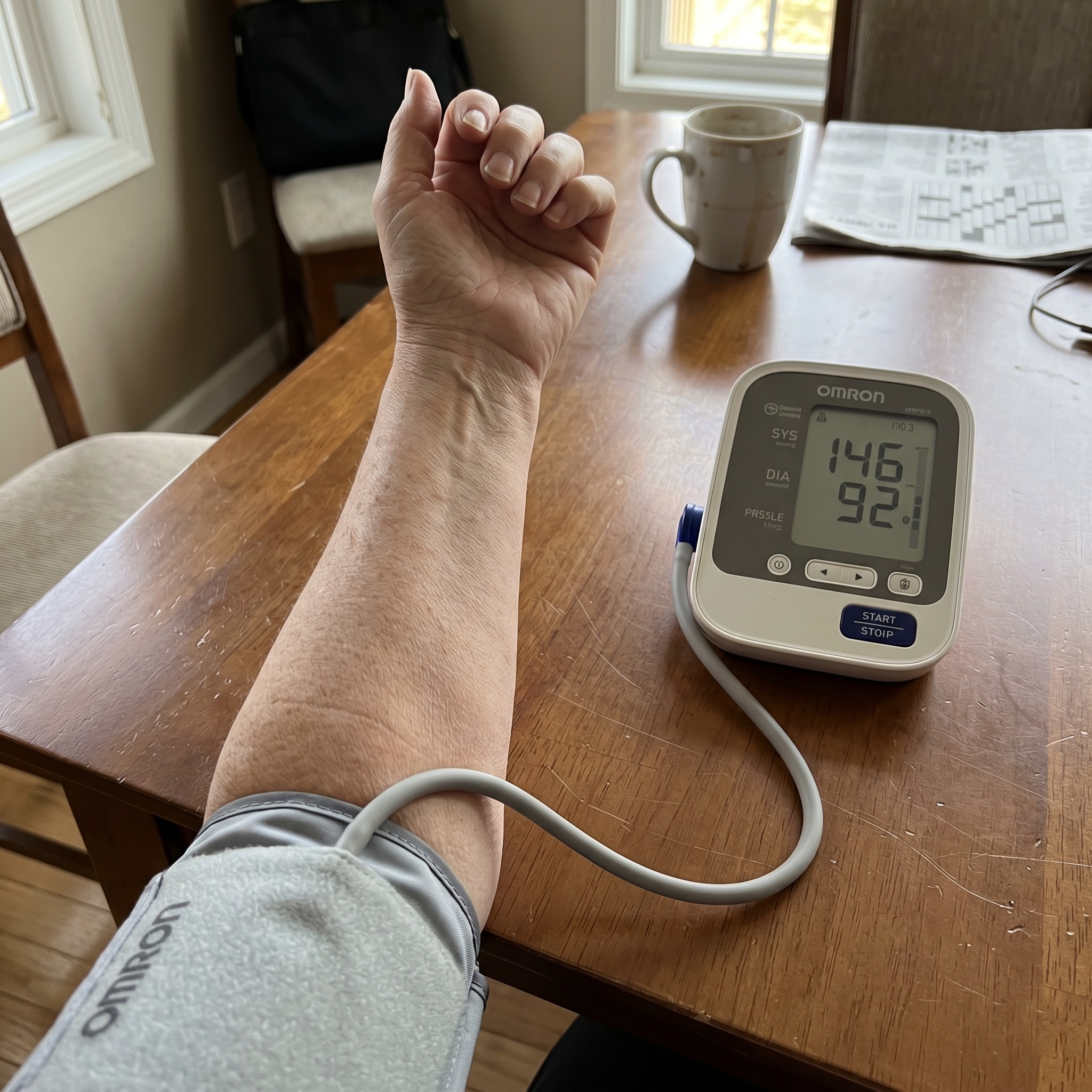
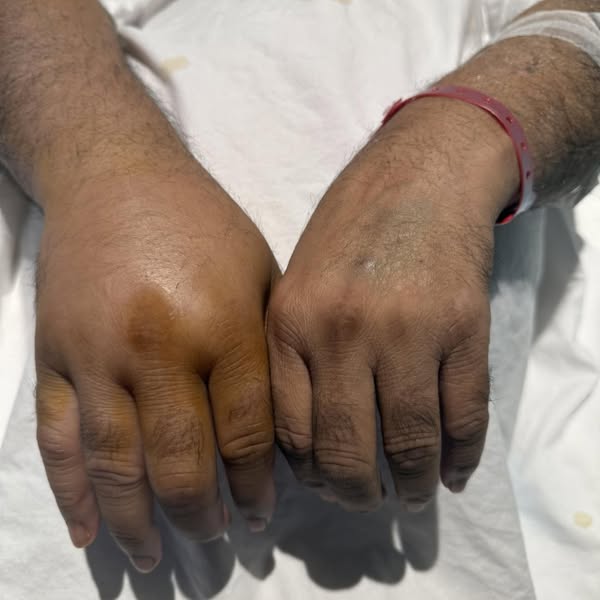
I drove four hours to my brother-in-law's funeral last September and I came home with the answer to a question I didn't know I'd been asking for 11 years. The question was about my husband. The answer was about a small green berry I'd never heard of. I'm getting ahead of myself. Let me start at the funeral. My name is Cheryl. I'm 57 years old. I live in Mobile, Alabama, in a one story brick house off Cottage Hill Road that my husband Wayne and I bought in 2003 when our youngest started middle school. Wayne is 61. He worked for Mobile Gas for 34 years, retired three years ago with a small pension, and now spends most of his time in our recliner watching the Weather Channel and the Crimson Tide and asleep before 8:30 most nights. We have two kids. Both grown, both moved out. Our daughter Brittany lives in Pensacola with her husband and our two grandsons. Our son Marcus lives in Atlanta and works in IT and we see him at Thanksgiving and Christmas and once in the summer if we're lucky. Wayne's brother Earl was 62. He was the older brother by 14 months. He was a deputy sheriff in Baldwin County for 31 years before he retired. Big man. Loud laugh. Smoked a pack a day until he was 51 and then quit cold turkey because his daughter Megan asked him to. He was a good man with a temper and a soft spot for stray dogs and a hat collection that took up an entire shelf in his garage. Earl had a stroke on a Wednesday morning in early September. He was at his kitchen table eating a bowl of grits. His wife Lorraine was at the sink and she heard the spoon hit the floor and turned around and Earl was looking at her with the right side of his face slack and his right hand on the table palm up not moving. He made it to the hospital. He was in the ICU for four days. He never woke up. The funeral was the following Saturday at the First Baptist Church in Bay Minette, Alabama, about an hour and 20 minutes northeast of where Wayne and I live. We got there at 10:30 in the morning for an 11 o'clock service. Wayne wore his good suit, the navy one he'd had since 2008, the one he'd worn to his mother's funeral and his cousin Donny's funeral and now his brother's funeral. The service was the kind of service you'd expect. The pastor talked about Earl's faith and his family and his service to the community. Megan, who's 28 now and works as a paralegal in Mobile, got up and read a poem her father had written for her on her 16th birthday. Wayne sat next to me and didn't cry. He hadn't cried once since the phone call on Wednesday morning. He just sat there with his hands folded in his lap looking forward. After the service we went to the receiving line in the church basement. That's where it happened. I want to tell you about Lorraine for a second. Lorraine is 60 years old. She was a school nurse for 28 years at the elementary school in Bay Minette. She and Earl were married for 38 years. They had Megan and a son named Tyler who's 30 and lives in Birmingham. Lorraine is a small woman, maybe 5'2", with steel gray hair she keeps short and a Southern voice that makes everything she says sound like a hymn. We got to the front of the line. Wayne hugged her. She held him for a long time. Then she turned to me. She took my arm. Not my hand. My arm. Just above the elbow. She squeezed it hard enough that I felt her fingers through my dress. She leaned in close to my ear and she said something to me so quiet that nobody else heard it. She said, "Cheryl. His pressure was always fine. The numbers were fine." I pulled back to look at her. Her eyes were wet but her face was angry. Not at me. At something else. She said it again, slower. "His. Pressure. Was. Always. Fine." Then she squeezed my arm one more time and let go and turned to the next person in line. I walked out of the church basement that afternoon and the sentence followed me into the parking lot, into the car, all the way home down I-65 in the dark, into our driveway, into the house, into the bedroom where Wayne fell asleep before I'd even taken my makeup off. I sat on the edge of the bed in my dress and looked at him. His pressure was always fine. I want to back up now. I want to tell you about Wayne. About the recliner. About the years before Lorraine grabbed my arm. Wayne started slowing down about 11 years ago. He was 50 then. He'd been at Mobile Gas his whole adult life. Got hired in 1989 doing service calls and worked his way up to crew supervisor by the time he turned 40. Out in the field every day. In and out of trucks, in and out of crawl spaces, climbing into attics, walking houses with a clipboard checking gas lines. He was a strong man. Not big but wiry. The kind of man who could carry a 40 pound steel pipe over one shoulder and not slow down. The first thing I noticed was the breathing. He'd come in from work and walk to the kitchen for a glass of water and he'd be breathing harder than he should have been. Just from the front door to the kitchen. He'd stand at the sink with one hand on the counter and pant for a few seconds before he could speak. I asked him about it once. He said it was hot at work. He said the trucks didn't have AC. He said he was fine. The second thing was the headaches. He started getting them in the late afternoon. He'd come home and put his hat on the hook and rub his temples and go straight to the recliner without saying hello. I'd ask if he wanted dinner. He'd say give me 20 minutes. The 20 minutes would turn into an hour. The third thing was his face. Wayne is a Black man with a medium brown complexion. Around 51 his face started changing color. Not all the time. In the evenings, after work, his face would go a kind of dark flushed red across the cheeks and forehead. It would fade by morning. Then it would come back the next evening. I made him go to the doctor. We went to Dr. Whitehead, a family practice doctor at the clinic over on Springhill Avenue. Dr. Whitehead took his pressure. 142 over 91. He said, "That's a little elevated for a man your age. We'll watch it." He didn't put him on anything. He told Wayne to cut back on salt and to walk more. Three months later Wayne went back. 144 over 88. Dr. Whitehead said, "Still elevated. Still watching." This went on for two more years. Every three to four months. The number bouncing between 138 and 148 over 86 to 92. Dr. Whitehead saying watching, watching, watching. He never put him on anything. When Wayne turned 54 the headaches got worse. He started taking three Tylenol every night before bed. He started having to sit down in the middle of mowing the yard. He stopped helping me carry groceries in from the car. Then the second thing happened. Wayne had a small stroke. They called it a TIA, a transient ischemic attack. He was driving home from a service call and his right hand went numb on the steering wheel. He pulled into the parking lot of a Hardee's on Airport Boulevard and called me. He said, "Cher, I think something's wrong, I can't feel my hand." I drove to the Hardee's and got him. We went to the ER. They kept him overnight. By the next morning the feeling had come back. The doctor at the hospital, a younger guy with red hair, looked at Wayne's chart and said, "Mr. Williamson, your pressure on admission was 168 over 102. We need to get you on something today." He started Wayne on lisinopril. The lisinopril worked. Sort of. It got the number down to 134 over 84 most days. Dr. Whitehead said it looked great. The headaches got a little better. The flushing eased up. But something else started. Wayne got tired. Not the tired I'd seen before. A new kind. Heavy. Slow. Like somebody had hung weights on him. He started napping in the recliner the minute he got home from work. Two hour naps. He'd wake up to eat dinner and then go right back to the recliner and watch TV until he fell asleep again. He'd stand up to go to bed and stagger a little bit, like his legs were made of cold clay. By 56, two years before he retired, he was sleeping 11 hours a night and napping three hours a day and still tired. By 58, the year he retired, he'd lost about 14 pounds without trying and developed a cough that nobody could explain. His doctor switched him from lisinopril to losartan because of the cough. His pressure on the losartan stayed in the 130s. The numbers stayed fine. The man inside the numbers was disappearing. Now I want to tell you about the recliner because the recliner is its own character in this story. The recliner is a Lazy Boy from 2017. It's beige microfiber. It sits in the corner of our living room next to the floor lamp my mother gave us when we moved into this house. There's a small side table next to it with a coaster on it that says BAMA in red letters. There's a remote on the side table. There's a TV tray that he uses sometimes. The arms of the recliner are worn shiny on both sides where his elbows have rubbed for eight years. When Wayne retired three years ago I thought we were going to travel. I thought we were going to drive to Pensacola to see Brittany and the boys every weekend. I thought we were going to take a cruise. I thought we were going to do projects around the house. What we did was Wayne moved into that recliner. He gets up at 7. He has coffee. He goes to the recliner. He watches the morning news. He eats lunch in the recliner. He naps. He watches the afternoon shows. He eats dinner in the recliner most nights. He watches the evening news. He falls asleep in the recliner around 8:30. He is 61 years old. I have watched him sit in that chair for three years and I have told myself a story about it the whole time. I have told myself that he's just relaxing. That he earned it. That this is what retirement looks like. That his blood pressure is fine because the doctor said so. That night, after the funeral, sitting on the edge of the bed in my dress with him snoring next to me, I stopped telling myself the story. I sat there for a long time. I thought about Earl at his kitchen table with the grits and the spoon hitting the floor. I thought about Lorraine at the sink turning around. I thought about Lorraine in the receiving line saying his pressure was always fine, the numbers were fine, the numbers were fine. I thought about Wayne in the recliner. I thought about what was happening inside him. I went out to the kitchen at 11:30 at night and I sat at the table with my laptop and I started reading. I'm going to tell you what I learned because nobody at Dr. Whitehead's office had ever told me any of this and I think for women whose husbands sit in recliners with "fine" numbers, this matters. The number on the cuff is not the disease. The number is a symptom of something happening inside the blood vessels. The number can be brought down by medication while the underlying problem keeps going. The underlying problem is mostly in the lining of your blood vessels. It's called the endothelium. It's a thin layer of cells, one cell thick, that lines every artery, every vein, every capillary in your body. When you're young, the endothelium is smooth and active. It makes a molecule called nitric oxide that tells your blood vessels to relax. To soften. To open up. The nitric oxide is what allows your vessels to flex with every beat. That flexing is part of what keeps your pressure where it should be naturally. As you age, two things happen. First, your body makes less nitric oxide. Second, the endothelium takes a beating. From sugar in your diet. From inflammation. From oxidative stress, which is just a fancy way of saying your cells are getting damaged at a chemical level over time, like a piece of metal slowly oxidizing in salt air. Damaged endothelium can't make nitric oxide properly. Damaged endothelium gets stiff. Stiff vessels can't flex. Pressure climbs. Tiny tears form. Plaque has somewhere to attach. The vessels narrow. A blood pressure pill can force the vessels open. Lisinopril does this by blocking a hormone. Losartan does the same thing in a different way. They work. They bring the number down. What they don't do is fix the rust. The endothelium keeps getting damaged. The nitric oxide keeps falling. The vessels keep getting stiffer underneath the medication. The number stays fine. The vessels keep dying. That's how a man can be on a blood pressure pill for seven years, with "fine" numbers every checkup, and have a stroke at his kitchen table on a Wednesday morning eating grits. That's what Lorraine was trying to tell me with her hand on my arm. I read until 3 in the morning. I closed the laptop. I went to bed. Three days after the funeral I called Lorraine. I asked her what she meant by what she'd said. She was quiet for a minute. Then she said, "Cheryl. Earl was on lisinopril for nine years. His pressure on the cuff was 128 over 80 the day before he died. I have his folder right here, all the readings. The pressure looked perfect on paper. The vessels in his head told a different story when the autopsy came back. Massive blockage. Years and years of damage in there that nobody had been measuring. The pill kept the number down. The damage kept happening underneath." She was crying when she said it. She said, "I should have known. I'm a school nurse. I knew the number on the cuff isn't the whole story. I let myself believe it because the doctor believed it. I let myself believe it because Earl believed it." Then she said, "Don't let yourself believe it. Whatever you do." I asked her if she was on anything. If she was doing anything different now. She said, "I started something three weeks after Earl died. My niece Janelle works at the hospital in Birmingham. She came down for the funeral and we talked. She's been on it for over a year. She told me Earl's story made her start it in the first place. She watched him slow down at family gatherings. She told me she didn't want me to be next." I said, "What is it?" She said the word. Amla. I'd never heard it. She spelled it out for me on the phone. A M L A. Indian gooseberry. She told me to look it up. She said her niece had told her it was one of the most studied fruits in the world for cardiovascular and metabolic health and that nobody in this country had ever heard of it because it doesn't make any pharmaceutical company any money. She said the brand she was using was called Alevia. Said her niece had switched to it because the bottle was sourced and tested in the U.S. and the company offered a 90 day money back guarantee. I got off the phone with her and I went straight back to my laptop. The research on Amla isn't hidden. It's been studied for decades. It's been used in traditional medicine in India for thousands of years. There are dozens of papers on it sitting in mainstream medical journals. Amla has been linked to supporting healthy blood pressure already in the normal range. Not by forcing the vessels open. By supporting the endothelium itself. By feeding the system that's supposed to regulate the pressure naturally. It's been associated with helping the body maintain healthy levels of nitric oxide. Linked to supporting the antioxidant defense system that protects the vessel walls from oxidative damage. Linked to supporting healthy inflammatory response, which is one of the main drivers of endothelial damage in the first place. Loaded with vitamin C, polyphenols, tannins, and a class of compounds called emblicanins that have been documented as some of the most potent natural antioxidants ever measured. What that translates to in plain English is that Amla supports the actual system that's supposed to keep your pressure where it should be, instead of just papering over the symptom. I read for two more nights. I checked sources the way I check things at work, slowly, carefully. The information was just sitting there. Nobody had ever told me about it. Not Dr. Whitehead. Not the ER doctor who put Wayne on lisinopril. Not the cardiologist Wayne saw once after the TIA. Not a single person in 11 years. I ordered a bottle of Alevia Amla on a Sunday night. I ordered it without telling Wayne. I didn't want to fight about it. It came on a Thursday. I put it on the kitchen counter. That night at dinner I told Wayne about the call with Lorraine. I told him what she'd said about Earl's autopsy. I told him about the endothelium. I told him about the rust under the number. He listened. He didn't say anything for a long time. Then he said, "Cher. Bring me the bottle." He read the label. He took two capsules with his glass of water that night. He's been on it for seven months now. I want to tell you what changed. Week two his afternoon nap went from three hours to one. He still went to the recliner. He just didn't sleep in it as long. Week four the flushing in his face stopped. I hadn't realized it had come back at low levels even on the losartan until it stopped. His face just looked like his face again. Week six he got up out of the recliner one Saturday morning and said, "Cher, I'm gonna go pull the weeds out of the front bed." I said, "Wayne, you don't have to do that." He said, "I know I don't have to. I want to." He was outside for two and a half hours. Week eight he went down to Pensacola with me to see Brittany and the boys. He hadn't been down there in 14 months. He sat on the floor with our older grandson Caleb and built a Lego set for an hour. Caleb is 7. He looked at his grandfather like he didn't recognize him because he kind of didn't. Three months in I noticed Wayne wasn't asleep in the recliner at 8:30 anymore. He was upstairs in the bed with me by 10. He was reading again. He'd start a book, finish it. Five months in we drove to Atlanta to see Marcus. Wayne drove the whole way. Three hours and 45 minutes. Five years ago he'd have made me drive at the halfway point. Six months in he went back to Dr. Whitehead. Pressure was 119 over 76. Whitehead said, "What did you do?" Wayne told him. Whitehead didn't say anything. Just wrote on the chart and nodded. I want to tell you something I think about a lot now. Lorraine grabbed my arm at the funeral because she needed somebody to hear her. Her husband had been dying for nine years inside numbers that looked fine. She'd watched it happen. She'd let herself believe what the doctor believed because what choice did she have. And then her husband sat down at the kitchen table with a bowl of grits and the spoon hit the floor. She didn't want me to be next. I don't want you to be next either. If your husband is on a blood pressure pill and his number looks fine on the cuff but you watch him sit in a recliner all day, sleep 11 hours a night, lose his color, lose his energy, lose his interest in the things he used to love, the number isn't the whole story. The pill is doing one thing. It's not doing the other thing. The other thing is what Amla is associated with supporting. Alevia Amla is two capsules a day. 90 day money back guarantee. If your husband's body doesn't tell you something is different inside two months, you send the bottle back and you don't pay a dime. Lorraine called me last week. She's been on it eight months now herself. Her own pressure is the lowest it's been in 20 years. She told me she went to the cemetery and sat on the grass next to Earl's headstone and she told him about it. She told him she was sorry. She said she sat there for an hour and the wind came up and she felt like he heard her. I'm telling you what she told me. The numbers are not the whole story. 👉 alevia.com/amla/33 P.S. Wayne's been out of the recliner most days now for about four months. He still uses it. He still watches the Tide on Saturdays and the Weather Channel before bed. But it's a chair now. It's not where he lives. He's in the yard. He's at the hardware store. He's at the kitchen counter making me coffee in the morning the way he used to before he got tired. We're driving down to Pensacola this weekend for our older grandson's birthday party and Wayne wants to take both boys fishing on Sunday morning. He hasn't taken anybody fishing in eight years. He pulled his old rod out of the garage on Tuesday and was greasing the reel at the kitchen table while I made dinner. I almost cried. P.P.S. The 90 day money back guarantee is the part I want you to think hardest about. When Earl was on lisinopril for nine years, nobody offered Lorraine her money back when the autopsy came back. Nobody offered to refund the years she watched him fade while the cuff lied to both of them. The pharmaceutical system doesn't refund. The doctors don't refund. The supplement aisle at the Walgreens doesn't refund. Alevia does. They refund because they know what happens when somebody actually tries it. Two months. If it doesn't move the needle, you send it back. You're risking nothing. Lorraine risked her husband's life on the cuff number. Don't risk yours. P.P.P.S. If your husband sits in a recliner all day and his doctor says his pressure looks fine, if your husband has been losing weight without trying, losing color, losing his energy, losing his interest, if you've started telling yourself this is what 60 looks like or this is what retirement looks like or this is what aging is, this is what I want you to know. This is not what 60 looks like. This is what unaddressed damage to the lining of the blood vessels looks like. This is what a body running out of nitric oxide looks like. This is what a man whose number is being managed while his vessels keep getting stiffer looks like. There is another way to think about this. Two capsules. A glass of water. A small green berry from a tree on the other side of the world. A receiving line in a church basement in Bay Minette, Alabama. A woman named Lorraine with her hand on my arm. The numbers were fine. The numbers were fine. The numbers were fine. Until they weren't. Don't wait for your numbers to stop being fine. 👉 alevia.com/amla/33
Like this ad? Make it yours.
Crush rebuilds this exact creative around your product — your brand, your colors, your offer — in about a minute.