Luke Harris
Luke Harris Facebook ad: “This tool would have saved $82,000 on our mountain”
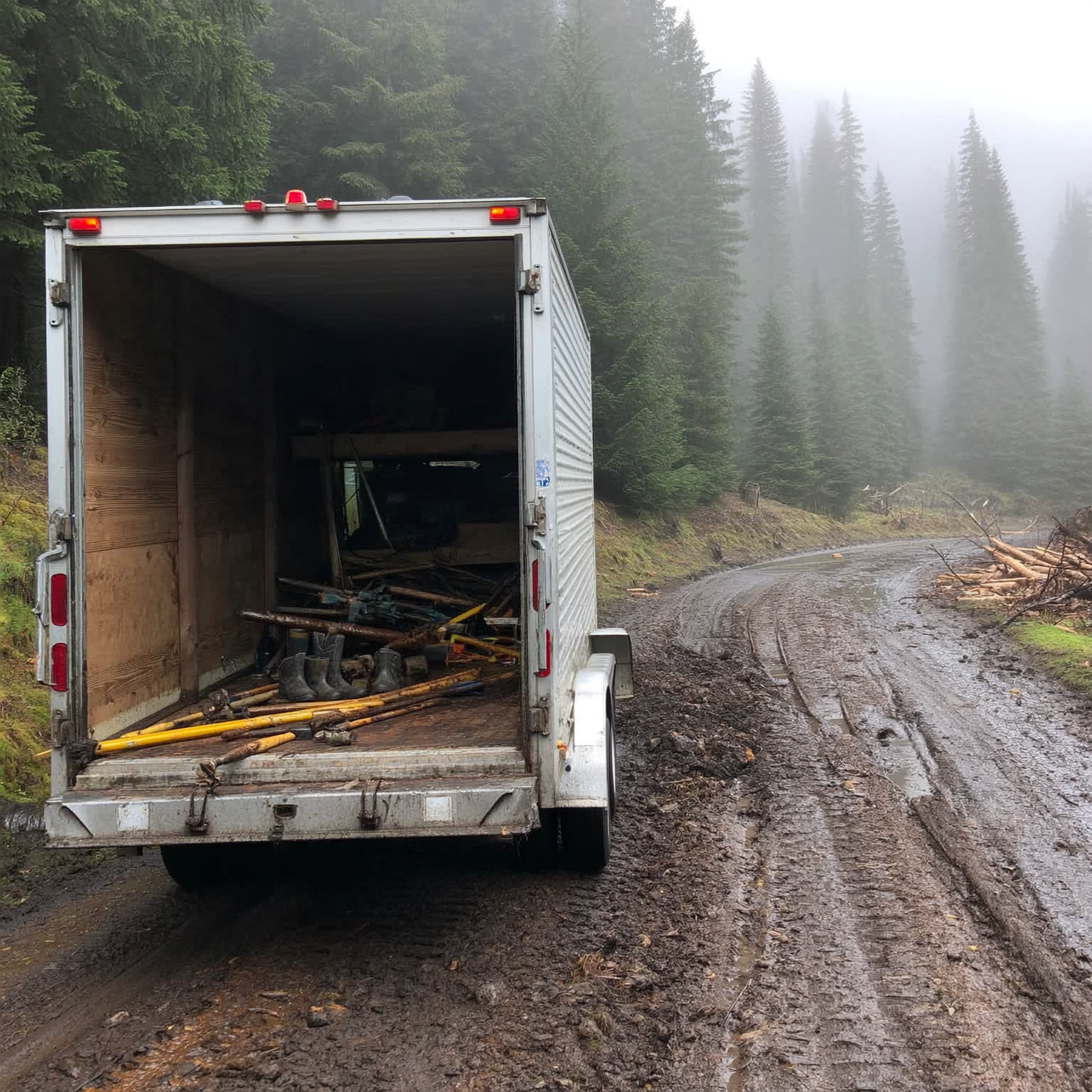
Ran for 8 days, from February 18 to February 26, 2026, the last day Crush saw it.
Run by Luke Harris on Facebook. Crush is not the advertiser and does not verify its claims. See this ad in Meta's Ad Library(opens in a new tab)
Want an ad like this for your product?
Crush makes new ad images for your product from this ad: your logo, your product photo, your offer.
Trials from $19.95 USD, then $79.95 USD a month. Cancel anytime.
About this ad
- Meta Ad Library ID
- 2017635835762721
- Platforms
- Facebook, Instagram, Audience Network, Messenger and Threads
- Relaunches
- 0
- Niche
- Travel & Events
Ad text
When your son walks away from a medical career in Portland to come home and log timber, and you find him standing on a mountainside at 2 AM next to a dead processor with three hundred thousand board feet of cut logs on the landing and an atmospheric river forty eight hours from turning every logging road on the mountain into a river that won't dry out until May, you don't want him thinking about the residency he turned down. Let me tell you what happened. We harvest timber on about 4,800 acres of managed Douglas fir and western red cedar forest in the Oregon Cascades. East of Sweet Home where the Willamette Valley tilts up into the foothills and the old growth stumps from the first cut a hundred years ago sit in the understory like gravestones for trees that were already ancient when Lewis and Clark walked through. Third generation. My grandfather started logging here in 1951 with a Caterpillar he bought on credit and a cable yarding rig he welded together from scrap pipe and war surplus winch drums. My mother ran the operation through the spotted owl shutdown in the early '90s when half the timber families in Oregon lost everything. Pivoted to private industrial land when the federal timber sales dried up. Found a way. I took over at twenty four when a widow maker limb broke off a snag and put my mother in the hospital for three months with a shattered collarbone and four broken ribs. My son Nate went to Oregon State. Pre med and biology. Did well enough to get into Oregon Health and Science University medical school in Portland. Matched into an emergency medicine residency at Legacy Emanuel, the Level 1 trauma center. Starting salary and trajectory that would have had him making more in his first attending year than this logging operation has netted in any single year of its existence. He took it. Completed one year of residency. Called me on a Wednesday night in February, sitting in the residents' lounge after a thirty six hour shift that had started with a chainsaw laceration from a tweaker cutting stolen catalytic converters and ended with a fourteen year old overdose that didn't make it, and said, "Dad, I spent today trying to fix things that were already broken. I want to go where the work happens before things break. I want to come home." He was on the mountain by Saturday morning. Didn't even finish the rotation. Told the residency director the truth, that he'd realized he wanted to build something with his hands in the place he came from rather than stitch up the damage in a city he'd never feel at home in. Drove the two hours south from Portland in the dark, parked at the landing, and walked straight to the processor, a John Deere 2154G with a Waratah 622B processing head, and started diagnosing the intermittent feed roller stall we'd been chasing for the last three logging shows. Found it in two hours. A hairline crack in a hydraulic control valve spool that only opened under sustained high pressure, which meant it only failed when the processor was feeding the biggest logs, the ones that mattered most. He found it by running the head under load while monitoring the hydraulic pressure on a gauge he rigged to the test port, the same systematic approach he'd used diagnosing intermittent cardiac arrhythmias in the ER, provoke the symptom under controlled conditions and watch the numbers. That's Nate. Diagnoses the system under load, not at rest. Last October, we were in the middle of the fall logging show. Best timber sale we'd had in six years. Eighty acre unit of fifty year old second growth Douglas fir on a south facing slope that had grown fast and straight and tall in the volcanic soil of the Cascade foothills. Average tree running twenty two inches at breast height diameter. Merchantable volume estimated at fourteen thousand board feet per acre. Mill price for delivered Douglas fir sawlogs was running $740 per thousand board feet, which was the highest price since the post pandemic lumber spike and meant this one unit was worth over $800,000 on the stump if we could get it cut, processed, and hauled to the mill before the winter shutdown. Then the weather models shifted on Monday afternoon. An atmospheric river was organizing in the subtropical Pacific and taking aim at the Oregon Cascades. Not a typical fall rain event. A Pineapple Express, a massive plume of tropical moisture stretching from Hawaii to the Pacific Northwest. Forecast calling for six to ten inches of rain across the western Cascades from Wednesday through Saturday. Possibly more at higher elevations. Flood watches for every river drainage in the foothills. If you've never logged timber in the Pacific Northwest, let me tell you what an atmospheric river does to a logging operation. Logging roads are dirt. Not gravel, not paved, not engineered. Dirt. Compacted volcanic soil bulldozed into the mountainside with drainage ditches and culverts that handle normal rainfall. When six inches of rain falls in three days, the roads don't just get muddy. They liquefy. The volcanic soil turns to a slurry that will swallow a loaded log truck to the axles. Culverts plug with debris. Ditches overflow. Sections of road slide off the mountain entirely. A logging road that was passable on Monday can be a canyon of mud and running water by Thursday. And once the roads go, they stay gone. You don't fix a destroyed logging road in winter. You wait. You wait for the rain to stop, for the ground to dry, for the road crew to rebuild what washed out. In western Oregon, that means you wait until May. Sometimes June. Five to six months of zero access to the timber on the mountain. Any logs sitting on the landing when the roads close are stranded. They can't be hauled. They sit through the winter rain, absorbing moisture, checking and cracking at the ends, developing blue stain fungus in the sapwood. A fresh cut Doug fir sawlog worth $740 per thousand in October is worth $520 by April if the checking is moderate. Worth $380 if the stain has penetrated. Worth nothing if the log has sat in standing water and rotted from the bottom up. And the standing timber that you haven't cut yet, that's fine. Trees don't care about rain. But the contract has a deadline. The timber sale expires. The landowner leases the next show to someone else. The trees you didn't cut are revenue you'll never see. We had 300,000 board feet of processed logs sitting on the landing ready for haul. Worth roughly $222,000 at the mill. Log trucks were scheduled to start hauling Tuesday. But we also had another 180,000 board feet of standing timber that needed to be felled, processed into logs, and decked on the landing before the roads closed. The processor had to keep running. The atmospheric river was hitting Wednesday. Log trucks could haul through Tuesday if the roads held. Maybe a partial day Wednesday if the rain started slow. After that, the roads would be done and anything still on the mountain would sit until spring. Tuesday morning, 1 AM, Nate was already on the mountain. Running the processor in the dark under the work lights, picking up felled trees with the head, feeding them through the delimbing knives, measuring and bucking them into log lengths. At 1:40 AM, the processor head stopped feeding. The Waratah processing head's feed roller drive had a main hydraulic motor mounting bolt that had worked loose from the constant cyclic loading of processing six hundred trees per day. Every tree is a load event. Head clamps the trunk, feed rollers engage, tree feeds through the delimbers at five feet per second, the head measures, the saw bucks, rollers reverse, next piece. Six hundred times a day. Five days a week. The bolt backed out just far enough that the motor shifted on its mount, the roller drive coupling lost alignment, the rollers stalled, and the processor head was holding a forty foot log it couldn't feed, delimb, or buck. Sitting on the mountainside like a mechanical arm that had gone to sleep holding a telephone pole. Not a hydraulic failure. Not a cracked head or a blown motor. A single mounting bolt. Seat it, torque it, and the motor realigns, the rollers engage, and the head feeds. Nate had the bolt. He always had the bolt. The month he came home, he inventoried every critical fastener on the processor, the feller buncher, the skidder, the loader, and the two log trucks. Built the inventory in a medical charting format because a year of emergency medicine had made that the only organizational structure his brain would trust. Every bolt had a chart. Thread specification, torque value, material grade, inspection interval, and a failure probability score he'd calculated using our equipment maintenance logs the way he'd use a patient's history to predict complications. The feed roller motor bolt had the third highest failure probability on the processor. He'd ordered replacements in September. They were sitting in a labeled vial on the parts shelf in the equipment trailer. ER discipline. He organized critical parts the way he organized a crash cart, every item in its place, every item reachable in the dark, because on a mountainside at 1 AM in October, it might as well be an emergency room and the patient is a machine that's bleeding money. The bolt sat in a pocket between the hydraulic motor housing and the processor head frame. Less than an inch of clearance. Motor casting on one side. Head frame rail on the other. Roller guard plate bolted across the top. Hydraulic supply and return lines and the electrical harness for the head's measuring system routed along the bottom. And everything was filthy. Not dusty. Logging filthy. Bark, pitch, cambium slime, hydraulic oil, sawdust paste, and the particular black resin that accumulates on any surface near a processing head where Doug fir pitch and diesel exhaust meet and form a compound that is roughly the consistency of roofing tar and twice as permanent. Nate could see the bolt hole. Could start the bolt one and a half turns with his fingertip. He spent five hours on it alone on the mountainside. Five hours. In the dark. In forty degree air at three thousand feet with fog settling into the unit from the valley below. That's Nate. At OHSU, he once spent an entire night shift manually reducing a comminuted femur fracture that the attending said needed to go to the OR in the morning. Nate said the patient's vascular compromise couldn't wait until morning. Reduced the fracture in the ER using procedural sedation and fluoroscopy, restored distal pulses, and the patient went to the OR the next day for fixation with the limb already saved. Attending told him he was either the best resident he'd ever had or the most reckless. Nate said those were the same thing. Same refusal to wait for someone else's timeline that makes a great emergency physician makes a son who will stand on a mountainside in the fog until his hands are black with pitch before he comes down. He walked into the equipment trailer at 6:30 AM. Hands black with hydraulic oil and pitch. A deep gash across three knuckles on his right hand from the roller guard bracket. Bark dust and sawdust caked into every crease on his forearms. Doug fir pitch in his hair, on his neck, on the front of his jacket where he'd pressed against the head housing trying to reach the bolt. Voice steady. Measured. The clinical tone he used delivering a prognosis that wasn't going to be good. "Feed roller motor mount bolt. I can thread it. Can't get a tool behind the head frame to torque it. Everything's covered in pitch and I can't get purchase on anything." I was on the mountain in twenty minutes. Full socket set, headlamp, every extension and adapter I owned. Truck grinding up the logging road in four wheel drive with the fog so thick the headlights only reached twenty feet. Tried everything Nate had tried. Tried things from twenty nine years of logging in the Oregon Cascades that medical school doesn't teach. Standard ratchet. Handle hit the head frame rail before the socket reached the bolt. And the handle was slick with pitch. Couldn't grip it with two hands. Stubby ratchet. Got into the pocket. Couldn't reach the bolt depth. Short by almost two inches. And every surface was coated with pitch and oil that made the chrome so slippery it might as well have been greased. Flex head ratchet. Flexed into the roller guard plate the instant I loaded it. No engagement. The flex joint was gummed with pitch and wouldn't hold position. Deep socket on a long extension. Extension diameter wider than the gap between the motor and the head frame. Would not enter the space. Wobble socket on a shorter extension. The wobble, combined with everything being coated in pitch and oil, meant the socket had zero chance of seating on the bolt hex. Walked off the bolt head four times. Fifth attempt the socket stuck to the pitch coating on the motor housing and came off the extension entirely. Spent ten minutes prying it loose with a screwdriver. Universal joint adapter. Torque scattered everywhere. The adapter was pitch covered, the drive was pitch covered, my hands were pitch covered. Couldn't feel anything. Working blind behind the head frame. Like trying to do surgery wearing oven mitts coated in honey. Crow foot wrench. Wrong profile. Body contacted the motor housing before the jaws reached the bolt. And pitch had filled the bolt head recess so completely I had to dig it out with an awl before I could even attempt to seat a tool. Cut my forearm on the roller guard bracket. Scraped both wrists raw on the head frame. Pinched my ring finger between the motor housing and the hydraulic fitting. The pitch sealed the wound closed before I even felt the cut, which is one of the stranger properties of Doug fir pitch, it's been used as a wound sealant by loggers and Native peoples for centuries, and on this particular morning it was the only thing on the processor that was helping. Nate stood beside me through every attempt. Handing tools in sequence. Methodical. Calm. The way he handed instruments in the ER, anticipating the next one, already knowing the current one wouldn't work but confirming before moving on. Ratchet. Extension. Stubby. Flex. Wobble. Universal. Crow foot. All tested. All failed. All charted. No remaining treatment options. None of them worked. By noon Tuesday, we had nine combined hours on one bolt. And the first log trucks were already arriving at the landing to start hauling the decked logs down the mountain. That's when Nate stepped back from the processor. Wiped his hands on his jeans, which did nothing because Doug fir pitch doesn't wipe off, it just redistributes. Leaned against the processor's track frame. Looked up through the canopy at the fog. And that's when I saw it. Not on his face. Nate doesn't show things on his face. He learned that in the ER, where patients and families read your face for the prognosis and the worst thing you can show them is uncertainty. I saw it in his breathing. The way it slowed. The way he closed his eyes for a three count. The way he does when he's resetting after a bad outcome. The kind of thing only a father reads. He'd turned down medicine. Walked away from the residency. Left the career that saved lives and the salary that would have paid off $280,000 in medical school debt in eight years and the trajectory that had him on track to be an attending emergency physician by thirty two. Left the apartment on the east side of Portland where the coffee was good and the streets were paved and the buildings didn't fall on you. Left the woman he'd been seeing, a fellow resident in internal medicine who understood seventy hour weeks and never complained that he smelled like the ER when he came home. Left because he believed this mountain and these trees and this equipment were worth more than any shift he'd ever work in a fluorescent lit trauma bay. Because he believed his hands and his mind and his willingness to stand on a mountainside at 2 AM could keep this operation running for one more generation in an industry where the average age of an independent timber operator in Oregon is fifty eight and most of them don't have anyone coming home. And here he was. Nine hours into a bolt he couldn't turn. Watching his father bleed on the same one. Three hundred thousand board feet of logs on the landing waiting for trucks. A hundred and eighty thousand board feet of standing timber still to cut. And an atmospheric river aimed at the Cascades like a fire hose, six inches of rain by Thursday, the roads about to dissolve, everything on the mountain about to be locked up until spring. Called the John Deere forestry dealer in Eugene. "Every processor in the Cascades is trying to finish ahead of this storm. Our technicians are all deployed. Best we can do is maybe next Monday." The rain was coming Wednesday. Called two independent heavy equipment mechanics. First one was already on a logging show near Mill City dealing with the same pre storm panic. Said maybe Thursday. Second one had blown the transmission on his service truck and was waiting for parts. His wife said call back next week. That's when the battered red pickup with the Oregon Logging Conference sticker on the bumper came grinding up the logging road through the fog. Walt Koskinen. Eighty one years old. Logged the Oregon Cascades for fifty five years before his back surgery and his daughter's ultimatum made him park the skidder for the last time. Still drove the logging roads every fall to watch the shows and check on the units and tell anyone within earshot that they were felling into the lead too fast or leaving too much wood in the tops. Someone running a log truck past our landing told him our processor was sitting. He walked across the landing the way old loggers walk on a landing, eyes on the ground checking for bark slabs and choker cables, then up to the decks checking log quality, then to the equipment reading the show the way his generation reads a unit, by the sound of the saws and the smell of the exhaust and the way the slash is piled. Looked at the processor head. Looked at the pocket. Looked at the tools laid out on the processor platform like instruments after a surgery that hadn't saved the patient. Looked at Nate. "OHSU?" he asked, squinting at the faded orange and black logo on Nate's hat. "Emergency medicine. One year of residency. Came home last spring." Walt nodded. The slow nod of a man who has watched young people leave the timber towns of Oregon for five decades and understands the exact weight of the ones who come back. "Doctors always find what's wrong. Just don't always carry what reaches where the fix has to go." Walked back to his truck. Came back with a flat steel tool. About 15 inches long. Thin as a ruler. Socket fitting on one end. Square drive on the other. Housing worn to bare metal and stained dark from years of pitch and hydraulic oil and the particular brown patina that accumulates on anything that lives in the cab of a logging truck in the Pacific Northwest, part rain, part diesel, part tree. A strip of old choker cable wire wrapped around the middle where the original grip had worn away, because loggers fix everything with choker wire and duct tape and whatever's in the pocket of their tin pants. "Offset extension wrench," he said. "Fellow I used to buy choker bells from, runs a big logging show up in the Tillamook burn country, he put one of these in my hand back in 2014. Used it on every machine I touched for the last eight years I logged. Doesn't matter if it's pitch covered, doesn't matter if it's dark, doesn't matter if you're on the side of a mountain in the fog and everything is slick with oil. Goes in, seats, turns. In the woods, that's the whole game." He climbed up onto the processor platform like he was climbing onto a log deck, hand on the frame, boot on the track, reading the machine's height and angle without thinking about it, fifty five years of climbing on equipment that sits on slopes and doesn't have stairs. Angled the socket end into the pocket between the motor housing and the head frame. Past the roller guard. Under the hydraulic lines and the harness. Into the counterbore where the bolt sat in its recess behind a quarter inch of packed pitch and hydraulic oil. Smooth and certain, the way a man who has worked in the woods since Kennedy was president does anything with his hands on a piece of logging equipment, unhurried, deliberate, absolutely sure. Socket seated on the bolt head. Through the pitch. Through the oil. Clean. He looked at Nate. "Your processor. Your bolt." Nate took the drive end. Applied rotation. Steady. Measured. The same incremental, calibrated force he used reducing a fracture, controlled input, feedback through the hands, trusting the instrument to transfer the force where it needed to go. No sudden movement. No forcing. Bolt seated. Motor aligned. Coupling engaged. Rollers turned. Feed engaged. Forty five seconds. Forty five seconds for a bolt we'd spent nine hours fighting. On a mountainside. In the fog. Nate held the tool for a long moment. Turned it over in his pitch covered hands. Felt the internal chain transfer the rotation from one end to the other. Ran his thumb along the housing, already understanding the mechanism, reading the engineering the way he read an X ray, by tracing the structure and verifying the connection. "Chain driven parallel transfer. One to one torque ratio. Zero arc at the output." Walt laughed from the processor platform, sitting on the track frame, fog around him like he was sitting inside a cloud, which at three thousand feet he very nearly was. "Son, I've been calling it my timber saver for ten years. That's the first time anyone's given it a proper diagnosis." Processor was running by 12:30 PM. We ran the rest of Tuesday. Into Tuesday night. Through Wednesday morning. Nate processed timber until midnight Tuesday, the head grabbing tree after tree in the dark, feed rollers pulling logs through the delimbers, saw bucking them into lengths that the loader stacked on the landing in neat decks. I ran the loader, sorting logs by grade, keeping the landing clear, flagging the log trucks through. Brought Nate food at midnight. He'd already processed another forty trees before I got the sandwich to his cab. Brought him coffee at 4 AM. He drank it in the operator's seat with the engine running, watching the fog and waiting for first light to process the last section of the unit. He processed that timber like a man running a trauma code. Like every tree was a patient and every log was a vital sign he refused to lose. Like the mountain was the ER and the atmospheric river was the ambulance bringing the next disaster and his only job was to stabilize everything he could reach before it arrived. I think he was proving something. Something about the difference between trying to fix what's already broken and getting the work done before it breaks. I think he proved it. But we didn't finish. The atmospheric river arrived Wednesday afternoon. Right on the forecast. Rain started at noon. Light at first, the way it starts in the Cascades, a mist that thickens until you realize it's been raining for an hour. Then steady. Then heavy. Then the kind of rain that turns the forest into a vertical river, water running down every trunk, every branch, every slope, every road. By Thursday morning, four inches on the ground. Logging roads were soup. The first truck that tried to go down Thursday morning slid sideways on a switchback and had to be winched back onto the road by the skidder. We shut down hauling. Friday, another two inches. The road in the steep section above the creek crossing washed out entirely, a forty foot section sliding off the mountain into the drainage below. We still had 85,000 board feet of standing timber uncut in the upper section of the unit. Our best wood. The oldest trees in the sale. Tallest, straightest, highest value logs on the mountain. Also the farthest from the landing and the last section to be reached by the processor. And 120,000 board feet of processed logs sat on the landing through the winter. The trucks couldn't reach them until the road crew rebuilt the washed out section in May. By the time we hauled those logs to the mill in late May, the damage was done. End checking moderate to severe on the exposed faces. Blue stain penetrating the sapwood on the bottom logs in the decks where standing water had pooled all winter. What should have scaled at $740 per thousand came back at $485 on the check scaled logs and $390 on the stained wood. Final damage: roughly $38,000 in reduced log value on the winter stranded timber, plus the 85,000 board feet of standing timber we never cut because the sale expired during the road closure, which represented approximately $44,000 in revenue we'll never see. Eighty two thousand dollars. From one bolt we couldn't turn for nine hours on a Tuesday morning while the atmospheric river organized in the Pacific. That weekend, Nate ordered the same tool Walt had brought. Ordered six. One for the processor cab. One for the feller buncher. One for the skidder. One for the loader. One for the equipment trailer, mounted on a stainless bracket he fabricated from a piece of flat bar with the part number engraved below it in an electric pencil, because Oregon rain and pitch and diesel vapor will eat any other label material before the season ends. One for my truck. Eighty nine dollars each. Adapters not included, runs a standard half inch square drive, you use your own sockets. Since then, we've used them more times than either of us can count. Three times on the processor. That same feed roller bolt again the following show. A delimber knife adjustment bolt buried behind the head housing in a space that Waratah apparently designed assuming forest workers have forearms the diameter of alder branches. And a saw bar mounting bolt recessed behind the saw motor housing where the manual says to remove the entire saw assembly, a three hour job that Nate did in twenty minutes on the mountainside between trees. Twice on the feller buncher. Head tilt cylinder pin bolt wedged between the boom frame and the cylinder mount. Saw drive motor bolt crammed behind the head housing in a gap that fills with sawdust and pitch until the bolt is essentially laminated into the machine. Once on the skidder. Winch drum brake bolt buried behind the winch frame and the PTO guard. Would have been a half day job in the shop. Nate did it on the landing in twenty minutes. Once on the loader. Grapple cylinder pin bolt tucked behind the boom knuckle and the grapple frame. Bolt worked loose during a long day of loading heavy logs. Grapple wouldn't close. Logs on the landing and trucks waiting. Nate had it running before the truck driver finished his coffee. Once on my truck. Starter bolt on the old F350 that sits between the block and the bellhousing in a space Ford apparently designed for a mechanic who has renounced the use of hands. And two weeks ago, a young man who'd just started his own logging show on a small timber sale east of us called the equipment trailer. First show on his own. Twenty four years old. His skidder's winch cable guide bolt had backed out. Cable jumping off the drum. Logs on the ground. Rain in the three day forecast. His voice was steady but he was talking too fast. That's how it sounds when you're twenty four and the machine is broken and the weather's coming and the bank owns everything including the skidder. Nate didn't ask a question. Pulled the wrench off the trailer wall. Said "Send me a pin and I'll find you" and was in his truck before the kid finished texting the coordinates. Drove up the mountain. Bolt seated in under a minute. Standing on a slope in the rain. The kid stood on the landing looking at the tool. Then at Nate. Then at the tool. "How does every logger in Oregon not have one of these?" Nate texted him the link from the cab of his truck before he backed down the logging road. Clean. No explanation. ER efficiency, deliver the intervention, move on. Kid ordered four that night. Here's what nobody tells you when your child gives up their career to come home. This equipment isn't built for the woods. It's engineered in climate controlled facilities and tested in clean, level, well lit dealer shops by technicians who charge $225 an hour and are booked solid during the exact two week window when an atmospheric river is bearing down on the Cascades and every logging show in western Oregon is trying to get their timber cut and their logs hauled before six inches of rain turns every road on the mountain into a creek and locks everything in place until spring. Every bolt that matters is buried behind a motor housing, a head frame, or a guard. Every breakdown during the fall show is a race between your toolbox and the sky. And every hour you can't fix it is another hour your son stands on a mountainside in the fog, eyes closed, silently measuring the distance between the career he left and the one that just stopped him cold with a bolt he can see but cannot turn. But when you've got something that reaches into those impossible pockets. Something thin enough to slide past the housing and the guard and the frame and the hydraulic lines. Something with a chain drive inside that transfers real torque without needing swing room or an arc. Something that works covered in pitch, works in the rain, works in the dark, works on the side of a mountain at 2 AM when the fog is thick and the atmospheric river is two days out and your hands are black and the bolt is the only thing standing between you and getting the timber off the mountain. Those "pull the head, truck the processor to the shop, wait two weeks" disasters become twenty minute mountainside fixes. And mountainside fixes mean your kid sees the processor running. Sees the logs stacking on the landing. Sees the trucks rolling down the mountain. Sees that the decision to come home, the residency he walked away from, the career he left, the future he traded for pitch and fog and diesel and the chance to keep his grandfather's timber operation running for one more generation, all of it was right. It's called the PRO Offset Extension Wrench. About 15 inches long. Half an inch thick. Chain drive inside transfers rotation where ratchets can't swing. Adapters not included, runs a standard half inch square drive, you use your own sockets. Eighty nine dollars. Less than one truckload of fuel for the processor. Less than fifteen minutes of dealer shop labor. Less than one tenth of one percent of what that atmospheric river cost us on the mountain. I'm not going to tell you this tool will save your show. But there's going to come a morning. Probably the darkest morning of the tightest window of the season. When your son walks into the equipment trailer at 2 AM with pitch on his hands and a photo of a bolt he can't reach. Or your daughter calls from the cab with the processor sitting dead. Or you're standing alone on a mountainside in the fog, bleeding from your knuckles, reaching into some gap behind a motor housing that mocks every tool in your box, while the rain builds and everything, the timber, the roads, the logs, the money, the kid who chose this life over the one that was waiting for him, all of it comes down to one bolt in one impossible space. When that morning comes, you either have the tool or you don't. We didn't. Now we do. Every machine. Every cab. Every toolbox on the show. Mounted, labeled, and exactly where you can grab it at 2 AM when the rain is forty eight hours out and one bolt is all that's standing between you and getting the timber off the mountain. Link's below. I hope you never need it the way we did.
Where the ad sends people
thesavary.com
This tool would have saved $82,000 on our mountain 👆
Savary
Shop now: thesavary.com(opens in a new tab)