Michael Anderson, PhD.
Michael Anderson, PhD. Facebook ad: “The Real Cause of Neuropathy Pain Most Treatments Ignore”
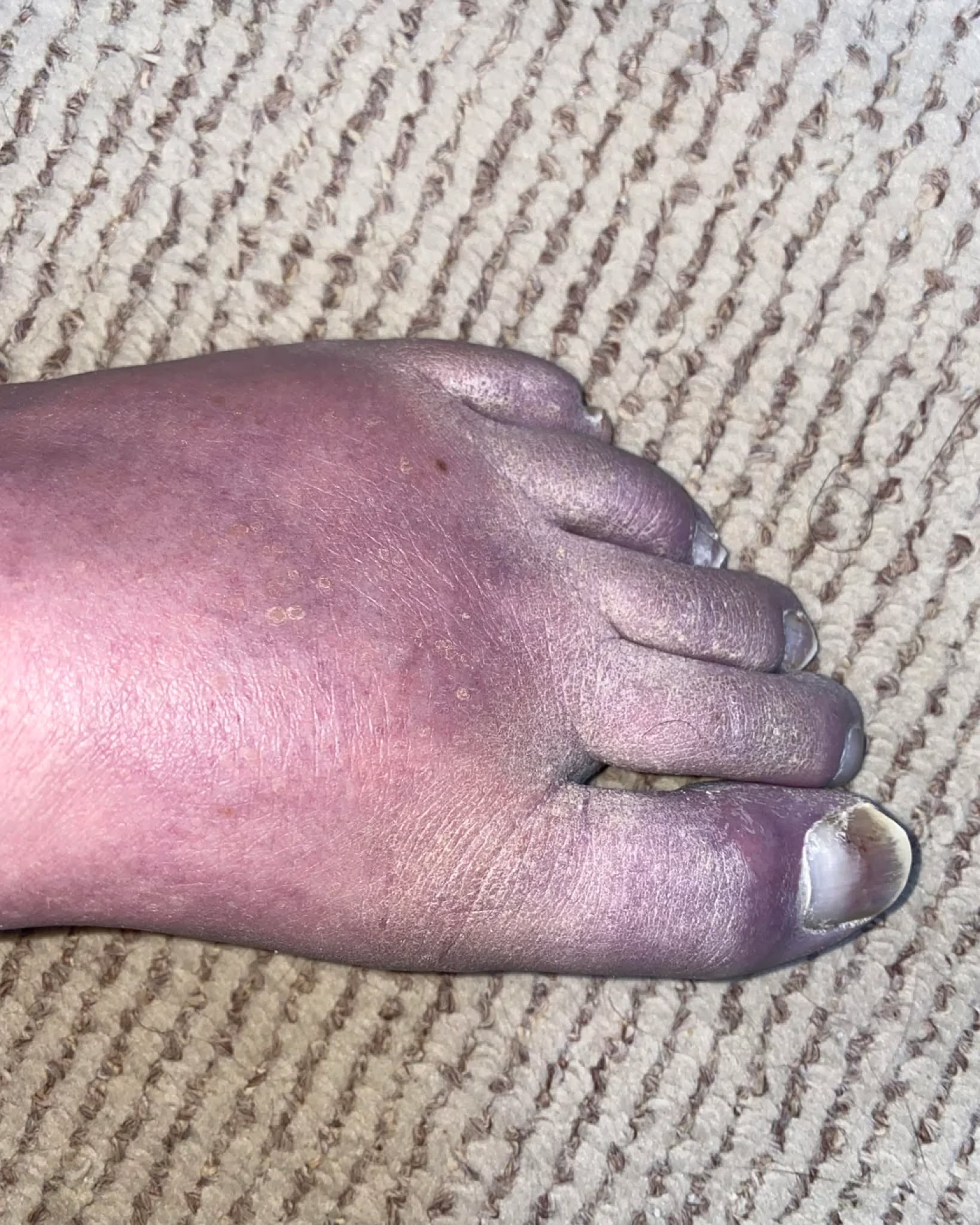
Ran for 27 days, from June 19 to July 16, 2026, the last day Crush saw it.
Run by Michael Anderson, PhD. on Facebook. Crush is not the advertiser and does not verify its claims. See this ad in Meta's Ad Library(opens in a new tab)
Want an ad like this for your product?
Crush makes new ad images for your product from this ad: your logo, your product photo, your offer.
Trials from $19.95 USD, then $79.95 USD a month. Cancel anytime.
About this ad
- Meta Ad Library ID
- 2206088520152408
- Platforms
- Facebook, Instagram, Audience Network, Messenger and Threads
- Relaunches
- 0
Ad text
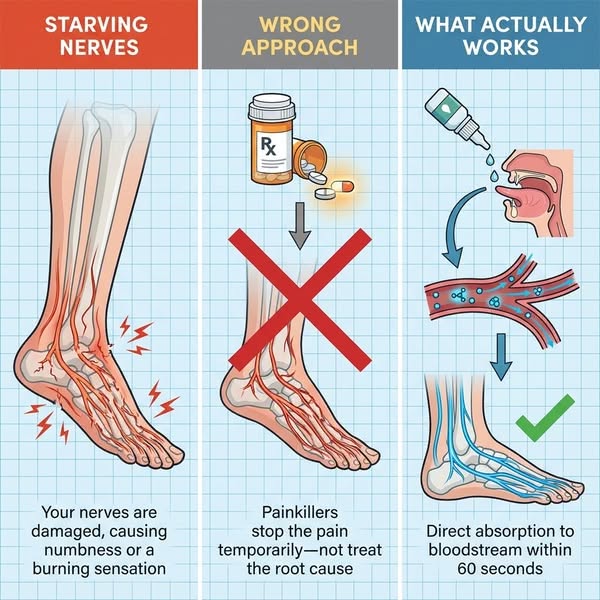
If you're dealing with neuropathy pain in your feet – the burning, the tingling, the feeling of walking on broken glass – I want to walk you through something that most treatment plans are leaving out entirely. Neuropathy pain in the feet is driven by two forces working together. The first is chronic inflammation. When the tissue surrounding your peripheral nerves stays inflamed, it presses on the nerve fibers and keeps them in a constant state of irritation. That's where the burning and stabbing come from. The inflammation doesn't have to be visible or show up on standard blood panels. It can sit at the tissue level, low-grade but unrelenting, grinding against nerve fibers every hour of the day. The second is poor circulation. Your peripheral nerves – especially the ones in your feet, which are the furthest point from your heart – depend on steady blood flow to deliver oxygen and nutrients. When that supply drops, the nerve fiber starts to suffocate. It sends distress signals. Those signals are what you experience as tingling, numbness, and electric zaps. The longer the blood supply stays compromised, the more permanent the damage becomes. These two forces feed each other. Inflammation damages the walls of small blood vessels, which reduces blood flow. Reduced blood flow means less oxygen reaching nerve tissue, which causes more damage. More damage triggers more inflammation. The cycle accelerates on its own. This is why neuropathy gets worse over time even when you're doing everything your doctor told you to do. Most treatment approaches work at the end of this cycle. Gabapentin lowers the signal that the damaged nerve sends to your brain. Lidocaine numbs the area where the pain is felt. Anti-inflammatory diets reduce the overall inflammatory load, and topical creams address what is happening at the surface. Each of those has a place. But all of them are managing what happens after the nerve is already damaged and inflamed. They are working downstream. The question I started asking in my practice was different. I wanted to know what was feeding the inflammation and destroying the circulation upstream – before the pain signal was ever generated. The answer, in neuropathy patient after neuropathy patient, is a functional B12 deficiency. Not the kind that always shows up on a blood test. Serum B12 measures what is circulating in your blood. It does not tell you how much is reaching the nerve tissue in your feet. A reading inside the normal range does not confirm that the nerve is getting what it needs. Here is why B12 sits upstream of both problems. When your B12 is low, a waste product called homocysteine starts to pile up in your blood. Normally your body clears it out – but it needs B12 to do that. Without enough B12, the buildup grows. Too much homocysteine irritates and damages your blood vessels, including the tiny ones that feed your nerves. Damaged vessels get inflamed. Inflamed vessels get narrower. Narrower vessels deliver less blood to the nerve. So low B12 creates the waste. Then the waste attacks the blood supply. One deficiency, two problems – each one making the other worse. B12 also does something else: it helps your nerves build their protective coating, called myelin. Think of myelin like the plastic insulation around an electrical wire. It keeps the signal running cleanly and protects the nerve from everything around it. When that coating breaks down, the nerve fiber becomes exposed. And an exposed nerve is hypersensitive – the way a raw wound stings at the slightest touch. Normal sensations become pain and minor irritation becomes intense. Without enough B12, your nerves can't repair that coating. So the fiber stays raw, inflammation keeps pressing against it, and the pain signal keeps firing – even if nothing is getting worse. Now if you’ve already tried B12 and it didn’t work, here’s why. Nearly every neuropathy patient who comes to my practice has taken a B12 supplement at some point. A drugstore pill, a B-complex, something off Amazon. They took it for a few weeks, felt no difference, and wrote B12 off entirely. Let me tell you this. The form was wrong and the delivery was wrong. The B12 in most supplements is cyanocobalamin – a synthetic version your body has to convert into the active form before it can use it. That conversion is inefficient even in healthy adults. Once you're past 60, or taking Metformin for diabetes, or on an acid reducer like omeprazole or Prilosec, the conversion barely happens at all. Even if the form were correct, the delivery kills it. An oral B12 pill has to survive your stomach acid, bind to a protein called intrinsic factor that your stomach produces in smaller and smaller quantities as you age, pass through an inflamed or damaged gut lining, and then make it into your bloodstream in a concentration high enough to reach peripheral nerve tissue in your feet. At every stage of that journey, the amount drops. By the time it reaches the nerve, the dose is a fraction of what left your mouth. For a neuropathy patient, it is not enough to move the needle at all. That is why your oral B12 did nothing. The B12 never reached the problem. However, there is one delivery method that removes the gut from the equation entirely. When B12 dissolves under the tongue, it absorbs through the mucous membrane directly into the bloodstream. Stomach acid never touches it, intrinsic factor is irrelevant, and a compromised gut won’t matter either. It is important to note that the form matters just as much. In the first form (methylcobalamin), it enters circulation ready to be used. Your nerves can take it up directly and begin using it to rebuild myelin and support methylation immediately. Whenever my patients ask me where to get theirs, I always recommend a brand called Nuvel. Their B-Essence Complex was designed with these problems in mind. Their B12 is sublingual and has methylcobalamin at a concentration that actually reaches peripheral nerve tissue. The delivery bypasses the failure points that made every oral supplement you tried before irrelevant. Here’s what recovery would look like if you were to give your body what it’s missing. The first thing most people notice is the nighttime burning starts to settle. As inflammation eases, the nerves stop firing constantly through the night. People who were getting three or four hours of sleep start getting five or six. That shift alone makes daily life feel different. As myelin starts to rebuild, the nerve becomes less raw. The tingling and electric sensations begin to fade. And not because something is suppressing them, but because the nerve itself is less damaged. Then something important happens. Once the pain drops enough to move, blood flow starts coming back. A short walk, ten minutes on a stationary bike, a lap in the pool – any movement pushes blood out to your hands and feet. And blood flow is what actually feeds the nerve: oxygen, nutrients, everything it needs to keep healing. That's the cycle you want: less inflammation means more movement, more movement means better circulation, better circulation means the nerve gets what it needs to repair, and repair means even less pain. It's the exact opposite of the cycle that made things worse – and it begins the moment you support the deficiency that started it all. If you're stuck in the cycle where it hurts too much to move, and not moving is making things worse – the place to start is the source. For most neuropathy patients, the answer keeps pointing back to B12. Not because it wasn't tested, but because the standard test can look normal even when your cells aren't getting what they need. And not because no one tried supplements, but because the cheap pill form most people try barely absorbs. And while it gets written off, the damage keeps going. Sublingual methylcobalamin changes the delivery. And the delivery is what has been failing this entire time. Here is where to start: trynuvel.com/pages/nerve-repair (They offer a 90-day money back guarantee. If it does not work for you, you pay nothing.)
Where the ad sends people
trynuvel.com
The Real Cause of Neuropathy Pain Most Treatments Ignore
Burning, tingling, and numbness aren’t just symptoms—they’re the result of a hidden cycle damaging your nerves. Here’s what’s actually driving it (and why most treatments miss it).
Learn more: trynuvel.com(opens in a new tab)