
Inactive· since Jan 30, 2026
- 7
- days it ran
- 1
- relaunches
Ad copy
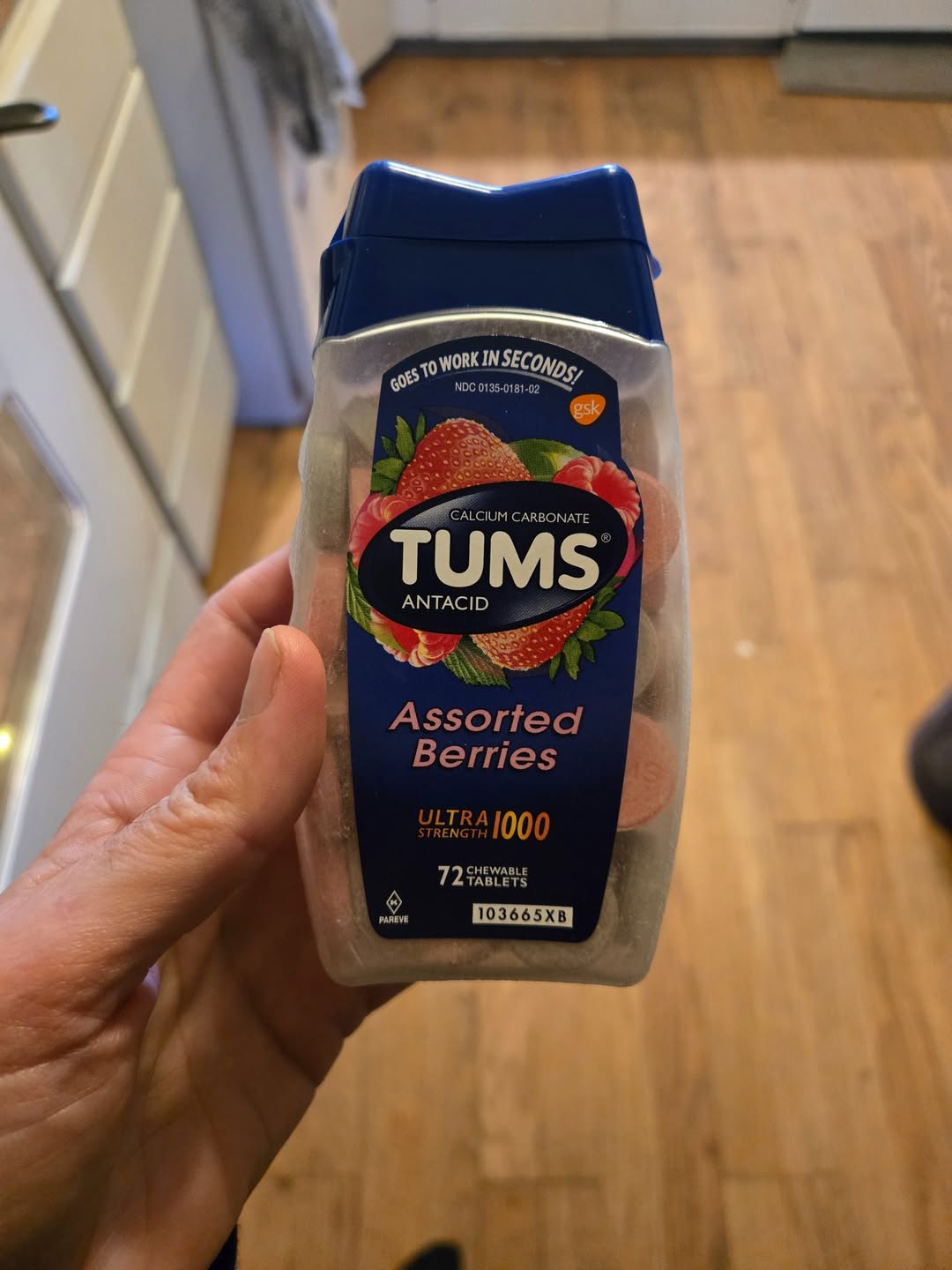
I've been taking antacids before bed for so long I stopped questioning it, until my pharmacist mentioned something about long-term effects and I thought "wait, there has to be something that just... keeps the acid down naturally while I sleep?" I was picking up my usual refill. Three bottles of Tums. The extra-strength kind. The ones that taste like chalky mint. The pharmacist scanned them. Looked at my account history. "You buy these pretty regularly." "Yeah. Every night before bed. Have been for... I don't know, five years?" She nodded slowly. "You know these can interfere with medication absorption, right? And long-term calcium carbonate use can affect your kidneys." I didn't know that. "How many are you taking per night?" "Four. Sometimes six if it's a bad night." "That's a lot of calcium. Every single night for five years. You might want to talk to your doctor about a different approach." I took the bottles home. Googled "long-term antacid use side effects" that night. Kidney stones. Reduced absorption of iron and B12. Rebound acid hypersecretion. Potential cardiovascular effects. I'd been so focused on stopping the burning that I never thought about what I was putting in my body every single night for five years. 2,190 doses. Minimum. Probably closer to 3,000 when you count the bad nights. And the burning still happened. Not every night, but three or four times a week I'd still wake up at 2am with acid in my throat. The antacids weren't solving anything. They were just making the burning slightly less awful when it did happen. I'm 49 years old. I'm a logistics coordinator for a freight company. I spend my days solving routing problems. Finding efficient solutions to complex challenges. And somehow I'd spent five years treating acid reflux with the medical equivalent of bailing water out of a boat instead of fixing the hole. The reflux started when I was 44. Not gradually. Suddenly one week it was just there. I'd go to bed around 10:30. Fall asleep fine. Wake up around 1am or 2am with this burning sensation rising up from my chest into my throat. Hot. Acidic. Sometimes I'd actually taste the acid in my mouth. I'd get up. Drink water. Take a couple Tums. Wait twenty minutes for them to work. Go back to bed. Happened two or three times a week at first. Then four times. Then almost nightly. I started taking the antacids preemptively. Four tablets right before bed. Every night. It helped. Kind of. I still woke up with reflux, but maybe the severity was reduced. Maybe it happened less often. Hard to tell. I never went to a doctor about it. It seemed manageable. Just take the antacids. Deal with it. My wife noticed the bottles multiplying on my nightstand. "That's a lot of Tums." "I know. But they work." "Do they? You still wake up half the time." She was right. But what else was I supposed to do? I tried the standard advice. Cut out trigger foods. No coffee, no alcohol, no chocolate, no tomatoes. Stopped eating after 7pm. Lost some weight. The reflux didn't improve. Bought a wedge pillow from Target. $35. Firm foam triangle. Used it for two nights. It was uncomfortable. Hard. My neck hurt. And I kept sliding down by morning, ending up flat anyway. Gave up on that. Went back to the antacids. Then the pharmacist said that thing about my kidneys. I started actually researching. Not just "how to stop heartburn" blog posts. Medical studies. Research papers. Found a study from a gastroenterology department in Australia. They tracked 190 people with nighttime reflux for eighteen months. Group one: antacids as needed, standard sleeping position. Group two: H2 blockers daily, standard sleeping position. Group three: no medication, upper body elevated 30 degrees during sleep. They measured nocturnal acid exposure. Tracked symptom frequency. Documented medication use. After twelve months, group three had 84% reduction in nighttime reflux events. And 73% of them had stopped using any reflux medication entirely. Group one had 28% reduction. Still using antacids regularly. Group two had 41% reduction. Still medication-dependent. The study stated it plainly: "Positional therapy addresses the mechanical cause of nocturnal reflux. Medication addresses only the chemical composition of reflux content. Mechanical prevention is superior to chemical modification." I read that three times. Mechanical versus chemical. The acid in my stomach isn't the problem. My stomach is supposed to have acid. I need acid to digest food. The problem is the acid going where it shouldn't go. Backward. Up into my esophagus. Into my throat. Antacids reduce the acid. But they don't stop it from flowing backward when I'm lying flat. I'm still refluxing. It's just slightly less acidic reflux. Still irritating. Still damaging. Still waking me up. Gravity doesn't care how many Tums I've taken. When I'm horizontal, fluid flows upward. Physics doesn't negotiate. But if I'm at an angle? If my head and torso are elevated above my stomach? Gravity keeps the acid down. Naturally. Without chemicals. The study showed people sleeping elevated needed less medication because they were having fewer reflux events. Not smaller events. Fewer actual episodes of acid escaping the stomach. Prevention instead of mitigation. I'd been mitigating for five years. Taking chalky tablets that made my mouth taste weird. Worrying about kidney stones. Still waking up with burning three times a week. I looked for proper elevation solutions. Adjustable bed frames. $2,000 minimum. Electronic. Complicated. And my wife doesn't have reflux. She'd be sleeping elevated for no reason. Stacking regular pillows. I'd tried that. They shift and flatten. You slide down. Wake up horizontal anyway. Wedge pillows on Amazon. Hundreds of options. I read through the reviews. Same complaints over and over: "Too firm, can't sleep on it." "Slides around." "Lost its shape in three weeks." Cheap foam wedges. $30 to $50. No engineering. Just foam cut into a triangle. At 11:20pm on a Wednesday, I found Healpurea. Company founded by a physical therapist whose husband developed severe reflux after gaining weight during a stressful work period. He was taking four different medications. Still having breakthrough symptoms. She knew from her medical training that elevation would help. But she couldn't find a product that actually worked for sleep. The cheap wedges were too hard. Her husband couldn't sleep on them for more than an hour. He'd give up and go back to flat sleeping and medications. So she designed one herself. Worked with an engineer who specialized in medical support surfaces. High-density memory foam. Hospital-grade material. The kind used in pressure relief systems. Maintains its structure under body weight. Not just a triangle. Contoured to support the natural curves of the spine. Has a neck support area so your head doesn't tilt at a weird angle. The cover has a textured surface. Honeycomb pattern. Creates friction. Prevents sliding. 30-degree angle. The specific angle research identified as optimal. Steep enough to prevent reflux. Not so steep that it causes discomfort. It cost $109. I'd spent maybe $600 on antacids over five years. Plus probably another $200 on various pillows and wedges that didn't work. $109 seemed reasonable. But I was skeptical. I'd tried a wedge before. It didn't work. I read the reviews. People describing the same symptoms I had. Nighttime burning. Multiple wake-ups. Years of antacids. And they were saying it worked. Not some of them. Most of them. I ordered it. Arrived six days later. Heavy box. I opened it and the wedge expanded. The foam was dense. Firm but not hard. It had weight to it. I set it up that night. Put my regular pillow on top of the neck support area. Laid down. The angle felt steep. Higher than I expected. Like being in a recliner. But my chest felt open. I could breathe easily. No pressure. I took my usual four Tums out of habit. Then stopped. Put them back. If this was going to work, I wanted to know if it actually worked. Not just helped a little. Fell asleep around 10:45. Woke up at 6:00 when my alarm went off. No burning. No acid taste. No middle-of-the-night wake-up. I'd slept straight through for the first time in I couldn't remember how long. I thought maybe I just got lucky. Maybe my stomach wasn't producing much acid that night. Night two: No Tums. No reflux. Slept through the night. Night three: Same thing. Week two, I realized I hadn't taken a single antacid in fourteen days. The bottles were still sitting on my nightstand. Untouched. Week three, I ate pizza. With pepperoni and jalapeños. Foods I'd been avoiding for years because they guaranteed reflux. Went to bed nervous. Certain I'd wake up with burning. Slept straight through. No symptoms. Month two, I had a physical. My doctor asked the standard questions about medications and supplements. "I used to take antacids every night. Stopped completely." "Reflux resolved?" "Yeah. Changed my sleeping position. Elevated." He nodded. "That makes sense. Gravity-assisted positioning. We should recommend that more." Month three, something happened that I didn't expect. My wife and I went to a Mexican restaurant. I ordered enchiladas. With red sauce. And had a margarita. Foods that would have destroyed me six months ago. Would've guaranteed I'd be up at 2am with acid in my throat. Went to bed at 11:00. Slept until 6:30. No issues. The elevation doesn't make me immune to reflux. But it makes my stomach work the way it's supposed to. The acid stays where it belongs. I can eat normal food now. I can have coffee in the morning. I can go out to dinner without mentally calculating which menu items won't trigger burning. The company that makes this? They could easily charge $250. It's medical-grade materials. Proper biomechanical engineering. It solves a problem affecting millions of people. They charge $109 because the founder isn't trying to maximize profit. Her husband suffered with reflux for two years. She knows what it's like. She's trying to help people, not extract maximum revenue. Last week I was at a family dinner. My uncle mentioned his reflux. He's 68. Has been taking Prilosec for fifteen years. I told him about the elevation solution. The gravity principle. "Nobody ever told me that," he said. "My doctor just gave me prescriptions." I don't know why more doctors don't recommend this first. Maybe because there's no prescription to write. No follow-up appointments needed. Here's what I understand now: Your body produces stomach acid because it needs to digest food. That's normal. That's necessary. The problem isn't the acid. The problem is lying flat allows the acid to flow backward. Up your esophagus. Into your throat. Antacids reduce the acidity. But they don't stop the backward flow. You're still refluxing. Just less-acidic content. Still causing irritation. And you're consuming calcium carbonate every night for years. Affecting your kidneys. Interfering with nutrient absorption. Elevate your torso at 30 degrees and gravity prevents the backward flow. The acid stays in your stomach. Your esophagus isn't exposed. No irritation. No burning. No medication needed. Your nighttime reflux isn't something you have to manage with antacids forever. It's not a chemical problem. It's a positioning problem. Fix the position and the reflux fixes itself. I'll leave a link below to the brand I use. You can also search for Healpurea 2.0 Sleep Pillow. I don't get anything from sharing this. I'm not affiliated. I'm sharing because I spent five years taking antacids every single night and still waking up with burning, and nobody told me the solution was this simple. The only question is whether you're going to keep taking pills every night while worrying about kidney stones, or whether you're going to let gravity do what chemistry can't. I'm 49 years old and I haven't taken an antacid in four months. Not because I'm managing my symptoms better. Because I stopped fighting gravity.
Like this ad? Make it yours.
Crush rebuilds this exact creative around your product — your brand, your colors, your offer — in about a minute.