Michael Anderson, PhD.
Michael Anderson, PhD. Facebook ad: “I've been an MS neurologist for 19 years and I never asked…”

Ran for 18 days, from August 3 to August 21, 2026, the last day Crush saw it.
Run by Michael Anderson, PhD. on Facebook. Crush is not the advertiser and does not verify its claims. See this ad in Meta's Ad Library(opens in a new tab)
Want an ad like this for your product?
Crush makes new ad images for your product from this ad: your logo, your product photo, your offer.
Trials from $19.95 USD, then $79.95 USD a month. Cancel anytime.
About this ad
- Meta Ad Library ID
- 2784352431947582
- Platforms
- Facebook, Instagram, Audience Network, Messenger and Threads
- Relaunches
- 0
Ad text
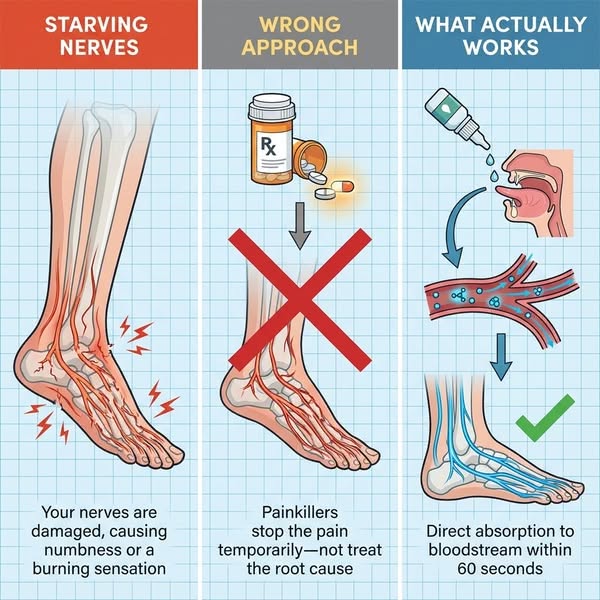
I've been an MS neurologist for 19 years. And I need to tell you what the symptom medications are not doing. I've seen hundreds of MS patients cycle through gabapentin, Cymbalta, Lyrica, Ocrevus, Kesimpta, Tecfidera. I've watched people come in every three months, adjust their dose, go home, come back worse. I've seen what happens after five years on that cycle. And I was the one adjusting the doses. My name is Dr. Michael Anderson. I'm a neurologist specializing in MS care. Nineteen years in practice. I still see patients every week. I'm not against medication — I prescribe it, I understand why it exists, and sometimes it's the right call. But I've spent nineteen years managing symptoms while the thing causing those symptoms kept getting worse underneath. And I never asked the question that would have changed everything for most of the patients I was seeing. Let me tell you about three patients who stayed in my head. Carol. 52. Seven years post-diagnosis. She'd been on gabapentin for three of them — started at 300mg, ended up at 2100mg a day by the time I really understood her case. She described her feet as standing in hot coals around the clock. She'd wake up at 3am and stand on her bathroom tiles in the dark just to bring the burning down enough to go back to sleep. By morning her hands would be tingling so badly she couldn't hold her coffee cup steady. She told me once: "I don't need it to stop completely. I just want one morning where I wake up and the first thing I think about isn't my feet." We adjusted her dose four times over three years. Each adjustment bought her a few weeks of slightly less noise. Then it came back louder. James. 47. Four years in. He'd been added to Cymbalta on top of his gabapentin because the neuropathic pain wasn't responding anymore and his neurologist thought an SNRI might help with what was also looking like depression. His words when I asked how he was doing: "My brain turns to mush by noon and I can't tell if it's the MS or what I'm taking for the MS." He had electric shock zaps to his chin and temples — random, no warning — that he'd stopped mentioning at appointments because nobody had anything new to say about them. He had what he described as a vibrating feeling all through his body at night, especially when he was trying to sleep. Like a frequency he couldn't turn off. He'd put his hand on his wife's arm in the dark to check if she could feel it. She couldn't. Just him. His MRI was stable. His neurologist said he was doing well. Patricia. 61. Eleven years since diagnosis. The burning that had started in her feet had spread up her legs and into her hands over that decade. She was on three symptom medications. She'd seen a pain management specialist who added a fourth. She told me she'd stopped going to her granddaughter's school events because she never knew how she'd feel and didn't want to have to leave early again. She said: "I've accepted that this is just what my life is now. I just want to be able to plan something without canceling it." I was managing all three of their symptoms. I was not helping any of them. Here is what none of their symptom medications were doing. What they cannot do, by design. Gabapentin suppresses nerve pain signals. It does not repair the nerves generating those signals. The myelin damage that causes the burning — the stripped protective coating around the nerve that makes it misfire, shoot signals in wrong directions, generate burning and tingling and zaps from nothing — gabapentin quiets the alarm. It does not address what's setting it off. Cymbalta and other SNRIs dull the central processing of pain signals. Same principle. The nerve damage is still there. The misfiring continues. The brain receives a muted version of it. Disease-modifying therapies — the Ocrevus, the Kesimpta, the Tecfidera — slow the immune attack on myelin. They are important. But they do not repair the myelin already damaged. They reduce the rate of new damage. They do not address the accumulation of old damage. Between every attack, your nervous system is trying to repair itself. The process exists. The machinery is there. But it requires specific fuel to run. And that fuel wasn't getting there. For any of them. Here's what I eventually understood — and what I should have understood years earlier. Nerve cells are the most energy-hungry cells in your body. They fire electrical signals thousands of times per minute, constantly, just to maintain basic sensation. To do that, and to rebuild the myelin sheath between attacks, they need a massive, constant supply of cellular energy. That energy is produced inside the nerve cell in structures called mitochondria. Mitochondria need two specific raw materials to run the energy cycle that powers myelin repair. Not vitamins in the general sense. Two specific compounds that nerve cells use directly. You may know them as B12 and B9. But not the forms on the pharmacy shelf. The active forms — methylcobalamin and methylfolate. When both reach the mitochondria, energy production runs at full capacity. That energy goes toward one job: building and maintaining the myelin sheath — the protective coating that, when intact, keeps nerve signals traveling clean and fast. When it thins, the nerve misfires. When it misfires, you feel the burning, the tingling, the zaps, the vibration that nobody else can feel. In MS patients, under chronic immune attack, with gut function compromised by years of medication and inflammation — methylcobalamin and methylfolate deplete fast. The repair process stalls. The myelin that was supposed to rebuild between attacks stays stripped. The burning gets louder. The tingling spreads. The MRI looks stable and nothing the patient can actually feel is stable. The disease-modifying therapy slowed the damage coming in. Nothing was fueling the repair going out. James came back to see me about eight months ago. He walked in without the symptom list he usually brought. He sat down and put a folded piece of paper on my desk. I opened it. One word. Methylcobalamin. And below it: Sublingual. "My burning is at about a three," he said. "I slept six nights in a row last month. I'm off the Cymbalta. My neurologist doesn't know what changed." I looked at the paper. I knew what methylcobalamin was. I'd known for nineteen years. He said someone in an online MS group had explained that their B12 tested normal for years while their nerve symptoms kept worsening. Someone else explained that total B12 and usable methylcobalamin are not the same number. He'd tried capsules first and felt nothing. Then someone explained why — and it was the part I hadn't thought through carefully enough. I went back through everything I knew that night. Here's what I'd been missing. B12 in any form you swallow requires a protein called intrinsic factor to be absorbed. Intrinsic factor is produced in the stomach lining. Its only job is to bind to B12 and escort it through the gut wall into the bloodstream. Without it, B12 can't cross. It passes through. Intrinsic factor production declines with age. It declines faster with long-term medication use, with the gut inflammation that comes with autoimmune conditions. Most of my MS patients — especially those who've been on treatment for years — are producing a fraction of what they need. So they swallowed B12 every morning. Some made it through — enough to show up normal on bloodwork. But the amount reaching the nerve cells at the ends of their fingers and toes? Close to nothing. This is why doctors treated B12 deficiency with injections for over a hundred years. Not because they preferred needles. Because they discovered that the oral route — relying on intrinsic factor — failed too many patients. The only fix was to bypass the gut entirely. Sublingual delivery does the same thing without the needle. Lift your tongue and look in a mirror. You'll see two blue veins running along the underside. Those blood vessels sit almost at the surface, separated from the outside by a membrane thinner than a piece of paper. When methylcobalamin and methylfolate dissolve there, they cross that membrane and enter the bloodstream in minutes. No stomach. No intrinsic factor. No gut wall. The active forms — straight into the blood, straight to the nerve cells that have been waiting for them. That's not a supplement claim. It's why nitroglycerin has worked under the tongue for heart patients for over a hundred years. When something needs to reach the blood intact, that membrane is the door. Before I tell you what happened with Carol and Patricia, I want to tell you the one thing that kept my patients going when the first two weeks felt like nothing. Peripheral nerves regenerate at approximately one millimeter per day. That's the measured biological rate of nerve repair under the right conditions. One millimeter. Per day. At that rate, damage extending several centimeters takes months to fully address — not days. The patients who understood this stayed the course. The ones who expected something dramatic in week two stopped too early. What you'll feel first isn't the burning stopping. It's the burning shifting. Moving from the front of your awareness to somewhere behind it. That shift is the myelin beginning to rebuild. I almost missed it in my first patients because I was watching for something bigger. I contacted Carol after James came in. I explained what I've explained here. I told her about methylcobalamin and methylfolate together — why both active forms matter, why the capsule form she'd tried before hadn't worked, why sublingual bypasses the problem entirely. She called me six weeks later. She said the burning was still there but had moved — her words — "from the front of everything to somewhere behind it." She'd slept through the night four times that week. She'd reduced her gabapentin by a third with her prescribing doctor's agreement because the burning that had required the higher dose had quieted enough to need less. She said: "I had a morning last week where I woke up and the first thing I thought about was whether I wanted coffee or tea. Not my feet. Coffee or tea." That's what she'd asked me for three years ago. One morning. Patricia drove to her granddaughter's spring recital last month. She texted me a photo from the auditorium. Third row. She'd made it for the whole thing. If you have MS and you've been on gabapentin or Lyrica or Cymbalta for the burning and the tingling and the pain, and the doses keep getting adjusted and the symptoms keep coming back louder — the medication is doing what it was designed to do. It is suppressing the signal. It is not repairing the source. Your nervous system is trying to rebuild myelin between every attack. It cannot do that without methylcobalamin and methylfolate — both active forms, both reaching the nerve cell directly. The disease-modifying therapy slowing the attacks is not providing the repair fuel. Nothing in the standard MS protocol is providing the repair fuel. The burning getting worse despite a stable MRI is not the disease progressing unchecked. It can be the repair process falling further behind because the fuel it runs on isn't getting there. That is the window. While the repair process can still run if it has what it needs. While one millimeter per day is still possible. The gabapentin will keep the alarm quieter while you read this. It will not close the gap. The product I now recommend is Nuvel. Sublingual methylcobalamin and methylfolate — both active forms, dissolves under the tongue, absorbs directly into the bloodstream, no stomach required. Edit: several patients have asked for the specific link — https://trynuvel.com/products/b-essence-complex Morning. Empty stomach. Thirty full seconds under the tongue before swallowing. No coffee for an hour after. Give it six weeks. The first signal is not elimination — it's a shift. The burning moves from the foreground to the background. Watch for that shift. It means the repair process has started, at one millimeter per day, finally with what it needs to run. I managed Carol's pain for three years. I adjusted her dose. I sent her home. I never asked the question that would have changed everything. I'm asking it now. For you.
Where the ad sends people
trynuvel.com
I've been an MS neurologist for 19 years and I never asked the question that would have changed everything.
Carol just wanted one morning where the first thing she thought about wasn't her feet. I adjusted her dose four times. That wasn't the answer.
Learn more: trynuvel.com(opens in a new tab)