
Active· since Jun 15, 2026
- 92
- days running
- 4
- relaunches
- 13
- EU reach
Ad copy
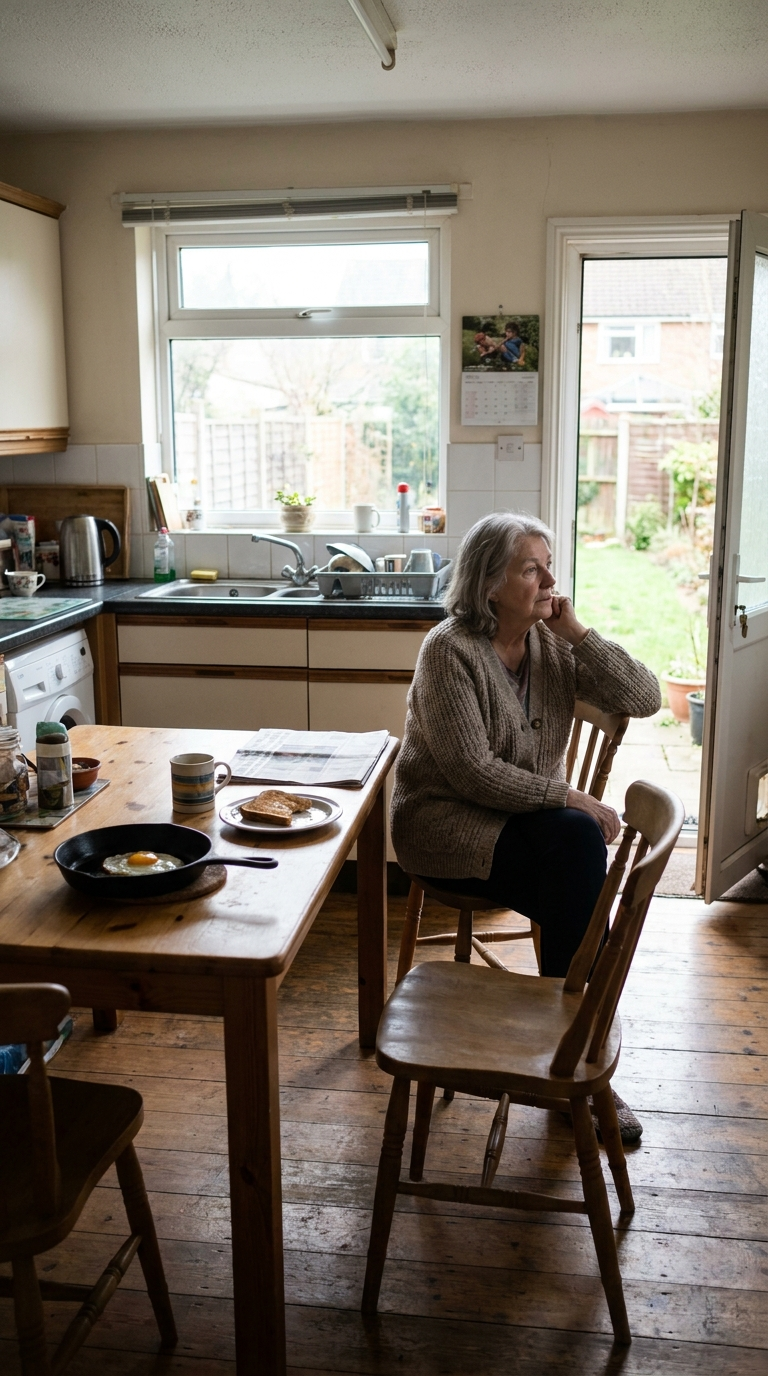
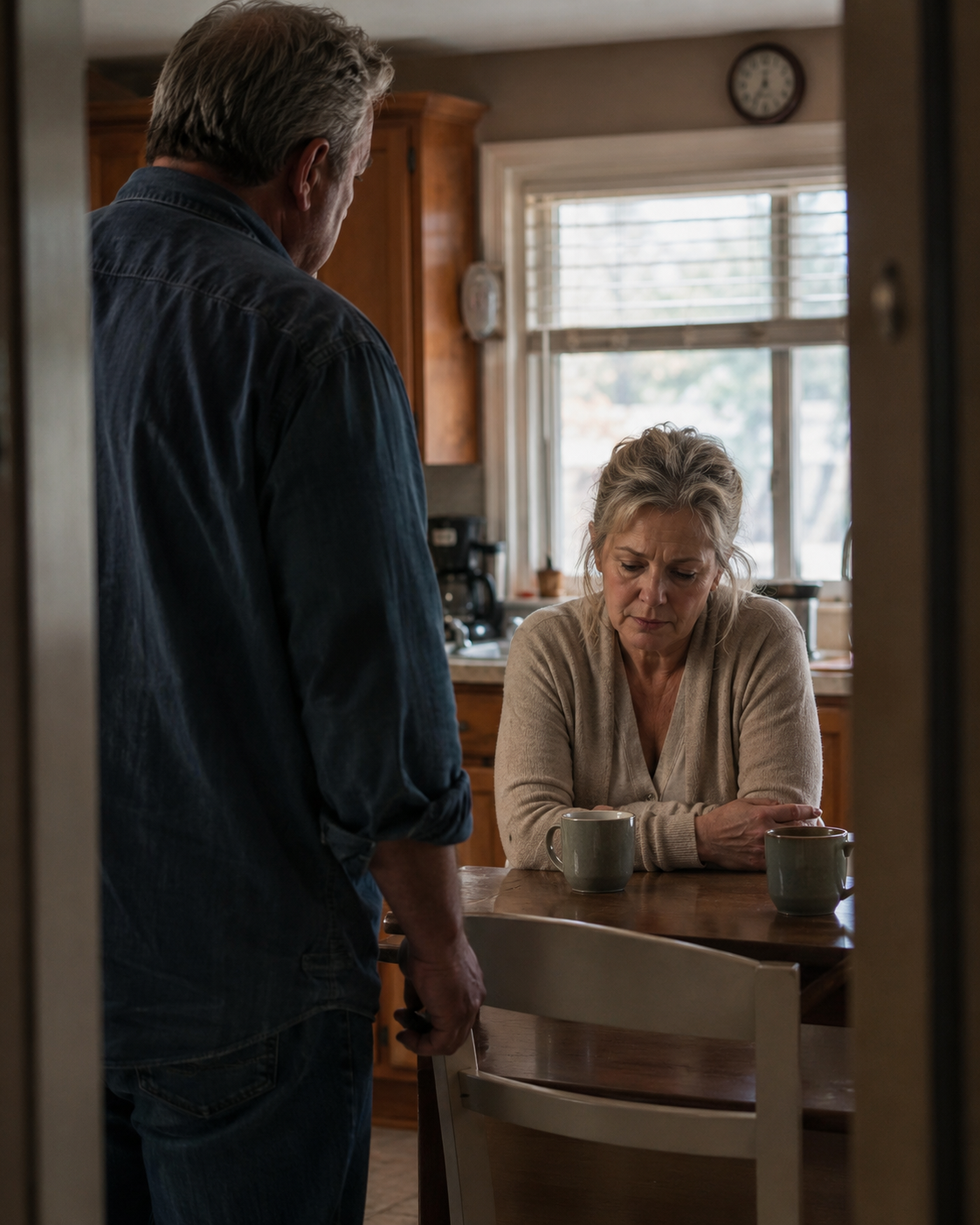
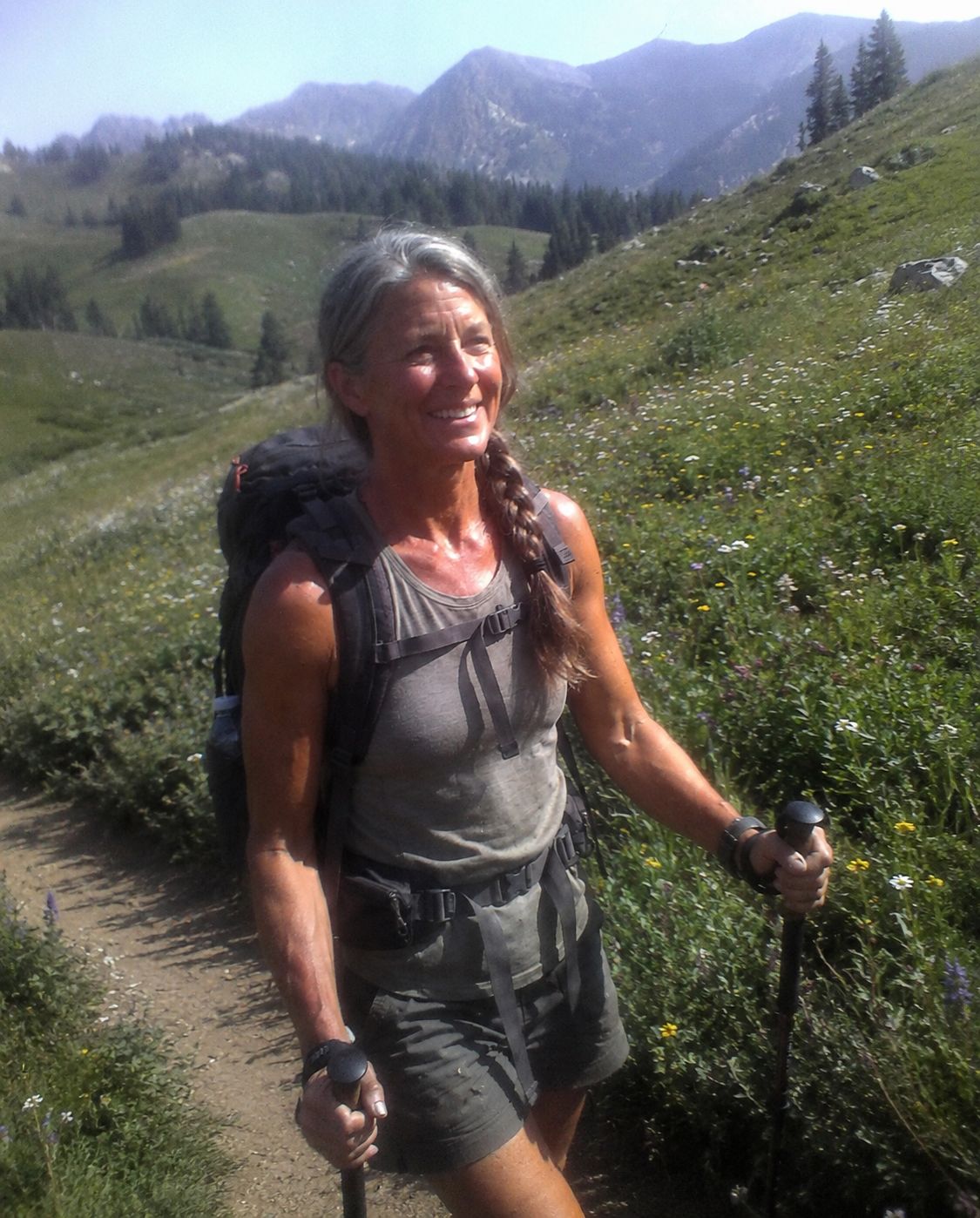
My Mother Stopped Wearing Her Earrings. That's How I Knew Something Had Changed. This is about my mother, Judith. She's 68. She lives in the same townhouse in the Philadelphia suburbs she's lived in for fourteen years, about forty minutes from where I live with my husband and our daughter. My father passed away six years ago. My mother has been on her own since then. She's done well. She joined a women's investment club at her library. She started volunteering at the food bank on Wednesday afternoons. She kept the bridge group going. She took a trip to Italy with my Aunt Carolyn for her 65th birthday — the trip my father had always promised her and never gotten around to. For most of the last six years, she's been the version of my mother I've always known. Sharp. Particular. Put together. The kind of woman who matches her purse to her shoes even when she's just driving to Wegmans. The kind of woman who never leaves the house without earrings. My name is Diane. I'm 41. I work part-time as an editor for a small academic press. I have a 9-year-old daughter and a husband who teaches at a community college. I'm an only child. My mother and I are close — closer since my dad died — and I see her almost every Sunday for lunch. I bring my daughter. My mother makes a roast or a casserole. We sit at the dining room table she's had since I was in elementary school. It's been our rhythm for six years. It's also how I noticed. I want to back up about a year, because that's when this started. It was so gradual. The first thing I noticed — and I didn't really notice it at the time, I only noticed it looking back — was that she stopped going to her women's investment club. She'd been a founding member of that club. She loved it. She'd come home from the monthly meetings with a notebook full of ideas and a slight buzz in her voice from arguing about index funds with women she respected. In April of last year, she told me she'd stopped going. She said: "I just felt like I'd gotten what I needed out of it." I believed her. A few months later, in June or July, she stopped volunteering at the food bank. She said the standing was bothering her hip. I believed her. By the fall, she'd cut the bridge group from twice a month to once a month. She said the women had been getting cliquey about the same hands every time. I believed her. By Christmas, she was making excuses about the bridge group entirely. I started bringing it up gently. She said she'd think about going back in the spring. She didn't go back in the spring. The thing that finally caught my attention happened in March. She'd had us over for Sunday lunch. My mother had made a roast — pot roast with carrots and potatoes, the way her own mother had made it. It was good. It was always good. But I was helping her clear the dishes after lunch and she turned to put a stack of plates in the sink and I looked at her — really looked at her — for the first time in a while. Her earlobes were bare. I'd had Sunday lunch with my mother probably 250 times since my father died. I'd never once seen her without earrings. She wore pearl studs to church. She wore small gold hoops for grocery store errands. She wore a pair of little turquoise drops my father had bought her on a trip to Santa Fe when she wanted to feel pretty. I'd never seen her earlobes. I stood there with a serving bowl in my hand and I felt something inside me shift. I said: "Mom. You're not wearing earrings." She put her hand up to her ear. Touched her lobe. Looked at me. She said: "Oh. I guess I forgot." She said it the way you'd say "oh, I forgot to defrost the chicken" — surprised, a little embarrassed, not alarmed. She went and got the earrings out of the dish on her nightstand and put them on right there in the kitchen. She kept doing the dishes. I kept clearing the table. We didn't talk about it again that day. But on the drive home, I told my husband: "Mom forgot her earrings today." He looked over at me from the driver's seat. He said: "That's a thing?" I said: "For my mother, that's a thing." I started paying attention after that. Over the next few weeks, I saw it everywhere. The pile of unopened mail on her hall table was bigger than I'd ever seen it. Three magazines on her coffee table had subscription renewal stickers on the cover — magazines she usually canceled or renewed the day the notice came. Her checkbook register, which she'd kept by hand in her precise small handwriting for fifty years, hadn't been updated in two months. There were receipts paper-clipped to the back cover that she hadn't entered. She mentioned at one Sunday lunch that she hadn't been sleeping well. She'd wake up at 3 in the morning and her heart would be doing something — not racing exactly, just doing something — and she couldn't get back to sleep. She'd been tired in the afternoons. She'd been cold. She'd been turning the heat up to 75 in April. She'd been wearing a cardigan inside. She'd been canceling things. She'd been forgetting things. I called my Aunt Carolyn — her younger sister — and asked her if she'd noticed anything. Aunt Carolyn was quiet for a long time on the phone. Then she said: "Diane, I'm glad you called. I've been worried about her. I didn't want to say anything to you because I didn't want to alarm you. But she's been different the last six months and I haven't known what to do about it." I said: "Has Mom been to the doctor?" Aunt Carolyn said: "Not since her annual physical last September. And at that one, she didn't mention any of this." I made an appointment with her doctor for two weeks later. Her doctor is Dr. Ahuja. She's been my mother's doctor for about nine years. I called and asked if I could come into the appointment with my mother. The receptionist said of course. I told my mother on the phone that I'd made the appointment and that I wanted to come with her. She didn't argue. She said: "Diane, honey. Thank you." I knew right then that part of her had been waiting for someone to take her by the elbow. I picked her up on a Thursday morning. She was wearing earrings. She was wearing lipstick. She'd dressed up the way you dress up when you're going to see your doctor because you know your daughter is going to be in the room and you want to look like yourself. I parked at the medical office building. I walked her in. We sat in the exam room together. Dr. Ahuja came in. She's a careful woman. She listens. She asked my mother how she'd been. My mother said: "I've been okay." I waited. Then I said: "Dr. Ahuja, can I share some things I've been noticing about my mom?" Dr. Ahuja said: "Please do." I told her. The investment club. The food bank. The bridge group. The bare earlobes. The unopened mail. The checkbook. The 3 AM heart thing. The cold. The heat at 75. The cardigan in April. The forgetting. I told her in order. I'd written it down on the way over. When I was done, Dr. Ahuja turned to my mother and said: "Judith. Is what your daughter just said an accurate description of how things have been?" My mother looked at her hands in her lap for a second. Then she said: "Yes." Dr. Ahuja nodded. She said: "Thank you for letting her tell me. A lot of women your age don't want to admit when something's been shifting. They think they're supposed to handle it on their own. I'm glad you have Diane." Dr. Ahuja spent close to an hour with us. She ran a comprehensive workup. Full lipid panel. Thyroid. Vitamin D. B12. Iron. Blood sugar. A full cardiac check including an EKG right there in the office. A cognitive screening. She asked my mother dozens of questions about how she'd been sleeping, what she'd been eating, what she'd been doing with her days, what had changed in the last year. When she was done, she said: "Judith, I want to wait for the bloodwork before I say anything definitive. But I want to tell you what I'm thinking." She said the post-menopausal years are a stretch when the body's cardiovascular system, its energy systems, and its cellular-level recovery systems all start to behave differently than they did before. She said for women in their late sixties — fifteen, twenty years past menopause — the cumulative shift can sometimes show up as a quieter, slower, colder, more tired version of themselves. She said: "It's not a disease. It's a chapter the body moves through. For some women it's barely noticeable. For others it's a stretch of years where they feel less like themselves than they used to. The bloodwork is going to tell us if there's anything specific we need to address. If it doesn't, we'll focus on the foundation." She turned to me. She said: "Diane, the most important thing you can do for your mother right now is exactly what you're doing. Bring her in. Be in the room. Help her get back to the things she used to love. The investment club. The food bank. The bridge group. Those things weren't accessories. They were what was keeping her in herself." I felt my eyes get wet. She said it like she'd seen it a hundred times. The bloodwork came back a week later. Mostly fine. Vitamin D was on the low end of normal. Iron was a little low. Cholesterol was where Dr. Ahuja wanted it. Blood pressure good. EKG clean. Thyroid fine. Dr. Ahuja called my mother and went through it all with her. Then she said: "Judith. There's nothing on these labs that explains everything you've been feeling. That's actually good news. It means we're not chasing a disease. It means we're looking at the foundation." She talked about four things. Movement — start walking again, even just to the end of the block and back. Sleep — protect it, and let me know if the 3 AM heart thing keeps happening. Social connection — get back to the investment club, the food bank, the bridge group, in whatever order felt right. A thoughtful approach to what she was putting in her body — more vegetables, more antioxidant-rich foods, plenty of water. She said: "If you and Diane want to add one thoughtful supplemental thing to support what we're talking about, I won't argue with it. Just call the office first if you have something specific in mind. We'll check for interactions with your blood pressure medication. And don't expect a switch to flip. Expect a foundation to slowly start to hold you a little better." My mother takes one medication. A low-dose blood pressure pill she's been on for about eleven years. That's it. By every measurable thing, she's a healthy 68-year-old woman. She was just, for a year, slowly going quieter. I drove home from that follow-up call thinking about what Dr. Ahuja had said about the things keeping my mother in herself. I made a list. I called the investment club secretary — a woman named Phyllis I'd met at one of their holiday parties. I told her my mother had been going through a stretch but was wanting to come back. Phyllis cried on the phone. She said she'd been hoping someone would call. She said she'd save my mother a seat at the next meeting. I called the food bank coordinator. Same conversation. I called my mother's bridge group friend Eleanor. Same conversation. Each of these women had been waiting, in their own way, for my mother to come back. Each of them had been afraid to call her in case the thing she was going through was bigger than they could ask about. I started driving over two evenings a week, not just Sunday lunches. We'd take a short walk around her townhouse loop after dinner. Just to the corner and back, the first few weeks. Then a little further. I asked Aunt Carolyn to come for Saturday lunches. I bought my mother a daily pill organizer for the multivitamin and the vitamin D and the iron supplement Dr. Ahuja had her start on. Small things. Slowly. About a month into all of that, I was at a school fundraising auction at my daughter's school. I was sitting at a round table with a few other parents I didn't know well. I ended up talking to a woman a few years older than me — her son was in the grade ahead of my daughter's. We were talking about our mothers, the way women in their forties end up talking about their mothers at school auctions over warm white wine. She mentioned that her own mother — 71, living in New Jersey — had been going through a quiet stretch for a couple of years and had been finding her way back. I asked her what had helped. She listed the things. A daughter who started showing up more. Walks after dinner. Reconnecting with the church group her mother had drifted away from. One supplemental thing her mother's doctor had approved — a beetroot product from a small farming community in Lancaster County. She said her mother had been taking it for almost a year and felt like it was part of what had helped. She said it wasn't a miracle. She said her mother still had bad days. But the stretch she was in now was different from the stretch she'd been in for the few years before. She wrote the brand name on the back of an auction bid card for me. Rosabella. I put it in my wallet. That night I went home and did some reading. What I learned was that beetroot has been studied for decades for cardiovascular wellness and for supporting the body's antioxidant systems. The active compound is something called betalains — that deep crimson red pigment that stains your cutting board when you slice a beet. Betalains are one of the more potent antioxidants in the food supply. They support the body's natural antioxidant balance. They support healthy circulation. They're part of the family of plant compounds researchers have been studying for their role in supporting cardiovascular wellness in women in the years after menopause, when the body's natural cardiovascular support systems shift. Beetroot is a structure-function ingredient, not a medication. It supports healthy cholesterol levels already within the normal range. It supports healthy circulation. It doesn't replace anything else a person is doing — it works alongside it. That last part is what made me comfortable thinking about it for my mother. I wasn't going to ask her to come off her blood pressure pill. I wasn't going to second-guess Dr. Ahuja. I was thinking about adding one capsule to her morning — the way Dr. Ahuja had said I could, if I called first. Before I ordered anything, I called Dr. Ahuja's office. I spoke to her nurse. I told her exactly what I was thinking. Told her the brand. Told her my mother's blood pressure medication and the dose. Told her my mother had also just started the multivitamin, the vitamin D, and the iron supplement. She talked to Dr. Ahuja and called me back the next day. She said it was a sensible thing to add. No interactions with my mother's blood pressure medication or with any of the supplements she'd just started. Have my mother mention it at her next appointment so it gets in the chart. I ordered the bottle. I drove it over to my mother on a Saturday. I sat at her dining room table — the one we'd been having Sunday lunch at for six years — and I told her the truth. I told her about the mother at the school auction. About what she'd said. About calling Dr. Ahuja's office. I told her I wanted to put one capsule on the saucer next to her coffee every morning and have her take it with her first sip. I told her I wasn't asking her to change anything else. She listened. Then she said: "Diane. Honey. Yes." She took the bottle and put it on her kitchen counter next to the coffeemaker. The next morning she called me at 8. She said: "I took it. Tasted like nothing." I laughed. She laughed. I'd missed her laugh. That was the start. I'm not going to tell you my mother was different in seventeen minutes. I don't think these things work like a switch flipping. But over the next couple of months, things started to shift. The first thing was the earrings. She put them on every day. I noticed at the next Sunday lunch. The pearl studs. The little gold hoops. The Santa Fe turquoise on a Wednesday. She wasn't forgetting anymore. The second thing was the mail. The pile on the hall table got smaller. I saw her sit down at the dining room table one Sunday afternoon with a stack of envelopes and a letter opener and methodically go through them. She was caught up by the end of May. The third thing was the checkbook. Her precise small handwriting started showing up in the register again. The fourth thing was the heat. The thermostat came down to 72. Then to 70. She stopped wearing the cardigan inside. She started opening the windows in the mornings. The fifth thing — the one that made me cry in my car — was the investment club. She went back in early June. She drove herself. She came home and called me that night. She said: "Diane. Phyllis hugged me at the door. She said: 'Welcome back, Judith. We saved your seat.' I sat in my old chair and I argued for forty-five minutes about a small-cap value fund that I think is overvalued and a woman I'd been disagreeing with for ten years told me I was right. I came home and I sat at this dining room table and I felt like myself for the first time in a year." I sat on my back deck with my phone in my hand and I cried for about five minutes. Then I called my husband and told him about it. He said: "Diane. You did this." I said: "I just listened to the earrings." At my mother's next appointment with Dr. Ahuja, her bloodwork was the same as it had been in the spring — with vitamin D and iron now in better ranges. Dr. Ahuja didn't change her blood pressure medication. Didn't increase the dose. Didn't take her off it. She asked my mother how she'd been feeling. My mother told her. The investment club. The food bank. The bridge group. The mail. The checkbook. The earrings. She mentioned the beetroot. Dr. Ahuja nodded. She said it sounded like a reasonable addition and she was glad I'd called the office before we started it. She said: "Judith. Whatever combination of things you and your daughter have been doing, keep doing it. The foundation is working." That was about six weeks ago. I want to be careful about what I'm claiming. I don't know how much of my mother's coming back is the walks we started taking. I don't know how much is Aunt Carolyn on Saturdays. I don't know how much is Phyllis saving her seat. I don't know how much is the vitamin D and iron she'd been low on. I don't know how much is the beetroot. It's probably all of it together. Bodies are different and lives are different and I can't tell you that what worked for my mother would work for yours. What I can tell you is what I did. I noticed the earrings. I stopped explaining away the things I'd been watching. I made the appointment and I went into the room. I read the list. I listened when Dr. Ahuja said the answer was a foundation. I called the women who'd been waiting for my mother to come back. I called Dr. Ahuja's office before I added anything new to my mother's morning. I waited for the doctor to call back. When she said it was a sensible thing to add, I ordered the bottle. My mother never came off her blood pressure medication. She never reduced the dose. She never went against her doctor's recommendations. She added one thing to what she was already doing — alongside everything else we changed together. Talk to your mother's doctor or pharmacist before adding any new supplement to her existing care, especially if she's on medication for blood pressure or cardiovascular health. That one phone call is what made me comfortable. It's what I'd tell anyone else to do first. The brand I added to my mother's morning is Rosabella. 1,300 milligrams per capsule, cold-pressed at low temperatures, grown in Lancaster County. One capsule with a glass of water in the morning. That's the whole thing. P.S. Phyllis from the investment club called me last week. She said: "Diane. I want to tell you something. Your mother has been our soul for fifteen years. When she stopped coming, the whole club felt different. We didn't know how to ask her to come back. We just kept hoping. Thank you for the phone call." I sat with my own phone in my hand for a long time after that one. There are circles of women holding our mothers up that we daughters don't always see. When we make one phone call we let those women know our mother is coming back. They've been waiting too. P.P.S. Rosabella has a 90-day money-back guarantee. If you're not satisfied for any reason, every penny back. No questions asked. I think that's a sensible policy for a supplement — it gives you time to actually see whether it does anything. I'd give it a few weeks at minimum. Bodies are different. Some people notice something within the first week or two. Others take longer. P.P.P.S. I keep an extra bottle at my own house just in case. They're a small operation and the harvest is once a year, so the bottling can run on its own schedule. P.P.P.P.S. Here's what I'd tell you to do if you're in a similar place with your own mother. Call her doctor's office first. Tell the nurse exactly what you're thinking and exactly what your mother is on. Wait for the doctor to call back. If the doctor approves, put one capsule on the saucer next to her morning coffee mug. Don't change anything else without your doctor's input. Let her take it quietly. Give it a few weeks before you decide anything. And in the meantime — call the women who've been waiting for her. Drive over for the extra dinner. Take a walk after the meal. Notice the small things she's stopped doing. The earrings. The mail. The checkbook. The thermostat. The cardigan. Those small things are signposts. They're how she's telling you, without telling you, that something has been shifting. Listen to the signposts. P.P.P.P.P.S. My mother came over for dinner last Sunday — we switched it up, she came to us. She brought a peach pie she'd baked that morning. She had pearl studs in her ears and lipstick on. She helped my daughter set the table. She asked my husband about the new course he's teaching this fall. She argued with me about whether the pie crust should be all butter or a butter-and-shortening mix — she's an all-butter woman, I'm a mix woman, this argument has been going on for thirty years and I'd missed it more than I knew. After dinner she sat in our living room with her granddaughter and they did a jigsaw puzzle together for an hour. She drove herself home at 8:30. She called me when she got there to say she'd had a wonderful evening. I sat at our kitchen table with my husband after I hung up and we didn't say anything for a long time. Sometimes a mother comes back and you don't have the words for what it means. You just sit in your own kitchen and you let it be true. https://track.tryrosabella.com/feb71eaf-4594-4b50-b39e-f5e5eeea7537 Individual experiences vary. These statements have not been evaluated by the FDA. This product is not intended to diagnose, treat, cure, or prevent any disease.
Support stamina and heart health every day
LEARN MORELike this ad? Make it yours.
Crush rebuilds this exact creative around your product — your brand, your colors, your offer — in about a minute.