
Inactive· since Aug 11, 2026
- 25
- days it ran
- 1
- relaunches
Ad copy
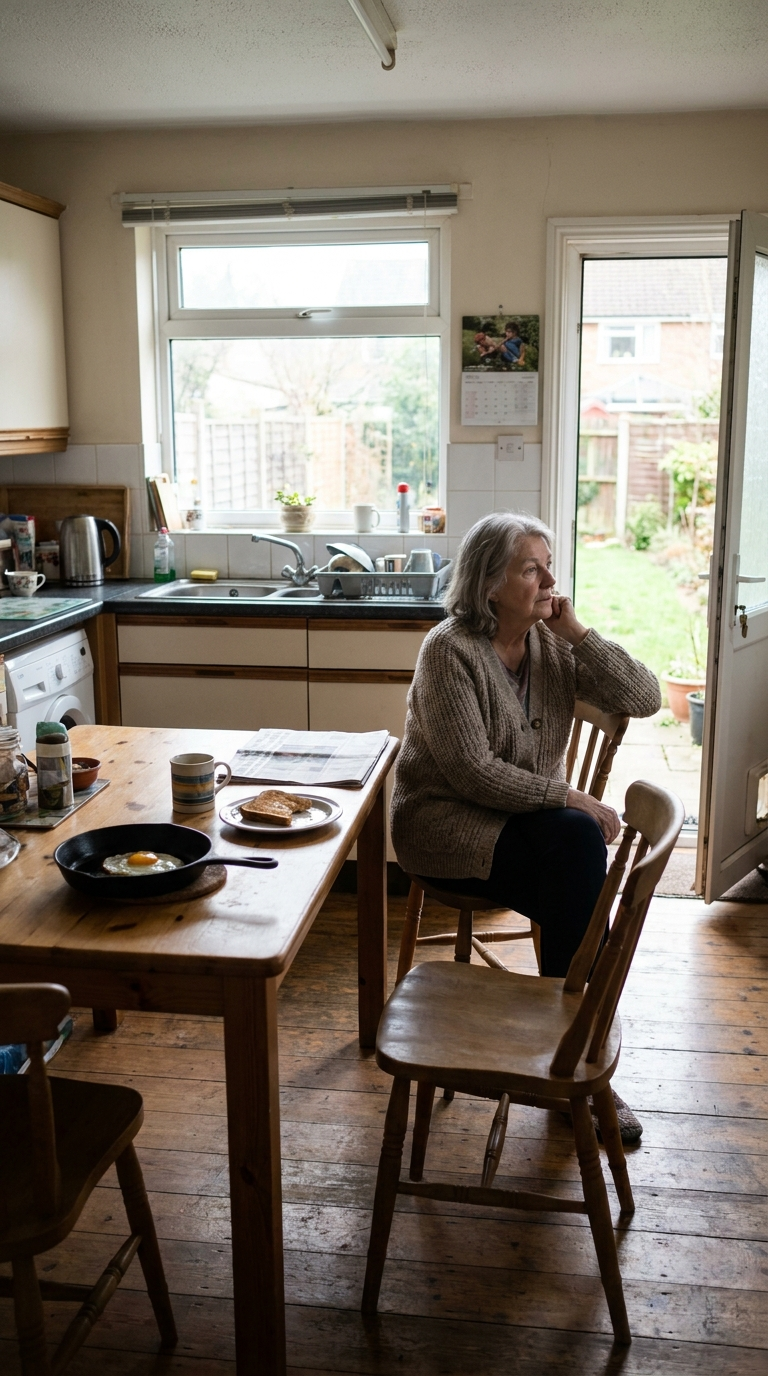
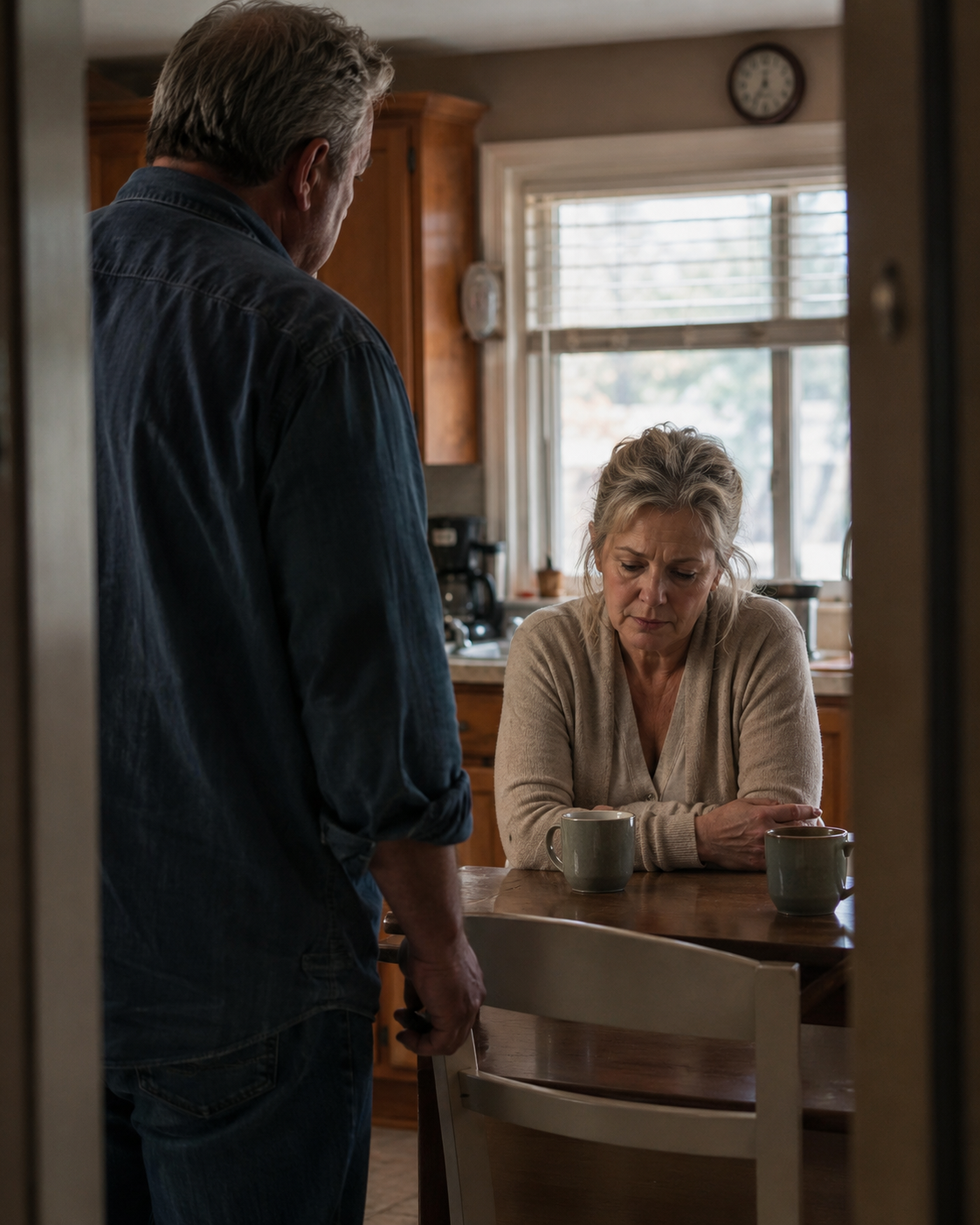
My husband was diagnosed with fatty liver in April 2022. He never drank a day in his life. After the diagnosis, he cut out sugar. Went Mediterranean. Walked three miles a day. Lost 38 pounds. He died of liver failure on November 3rd, 2024, at 5:40 in the morning. He was 59 years old. He cut out sugar completely on April 14th. Did the Mediterranean diet for two and a half years. Weighed his food on a little gray kitchen scale, every portion, every meal. Walked our golden retriever three miles every morning before work, rain or shine. He did everything the hepatologist told him. The hospital bill was $68,000. The funeral was $12,200. The kitchen scale is still on the counter. I can't move it. If I move it, he's really gone. I need to tell you what happened to Bill. Because every week I see posts on Facebook from women like me — "my husband's ALT is a little high, doctor said to cut carbs, any tips?" — and it makes me physically sick. If you're the wife of a man over 45 who got the fatty liver diagnosis, or you got it yourself, please read this whole thing. I know it's long. I know you're scrolling. I know you have things to do. Two years ago I would have given anything — everything — for someone to tell me what I'm about to tell you. Bill went in for his annual physical in the first week of April 2022. He felt fine. Better than fine. He was 56. He was refereeing middle school basketball two nights a week. He mowed his own lawn and half of Rosemary's next door. He'd never smoked, never drank — his father was a drinker, and Bill decided at seventeen he'd seen enough, and he kept that promise for forty years. We thought that promise made him safe. Three days after the physical, his primary called. ALT of 92. AST of 85. The ultrasound came back with moderate steatosis. The hepatologist confirmed it three weeks later. Non-alcoholic fatty liver disease. F2 fibrosis, already. "There's no medication for this. We treat it with lifestyle. Mediterranean diet, lose ten percent of your body weight, walk daily. We'll retest in six months." Bill hung up the phone and sat at the kitchen table for a long time without saying anything. Then he stood up, opened the pantry, and started filling a trash bag. I watched him throw out the Frosted Mini-Wheats. The saltines. The bag of fun-size Snickers we kept for the grandkids. The strawberry preserves his sister sends every Christmas. The whole door shelf of the freezer — the waffles, the ice cream sandwiches, the rocky road he loved. "That's it," he said. "I'm done." And he was. For thirty months, he did not break that diet once. Not at our granddaughter's First Communion party. Not on our 34th anniversary in Door County, where the waitress brought out a complimentary cherry crisp and Bill slid it across the table to me and drank his coffee black and smiled like it didn't cost him anything. Not at his own 58th birthday, where I grilled him salmon and he said it was the best birthday dinner he'd ever had, and I went in the kitchen and cried into a dish towel because I knew what he actually wanted was my pierogi, and he was never going to ask for it again. He stopped going to the Thursday fish fry with his referee crew, because a man can only sit in front of a plate of plain broccoli surrounded by beer batter so many times. His buddy Pete told him "you're no fun anymore" — as a joke, but not entirely — and the calls got further apart, and then they mostly stopped. He gave up food, and the food took some of his people with it when it went. He did it anyway. Because the doctor said to. He lost 38 pounds. He walked Scout three miles every morning, dark winter mornings included, in that orange stocking cap our son bought him as a joke that he wore completely unironically for six years. He bought a juicer. Bill Voss. With a juicer. I still can't picture it, and I watched it happen in my own kitchen. He took the milk thistle his hepatologist "had no problem with." He took a multivitamin. He weighed his portions on the little gray scale. He did everything right. The follow-up labs came back that October. ALT: 89. AST: 84. Six months of perfect. Three points. "The liver heals slowly," they said. "Keep doing what you're doing. We'll retest in six months." So he did. Spring 2023: ALT 94. Higher. Fall 2023: ALT 101. The fibroscan in February 2024 came back F3. He had progressed. Two years of perfect, and he had progressed. Bill came home from that appointment and sat down at the kitchen table. The same chair as the first phone call. He didn't say anything for a long time. Then he said, "Marion. I gave up everything. For two years. And it's getting worse." I told him to trust the process. I told him the doctor said the liver is slow. God forgive me, I told him to give it more time. He nodded. And he kept walking Scout, and weighing the salmon, and taking the milk thistle. Eight months later — it was a Sunday night, we'd watched half a movie and gone to bed early — he woke up at 1:30 AM with a pain under his right ribs that folded him in half. I drove him to the ER myself. I ran the red light on Margaret Avenue and I'd run it again. By the time they admitted him, the whites of his eyes had gone yellow. Not tired-yellow. Yellow like a legal pad. Like something switched on behind them. The ER doctor looked at his bloodwork and his face did a thing I will see for the rest of my life. "Mr. Voss, your bilirubin is 8.7. Your liver is in acute decompensation. We're admitting you to the ICU." "But I've been on the diet for two and a half years," Bill said. And the doctor — young, kind, exhausted — just looked at him and said, "I know, Mr. Voss. I'm so sorry." Bill spent seven days in the ICU. I learned things that week I never wanted to know. I learned that when a liver quits, the everyday toxins your own body makes start crossing into the brain, and they have a name for it, and what the name means is that your husband stops being your husband. On day three, Bill asked me twice in one hour whether I'd fed Barney. Barney was our beagle. Barney died in 2011. On day four, they drained almost four liters of fluid out of his belly. I signed the consent form for that in a hallway, standing up, with a pen borrowed from a nurse. And on day five, I heard the sentence. Two doctors outside his door — the hepatologist and a resident, going over the chart, voices low, the way they talk when they think the family is at the vending machines. I wasn't at the vending machines. I was around the corner in one of those plastic chairs, and I heard the hepatologist say it, calm as a weather report: "Look at the trajectory. His export function's been failing for a decade. The fat had no way out of the organ. Diet was never going to move it." The fat had no way out. I didn't know what it meant. I wrote it on the back of a parking receipt — I still have the parking receipt — because some animal part of me knew it was the answer to a question I'd be asking for the rest of my life. Day seven. November 3rd. They asked me to step out to the family room a little after five in the morning. At 5:40, a resident I'd never met came in, and I knew before she said one word. I drove home at 7:15 AM. The juicer was on the counter. His walking shoes were by the back door with the laces still in their loops, the way a man leaves shoes he intends to put on again. The milk thistle was on the windowsill over the sink. And the little gray kitchen scale was sitting on the counter with a coffee mug on it, because the last thing my husband ever weighed, the night before the ER, was decaf. I sat in his recliner and did not move until it got dark outside. Thirty-four years, and the loudest thing in my house was Scout breathing on the rug. The funeral was November 9th. Our daughter came from Columbus, our son flew in from Tucson, the grandkids wore church clothes they'd grown out of since Easter. My six-year-old grandson asked me if Pop could see Scout from heaven or only people. I had to leave my own kitchen. After the funeral, everyone said the things people say. "He did everything he could." "Sometimes it's just genetics." "At least he didn't suffer long." And I would nod, and inside I would hear the hallway sentence. The fat had no way out. Because that sentence didn't say genetics. That sentence didn't say he did everything he could. That sentence said there was a WAY OUT that mattered, and it was closed, and everything my husband sacrificed for thirty months was aimed at the wrong door. In January I started reading. Not because I wanted to. Because I couldn't stop. Studies I had to read three times with my thumb under the lines. The NAFLD forums, full of men on Bill's exact trajectory, and wives typing Bill's exact labs, being handed Bill's exact pamphlet. And what I found, over and over, in paper after paper, was the missing half of my husband's story. The half no appointment ever mentioned. Everything they told Bill to do was about what goes INTO a liver. Cut the sugar, cut the fat, cut the weight — slow the incoming. And it works, as far as it goes. That's his three points. Nobody said one word about how fat gets OUT. Because it turns out a liver isn't a bucket that empties when you stop pouring. It's a warehouse with a loading dock. Its whole design is to package the fat inside and ship it out — and that packaging line runs on a specific raw material. Not effort. Not willpower. A compound. The liver physically cannot load fat for export without it, the way you can't run a pump with no fuel, and if the compound isn't in the diet, the exports stop, and the fat that's already inside just sits there. Year after year. Diet or no diet. And fat that sits doesn't just sit. It inflames. That's the fire in the walls — that's what drives the ALT up and turns soft fat into hard scar. F2. Then F3. Then a Sunday night and a hallway sentence. Bill starved that warehouse for thirty months. Perfectly. Heroically. And the fat that was already inside him on the day of the pantry trash bag never had one single truck show up to haul it away, because nobody — not the hepatologist, not the pamphlet, not the juicer, not the forty-dollar milk thistle — nobody supplied the loading dock. Now the raw material. This is the part where I had to put the laptop down and walk around my kitchen. It's called betaine. And it's named after the beet — Beta vulgaris, where chemists found it 150 years ago — because the beet is where it lives, in a concentration nothing else common comes close to. The compound my husband's liver needed to open the way out is named after a root vegetable that was sitting forty feet from the salmon in every grocery store we shopped at for thirty months. His grandmother served beets more or less weekly. Bill's generation left that whole table behind — the roots, the organ meats, the old dark garden food — and nobody sounded any alarm, because the alarm doesn't ring for fifty years, and when it finally rings, it rings as an ALT of 92 at a routine physical, and the man gets handed a diet that manages the incoming and never once mentions the outgoing. And the milk thistle on my windowsill? I asked my own doctor about it in February — my internist, a woman I trust, who I went to because my own labs have been "mildly elevated" for two years and after November I wasn't calling anything mild anymore. She said, "Marion, milk thistle is a guard. It stands at the wall of the liver cell and protects it. But you cannot guard a warehouse out of being full. Nothing in that bottle moves anything out." Then she was quiet for a second, and she said the thing I will carry until I die: "If Bill's export pathway had ever been supplied — really supplied, at real doses, early — his story could have gone very differently. It's not that nobody knows this. It's that nobody's job is to tell you." I asked her why his hepatologist never said it. She said, "We don't prescribe groceries." They don't prescribe groceries. Write that on my headstone. They don't prescribe groceries, so my husband weighed his salmon to the gram for thirty months and died with the answer growing in the produce aisle. So I did what you'd expect a woman in my state to do. I went to the store and bought beets — the big red ones — and I bought the first beetroot capsules on the internet, four and a half stars, and I took them, and I sent a bottle to my brother Chuck in Fort Wayne, whose ALT was 141 and who'd been "monitoring" it with his GP for two years the way you monitor weather in another state. Eight weeks later my number had moved two points and Chuck's hadn't moved at all. I want you to learn from the fool I almost stayed. It was a 2 AM post on the NAFLD forum that saved me — a woman in Ohio whose husband went F3 to F1, ALT 118 to 34, and when people asked her what he took, she didn't post a brand first. She posted a warning. She said the beet on your shelf is not the beet in the studies. That the grocery beet's been bred sweet for a hundred years and the active compounds bred down with every generation. That nearly every powder on the market is heat-dried, and heat kills the crimson, and the crimson is half the medicine — the betalains, the pigment itself, the part that takes on the inflammatory fire so the fat can be moved instead of scarred in place. She said: twist a capsule open over a white saucer. If it's brown, it's dead, throw it out. Hers came out brown. So did mine. So did Chuck's. And then she posted the checklist. Four things. The heirloom strain — Blutwurzel, "blood root," an old seed line kept by Plain-community growers in Lancaster County, never crossed with the sugar beet. Shade-dried, slow, no heat, so it arrives crimson and alive. 1,300 milligrams per capsule, printed on the label, no "proprietary blends." And a third-party lab certificate on the actual batch, published where you can read it. I cross-checked every liver product I'd touched since November against those four lines. Zero for four, all of them. One product checked all four. Rosabella. I read the lab certificate at my kitchen table at midnight — me, a retired school secretary, reading a certificate of analysis like it was scripture — and I ordered it, and when it came I did the saucer test before anything else. Crimson. Dark as communion wine, going violet at the edges. One drop of water and it spread across the saucer like it was alive, because it was. I stood at my counter and looked at that saucer next to the little gray scale, and I'm not going to write down what that felt like. Here's what happened next, and I want to be careful, because I'm telling you about living people now, and living people are the whole point of this letter. Chuck first. I sent him the new bottle with a note that said: "Two capsules every morning or I will drive to Fort Wayne, Charles. You know I will." He took them — same stubborn diet-and-a-half he was already doing, nothing else changed. Eleven weeks later his doctor rechecked him. ALT: 46. Down from 141. He called me on a Tuesday evening and my 62-year-old brother could not get through a sentence. What he finally said — and I'm typing it exactly, because it's the reason I stayed up writing this — was: "Marion. Bill did everything harder than me. Somebody just never told him which half." My son-in-law in Charlotte, 41, early steatosis on his scan: ten weeks in, the ache under his right rib that his doctor called "probably muscular" for two years is gone, and his afternoon energy came back before anything else did. His retest is next month. My neighbor Rosemary — a widow too, cirrhosis took her Ed the year before Bill — takes it "for prevention and for spite," her words, and says it's the first year she doesn't feel like she's in a waiting room. And me. My "mildly elevated" came back last month at 34. Normal. My internist looked at the trend line, asked me what changed, wrote it in the chart, and told me to keep going and retest in six months — which is exactly how this should be done, with your doctor watching the paper the whole way. If your bloodwork is old, get it rerun now, before you start anything, so the paper can referee. And if anyone you love has ever heard the words fibrosis or cirrhosis with a stage attached, that's hepatologist territory — this rides along with that care. It does not replace it. I'm not a doctor. I'm not a scientist. I don't work for this company and I don't get one penny from anybody, and honestly, some nights I resent that a beet capsule gets to exist in a world where my husband doesn't. I'm a 58-year-old widow in a house that's too quiet, and here is everything I know, bought at the highest price I'll ever pay: Eating clean slows what comes in. It does not move out what's already there. My husband's three points, and your husband's stuck numbers, are the proof. Milk thistle guards a warehouse nobody's emptying. The way out runs on a raw material, the raw material is named after the beet, and the beet on your shelf hasn't really carried it for a hundred years. And the crimson has to arrive alive, at real doses, with the lab paper to prove it — or it's just red dust and hope. Rosabella is the one that passed the checklist. Two capsules, one glass of water, every morning, and a retest on the calendar in ninety days — they back it with a 90-day money-back guarantee, which is one full lab cycle, so let the paper decide and not your feelings. First thing you'll likely feel is energy inside a week; that's blood flow, that's real, and that is NOT the warehouse emptying — the warehouse reports to the lab and nowhere else. Chuck's 46 didn't come from a feeling. It came on paper, the same paper that spent two years saying 141. The kitchen scale is staying on my counter. I've decided it's not a shrine, it's a witness. It watched a good man do one hundred percent of what he was told, to the gram, for thirty months. It never once saw anybody tell him about the way out. You just got told. That's the whole reason I wrote this. For whoever you'd leave behind — go look at the saucer, go look at the paper, and change what happens next. https://tryrosabella.com/products/rosabella-organic-beetroot-capsules-bogo-a?variant=48358828802303 — Marion Voss, 58, Terre Haute, Indiana P.S. — His walking shoes are still by the back door. Laces still in their loops, the way a man leaves shoes he means to put back on. Every morning Scout still goes and sits by them at ten to seven, because for six years that was the deal, three miles, rain or shine, orange cap. A dog doesn't understand a hallway sentence. He just knows the shoes are there and the man isn't. $68,000 in hospital bills. $12,200 for the funeral. Thirty months of a good man giving up everything he loved, aimed at the wrong door. And the thing that opens the right door costs less per month than the wild-caught salmon he weighed on that scale every single night. Please. Don't let anybody you love end up as the quiet half of a house. P.P.S. — It's 2:51 in the morning as I finish this, because these get written when the house is loudest, which is never in the daytime. I don't work for anyone. I don't get a penny. Chuck is 62 and his number is 46 and every time my phone rings after nine at night my whole body still goes cold. If your husband's ALT is "a little high" — if he's doing the diet perfectly and the numbers won't move — ESPECIALLY if he's doing the diet perfectly — share this with him, or don't share it and just set the bottle next to his coffee the way I mail them to Fort Wayne. "It's just a fatty liver" is the most expensive sentence in American medicine. I have the receipts. I keep them in a drawer with a parking stub from the ICU garage, and I am begging you not to start a drawer of your own. https://tryrosabella.com/products/rosabella-organic-beetroot-capsules-bogo-a?variant=48358828802303
He gave up everything he loved… His liver failed anyway
Rosabella Beetroot Capsules provide 1,300 mg of organic beetroot powder per serving. Beetroot is a traditional whole food that naturally contains dietary nitrates and offers a convenient way to add plant-based nutrition to your daily routine. This supplement is designed to: • Add beetroot nutritio...
LEARN MORELike this ad? Make it yours.
Crush rebuilds this exact creative around your product — your brand, your colors, your offer — in about a minute.