Michael Anderson, PhD.
Michael Anderson, PhD. Facebook ad: “I wouldn't let my wife fill that prescription after 19…”
Ran for 17 days, from August 8 to August 25, 2026, the last day Crush saw it.
Run by Michael Anderson, PhD. on Facebook. Crush is not the advertiser and does not verify its claims. See this ad in Meta's Ad Library(opens in a new tab)
Want an ad like this for your product?
Crush makes new ad images for your product from this ad: your logo, your product photo, your offer.
Trials from $19.95 USD, then $79.95 USD a month. Cancel anytime.
About this ad
- Meta Ad Library ID
- 3544373799049544
- Platforms
- Facebook, Instagram and Messenger
- Relaunches
- 1
Ad text
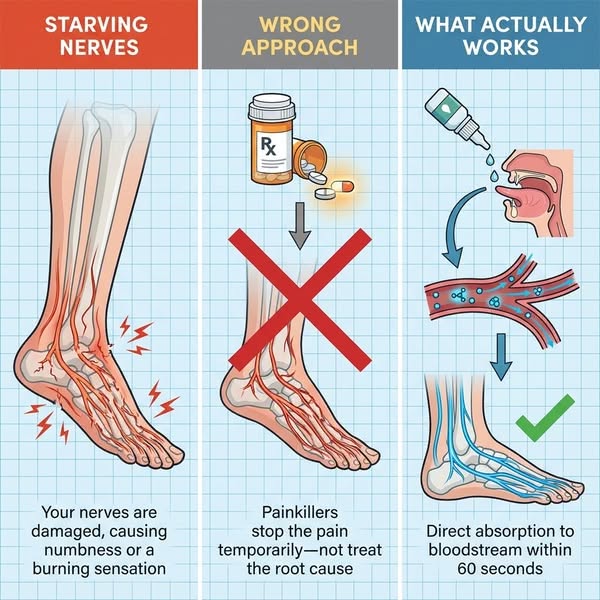
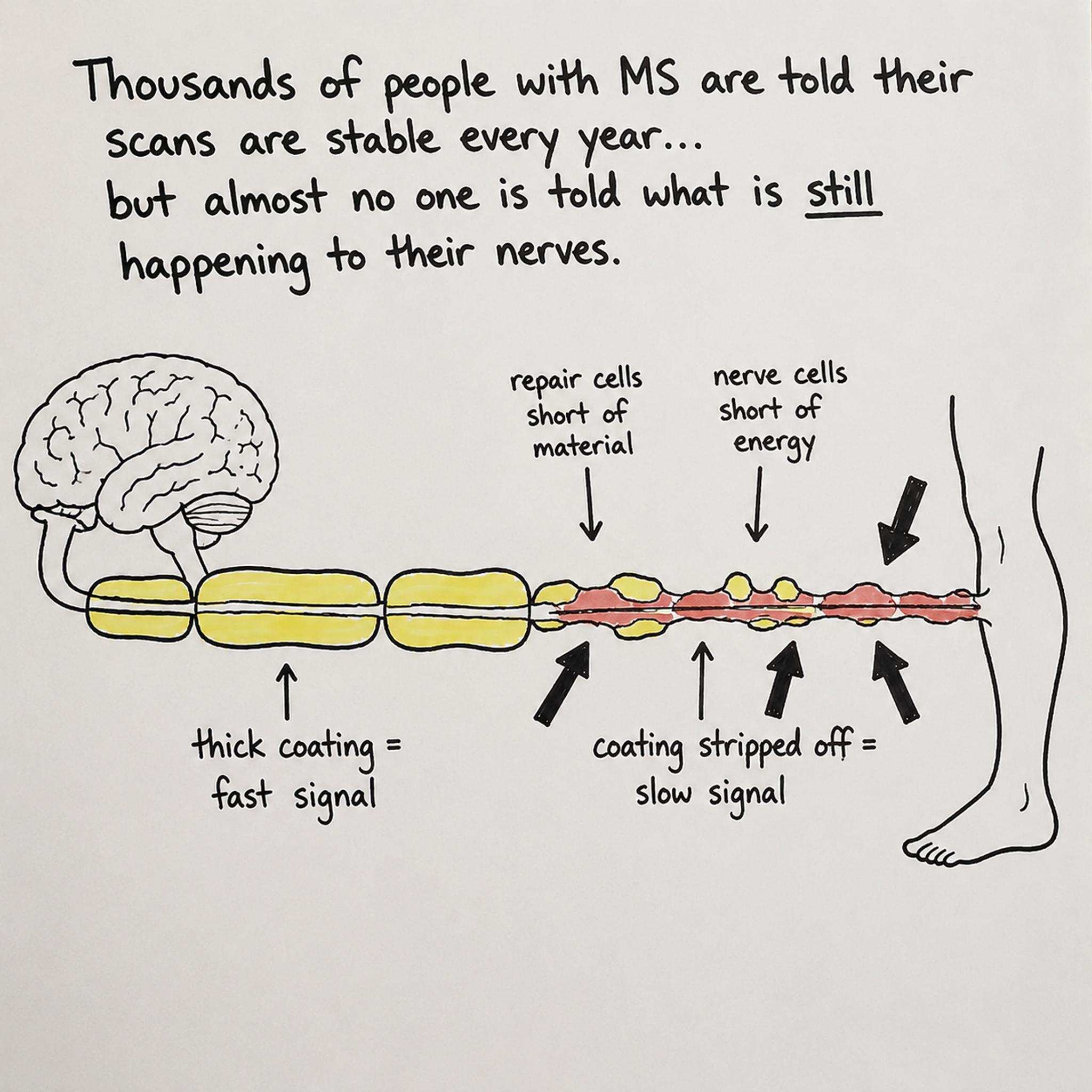
I've been administering infusions and steroids for 19 years, but last month I refused to let my wife fill the prescription her neurologist wrote. I want to explain why. Because there's a sentence I've been professionally unable to say out loud for almost two decades. And until three months ago, I kept my mouth shut. I'm not keeping it shut anymore. My name is Michael Anderson. I run the MS clinic at a hospital I'm not going to name. 19 years with the same patients. I have sat across the desk from more people losing their balance, their grip and their memory than I can count. I have watched people who started a disease modifying therapy at 34 end up using a cane at 43 and a wheelchair at 47. Most of them had a clean MRI the whole way. Most of them had "no new lesions" and "no relapses" written into their charts at every single visit. And they kept coming back to my clinic, the entire time their symptoms getting progressively worse. Here's what my job looks like. A patient comes in for their six month follow up. I pull up the chart. Diagnosed at 34. On a DMT for the last nine years. No relapse since year two. No new lesions on any scan since year three. Both of those dutifully logged as stable at every visit, and she is sitting in front of me telling me she cannot stand up out of a chair without pushing off it. I keep a number in my head. I'm not going to share it because it would sound like I'm making it up. Just trust me when I say it's a lot of women. A lot of mothers. A lot of daughters. All of them "stable" for years. All of them getting worse anyway, every single one of them surprised. And I never said anything. I'm a neurologist who took an oath, who has a license to protect, who has a mortgage to pay, and who has been told for 19 years that the standard of care is the standard of care, and that if I question the medical system out loud, in front of a patient or in public, I will lose all three. So I learned to say the scan looks good. To explain the infusion schedule. To write the prescription for the symptom. To go home and try to forget. And then I'd come back the next clinic day and do it again. That was the deal I made for 19 years. Three months ago the deal blew up. My wife Ellen was diagnosed with relapsing MS nine years ago at 38. She has not had a relapse in six years. She has not had a new lesion in five. On paper she is one of our success stories. Her timed walk has gone from 5.9 seconds to 8.4 over the last three years. 5.9, then 6.8, then 7.6, now 8.4. Her fatigue score has climbed from 38 to 61 across the same three years. Her neurologist wrote her a prescription for dalfampridine on the spot. Ellen came home and put it on the kitchen counter. "He says it's time. He wants me starting tomorrow." I stared at the prescription on the counter. I had written that exact same prescription for my own patients for years. Watching them come back six months later with a walk time that had stopped falling and started climbing again, two years later needing something added for the fatigue, five years later in a clinic chair asking me about a walker. I knew exactly what was coming. I told Ellen not to fill it. "Give me one week." She looked at me. "Michael." "One week. Please." Ellen is an OR nurse. She has seen the same things I have. She didn't argue. That week is when everything changed for me. I started doing what I'd never let myself do as a practicing neurologist. I started actually reading. Not the trial summaries. Not the guidelines. The original research. The papers buried behind the trial data. The work nobody hands you at a conference because it complicates the story you are being paid to tell. And I learned something that I now cannot believe I didn't know. Lesions and relapses are not the disease. They are two symptoms of one process expressing itself twice. I want to say that again. The lesion count, the relapse rate, they are both downstream markers of one underlying problem. Every nerve in your body is wrapped in a coating called myelin, and in MS the immune system strips that coating off. Your body is supposed to rebuild it. That repair runs constantly, in the background, your whole life. But rebuilding myelin takes raw material and an enormous amount of energy, and when either one runs short the repair falls behind the damage. Every year the coating is a little thinner than the year before. A lesion only shows up on your scan once enough coating has come off one spot for the MRI to pick it up. A relapse only happens once a nerve has lost so much coating that it stops carrying a signal at all, and whatever that nerve controlled stops working. Two events. Both caused by the same repair failure, and that failure is running on every nerve in your body the entire time. It is all the same problem. One nerve repair failure, showing up in the only two places your neurologist looks. Kappos and colleagues published an analysis in JAMA Neurology in 2020 showing that most confirmed disability accumulation in relapsing MS happens with no relapse attached to it at all. Lublin and colleagues confirmed it in Brain in 2022 across a large trial population. The field has a name for it now. Progression independent of relapse activity. The two things Ellen's neurologist was watching were both coming from the same place, and nobody had ever once mentioned that to either of us. Ellen was 47. By 55 she would be where the women in my clinic are. I had watched this run hundreds of times over nineteen years. And the dalfampridine? Dalfampridine helps a nerve that has already lost its coating carry a signal a little better. That's its entire mechanism, and it's a real one. It does not put any coating back. It does not touch the repair that has been falling behind for nine years. Her walk time can improve on a stopwatch while the myelin driving every one of her symptoms keeps getting thinner. The drug is a symptomatic treatment at best. And it is not only that drug. The infusions I administer prevent new attacks. The steroids shorten the one you are already having. Neither one repairs a single bit of myelin that's already been stripped off. The repair underneath all of it keeps falling further behind, until the next thing goes. Opening a can. Getting to the bathroom in time. Remembering where she put her keys. I read it three times. I have been administering this incomplete picture for 19 years. That week at our kitchen table, I went looking for the alternative. I had watched the rest of the options fail too. Vitamin D. Green smoothies with berries and probiotics. Leaky gut protocols and functional medicine. The Wahls diet, which more of my patients have tried than any drug I have ever prescribed. None of them delivered the two things the repair actually needs. Then I found research I had never paid attention to in my career. There is an entire body of work on nerve regeneration built around three specific vitamins. B1, B6 and B12. In that literature they are not called B vitamins. They are called the neurotropic vitamins, because they act on nerve tissue specifically, and in Japan they have been standard for nerve damage for decades. Baltrusch reviewed the mechanism in BioMed Research International in 2021. B12 is the raw material myelin is rebuilt out of. B1 is the coenzyme nerve cells produce energy with. B6 is what those cells need to send a clean signal once the coating is there. Material. Energy. Signal. And then the part that stopped me. In 2025, a team tested those three against each other on nerve tissue. They found that when all three of the neurotropic vitamins are taken together, they are 26 times more effective than taking one on its own. Not one vitamin. All three, together. Give the nerves the material and the energy they have been short of, and the coating gets rebuilt instead of only being stripped off. The root cause is finally being addressed instead of managed one symptom at a time. Not a drug propping up her walk time for a few hours at a time. The body's own repair system, given what it actually needs to run. I checked the product. Not all B vitamin supplements are equivalent. Most use the cheap synthetic forms. Cyanocobalamin instead of methylcobalamin. Pyridoxine hydrochloride instead of P-5-P. Your body can barely use those. And almost none of them are liposomal. That is the part nobody explains. A B vitamin that is not liposomal only gets into your blood. It never reaches the nerve. Your next blood test will look fine, your doctor will tell you your levels are normal, and nothing about how you feel will change. That test only measures your blood. It does not measure what got inside the nerve cell. Liposomal is what fixes that. The vitamins are sealed inside a tiny sphere made of the same material as your own cell membranes. The two fuse, and the vitamins are released inside the cell, where the myelin is built. All three vitamins. Active forms. Clinical doses. Sealed in a liposome. Skip any step, and your nerves don't get the nutrients. I went with Nuvel Liposomal Neurotropic Vitamins. All three in one formula, at the doses used in the research. Active methylcobalamin and P-5-P, not the synthetic forms. Liposomal. Third-party tested for what is actually in the bottle, not just label claims. I gave it to Ellen. Told her to take one dose every morning with breakfast. Told her not to fill the dalfampridine. She took the first dose, did not feel different, did not expect to. End of week one. She came down for breakfast and said, "I slept through the night. My legs stayed still. First time in months." Week two. "I have more energy in the afternoons, Michael. I haven't felt like this in a while." That's the first phase. The repair finally receiving what it needs, and the cells that have been short of energy getting it back first. Week three. She timed her own walk in our hallway without me asking her to. 7.2 seconds. Down from 8.4 at the appointment. Week four. She walked down our stairs without holding anything. That's the second phase. Coating actually being rebuilt on nerves that have been bare for years, and the signal moving faster down them because of it. Week six. She had her fatigue score run early, ahead of her scheduled recheck. 34. Down from 61. Week eleven. Timed walk 5.7 seconds. Fatigue score 22. Both numbers moving together, without the dalfampridine. Her neurologist called me directly two days later. He knows me, my clinic, my license. "Michael, did Ellen start the dalfampridine?" "No." Four seconds of silence. The kind of silence I have heard from colleagues recalibrating before. "What did she do?" I told him. The repair failure. The way one failure was driving both of the things he was watching, for years before either of us noticed. The fact that her lesion count and her relapse rate were never two separate measures of how she was doing. They were always two symptoms of the same underlying process, and they were the only two things anyone had been recording. He was quiet for a long time. Then he said, "Michael, I don't know much about the remyelination side of this. But her numbers are remarkably improved. Keep doing what you're doing. Back in three months." 19 years of biting my tongue. And my wife's neurologist just said the words I had been waiting to hear my entire career. I held it together until I got off the phone. Then I sat at our kitchen table and cried. Because every single one of the patients I have watched decline in my clinic in 19 years should have been given this too. And nobody had told them. Including me. That's why I'm writing this. I cannot keep doing this anymore. I cannot keep telling women their scans look good while their bodies tell them something else, and handing them a prescription for whichever symptom they mentioned first. If your wife, your mother, or your daughter is sitting in a neurologist's office being told it's time to start dalfampridine for the walking or amantadine for the fatigue, read this twice. Lesions and relapses are not two problems. They are one nerve repair failure showing up in the only two places anyone is looking. The medications move one measurement at a time while the myelin underneath keeps thinning, for years, until something else gives out. Nuvel Liposomal Neurotropic Vitamins gives the repair the material and the energy it has been short of, all three in the active forms, in a liposomal delivery that reaches the nerve cell instead of only reaching your blood. The fatigue eases as the cells stop running short of energy. The walking improves as the coating gets rebuilt. Two symptoms, one mechanism, in that order. Ellen's timed walk went from 8.4 seconds to 5.7. Her fatigue score from 61 to 22. We take the stairs together again. Nuvel offers a 90-day money-back guarantee. If nothing moves, full refund. In 19 years of neurology, I have never seen a pharmaceutical company offer that. If your wife has a follow up coming up in the next 30 to 60 days, this is worth looking into before that appointment happens, not after she has already walked out with another prescription in hand. 👉 https://trynuvel.com/products/vitamin-b-complex-limposal She does not have to be the chart I open at 8 AM on a Tuesday. Dr. Michael Anderson, MD, Neurology, MS clinic, 19 years P.S. I want to be clear. I am not telling your wife to stop a disease modifying therapy she is already on. Ellen never stopped hers and she never will. That conversation is between her and her neurologist, and the DMT is doing a job nothing else does, which is keeping the immune system off the myelin in the first place. What I am telling you is that the DMT was never built to rebuild what has already been stripped, and nobody is treating that half. This is what worked for Ellen. She never filled the other prescription. P.P.S. The 90-day guarantee is the part I keep coming back to. I have written thousands of prescriptions in this specialty. None of them came with "if this does not work we will refund you." Not one. Whatever you decide, that detail is worth thinking about. 👉 https://trynuvel.com/products/vitamin-b-complex-limposal
Where the ad sends people
trynuvel.com
I wouldn't let my wife fill that prescription after 19 years of writing that same script myself
Clinical-grade dosed formula proven in studies
Learn more: trynuvel.com(opens in a new tab)