Michael Anderson, PhD.
Michael Anderson, PhD. Facebook ad: “The Part Of MS No Drug You've Been Given Treats”
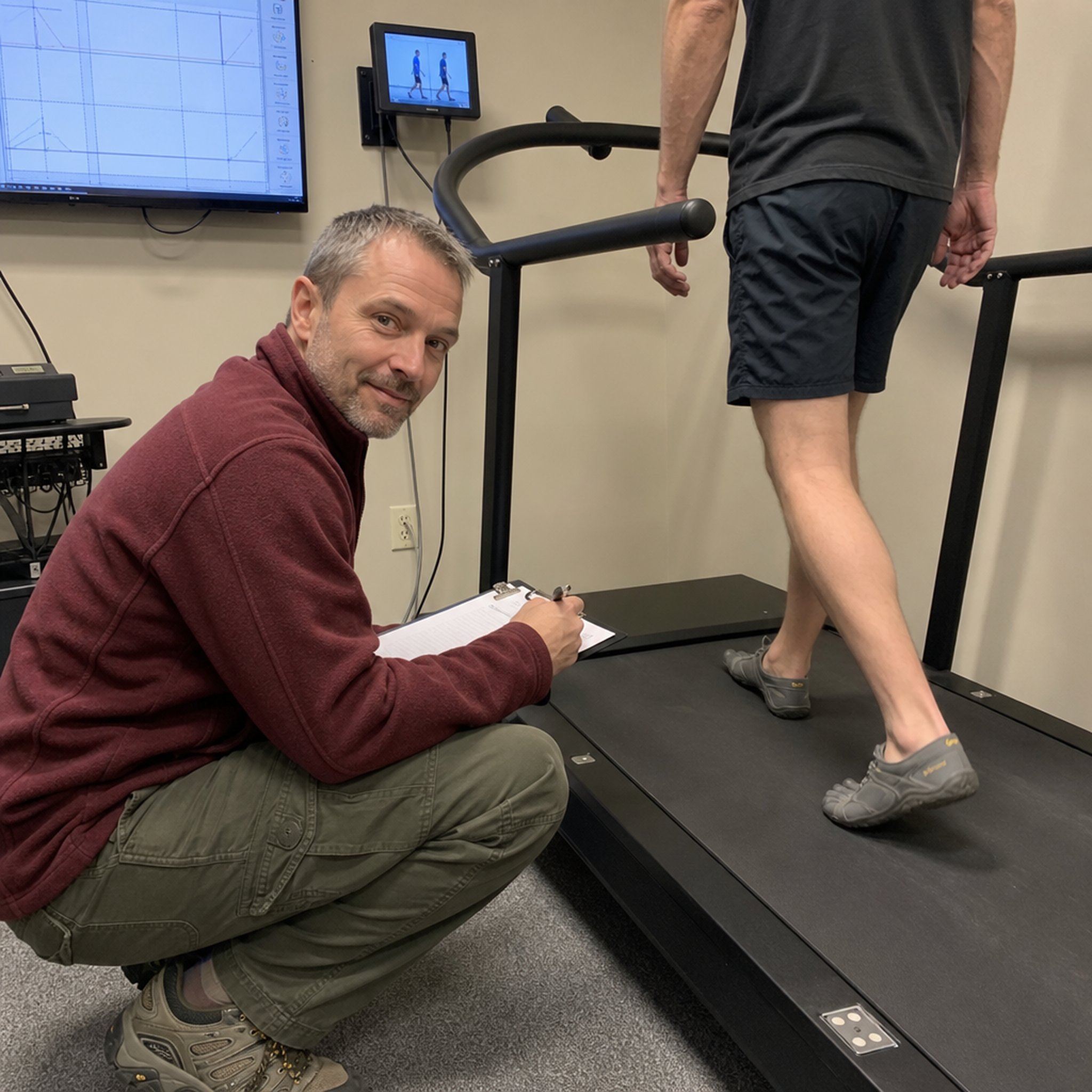
Ran for 7 days, from August 18 to August 25, 2026, the last day Crush saw it.
Run by Michael Anderson, PhD. on Facebook. Crush is not the advertiser and does not verify its claims. See this ad in Meta's Ad Library(opens in a new tab)
Want an ad like this for your product?
Crush makes new ad images for your product from this ad: your logo, your product photo, your offer.
Trials from $19.95 USD, then $79.95 USD a month. Cancel anytime.
About this ad
- Meta Ad Library ID
- 38106679765589888
- Platforms
- Facebook, Instagram and Messenger
- Relaunches
- 1
Ad text
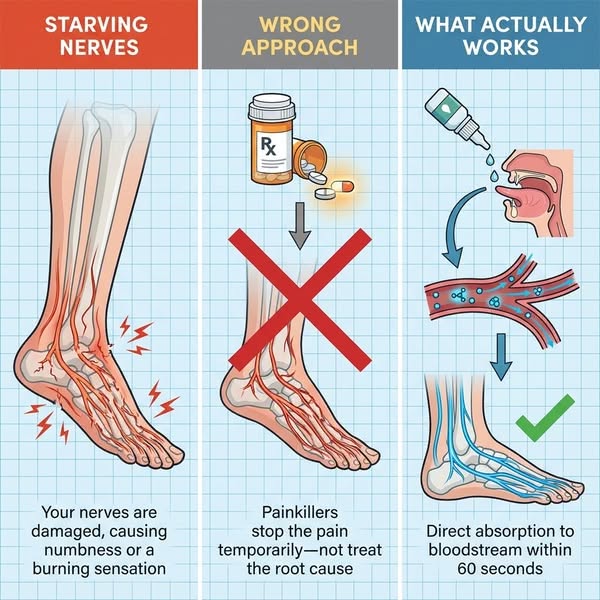
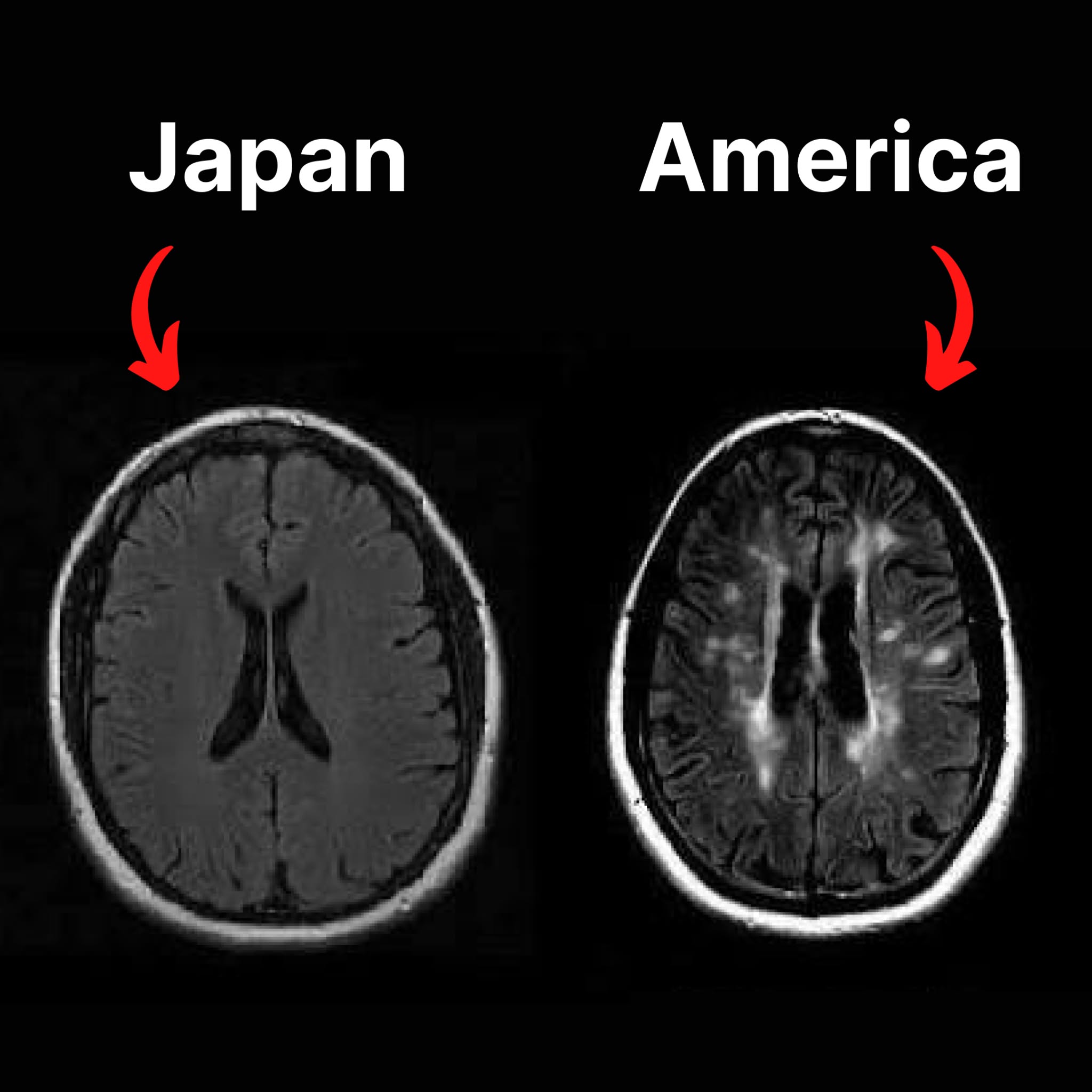
I'm so f*cking sick of doctors telling people with MS that because the MRI is stable, they're fine. You're not fine. You know you're not fine. You tell them you drop things now. That you fell twice last month and you had to be hospitalized. That you cannot always get to the bathroom in time. That you push off the chair with both hands to stand up. That after shopping for groceries, you are too exhausted to do anything else that day. They look at the scan and tell you the MS is controlled, so it must be something else. Stress. Age. Deconditioning. So you stop mentioning it. And after enough visits like that, you start wondering if it is in your head. I hear that sentence in my own clinic every week. My colleagues say it. I said it myself, to my own patients, for 19 years. And I have sat on the other side of the desk and had it said to me. My name is Michael Anderson. I am a board-certified neurologist with an MS subspecialty. And I have had MS for thirteen years. Let me tell you what that stable sentence leaves out. Because what it leaves out is the reason you keep getting worse while everyone keeps telling you the drugs are working. But first, let me tell you what thirteen years of doing everything right actually got me. Vitamin D, 5,000 IU every morning. $18 a bottle. Thirteen years of bottles. I kept my blood level between 60 and 80. I drew it myself, twice a year. My walking got worse every single year I took it. Green smoothies, every morning, for a year. Blueberries, strawberries, a green powder, probiotics. $31 a week at the grocery store. The people in the forums swore the smoothies fixed their gut, and that the gut was where their MS started. Maybe my gut is healthier now. My walking got slower the entire year. CBD oil. $64 a bottle. I tracked doses and ratios like I was running my own trial. It helped the night spasms. It did not change my timed walk by a tenth of a second. Acupuncture. $85 a session, most weeks, for a year. Relaxing. It changed nothing I could measure. The Wahls diet. Two years. Nine cups of vegetables a day, no grains, no legumes. About $260 a month over regular groceries. I lost 22 pounds and kept it off. My nerve function declined the entire time. The cooling vest. $189. Physical therapy twice a week for nine years. $40 copay, every visit. Do that math on its own. I sat down one night and added all of it up. Thirteen years. Over $12,000 out of my own pocket. And that is before the physical therapy copays. And without counting the infusions, which bill my insurance $68,000 a year. You know what every single one of those has in common. They all kind of help. A little. For a while. And then your timed 25-foot walk comes back a little slower anyway, and your scan comes back stable anyway, and your neurologist smiles and says your MS is managed, and you are in your hallway at 6 AM with a stopwatch watching the same number come up again, and you are wondering how many more bottles you are going to buy before you finally give in and accept the rollator he has been mentioning for three years. That was me in January. I had kept my vitamin D level between 60 and 80 for thirteen years. I had eaten nine cups of vegetables a day for two of them. I had lost the 22 pounds, done the physical therapy, and taken every infusion on schedule. 9.1 seconds. That was my timed 25-foot walk that morning, in my own hallway. After everything. Five years ago it was 4.6. Three weeks earlier, my MRI had come back stable. No new lesions. No enhancement. A colleague read it to me with relief in his voice. I have read that same result, in that same voice, to hundreds of my own patients. I sat at the kitchen table and I almost cried. Not from sadness. From rage. The kind of rage where you start to wonder whether the supplement aisle and the prescription pad have been doing the same job this whole time. Managing a number. Repairing nothing. I'm writing this from the other side of that morning. My timed walk was 5.4 seconds when I ran it before I sat down to type this. It has been under 6 seconds for eleven weeks. Same infusion. No new prescription. No rollator. What changed wasn't another bottle off a shelf, or another prescription drug, or another infusion. It was an entirely different understanding of what is actually going wrong in MS. Something none of those bottles, and none of those drugs, ever addressed. Something my own training never taught me. Not in medical school. Not in residency. Not in a fellowship built around this exact disease. I'm going to tell you exactly how I found it. Because if you have heard the word stable this year and gotten worse anyway, you need to read this before you spend another six months and another $400 on the next bottle that promises to be the one, or another year being told that stable means fine. Back to that morning at the kitchen table. That night I couldn't sleep. I was scrolling our local community page on my phone in the dark. The one where neighbors post about lost dogs and which plumbers not to call. A woman a few streets over had posted a long question. Her husband has MS. Stable scans for six years. He had just gone from a cane to a rollator. She was asking if anyone knew a doctor who would take her husband's walking seriously, instead of showing them the stable MRI again and sending them home with nothing new. Forty-two comments. Most of them useless. But one comment near the top had thirty-eight replies under it. A man I didn't know recommended a doctor on the other side of the city. An older Japanese doctor who had trained and practiced in Japan for decades before he ever set foot in an American clinic. Said he had gone in losing his balance, falling on ordinary walks, with a folder full of stable MRIs, and walked out ninety minutes later with a different understanding of what was actually wrong with him. Reply after reply under that comment. People from my own zip code. He took his time. He explained things nobody else had explained. He didn't rush. I want you to understand what I did next, because it is the most embarrassing sentence in this whole post. I am a fellowship-trained MS specialist, and at 1 in the morning I screenshotted a stranger's doctor recommendation off a neighborhood Facebook page. Forty-five minutes across the city. Out of network. Three hundred dollars for the first visit, no insurance. I almost didn't go. I have colleagues in every major hospital in this city. I have read 9,187 MRIs myself. Driving across town to pay cash for an opinion felt like admitting something I was not ready to admit. But I kept thinking about those thirty-eight replies. People from my own town. People who weren't trying to sell me anything. I booked the appointment. I told nobody at my hospital where I was going. So two weeks later, on a Tuesday morning, I sat in a quiet office with bookshelves and no fluorescent lights, and a doctor with gray hair, reading glasses, and a faint Japanese accent pulled up my records on his laptop while I listed everything I had tried. He let me finish. Then he closed the laptop. "You are treating the wrong thing," he said. I waited. "The attack is not your problem anymore. Your drugs handle the attack, and they handle it well. The repair is your problem. In thirteen years, nobody has given you one thing for the repair." He pulled out a notepad and drew two pictures. The first was a healthy nerve. A straight line, wrapped in a thick coating. "Think of the coating like the insulation on an electrical wire," he said. "The wire carries the signal. The insulation is what lets the signal move fast and clean." The second picture was the same nerve with the coating worn thin. Patches of bare wire showing. He tapped the second picture with the end of his pen. "This is your nerve today. The falls, the fatigue, the bathroom trips, all of it happens because your nerves have lost myelin, and the signals they carry slow down or stop. Whether your body can rebuild that myelin. This is where MS disability actually gets decided." He kept going. "There are two processes running in your body at the same time. Your immune system strips myelin off your nerves. And your body rebuilds it." "Early in your disease, the rebuilding kept up. That is what recovering from a relapse actually is. The attack stripped the myelin, the symptom appeared, your body rebuilt the myelin, and the symptom faded. Every remission you have ever had was the repair working." "But rebuilding myelin takes two things, and both have to be inside the nerve cell. Raw material to build with. And an enormous amount of energy. Year after year, the stripping continues, and the cells run short of both. The repair slows down. The damage does not." "A little at a time. Year after year. Without one new lesion. Without one relapse. Without you noticing." "And then one day enough myelin is gone that the signals slow down and stop. You fall on a staircase. You cannot get to the bathroom in time. You are too exhausted by noon to do anything else. And your scan still says stable, because a lesion only appears when enough myelin comes off one single spot for the machine to measure it. Your damage is not happening in one spot. It is happening a little bit everywhere. A relapse is the same stripping, fast and hard, in one place. That is why a relapse makes a lesion the scan can see, and the slow version never does." "That is MS disability. Not a mystery. Not bad genes. A repair that has been falling behind the stripping for years, on every nerve in your body at once. It is not a failure of your effort. It is a failure of repair." "Medical journals have a name for this. Progression independent of relapse activity. PIRA. More than half of the damage people end up with from MS does not come from a relapse at all. It comes from the repair falling behind, everywhere, year after year." "That is why you are worse and your scan is stable. The MRI measures lesions. It does not measure repair. Stable means no new attacks. It has never meant the damage is being fixed." I sat there for a long second. He waited. Then he counted on his fingers. "Vitamin D supports the immune system. You were helping your drugs prevent the next attack. It does not rebuild the myelin." "The probiotic and smoothie protocol works on your gut. It does not rebuild the myelin." "The cannabis reduced your spasms at night. That is real symptom relief. It does not rebuild the myelin." "Your diet took weight and inflammation off your system. It does not rebuild the myelin." "Physical therapy strengthens the muscle the nerve controls. It does not rebuild the myelin." Then he looked at my list again and asked me a question. "In thirteen years, has anyone ever given you anything for the nerve itself?" I went through the list in my head. Every drug. Every bottle. Every copay. No. Not once. Not a single doctor. Including me. He set the pen down. "Even your infusion does not do this. It stops new attacks. But no DMT rebuilds myelin. No DMT trial has ever even measured it. Everything you have been given is managing the disease. Nothing you have been given is repairing the damage." "Managing is not repairing. It never has been." Thirteen years. Twelve thousand dollars. Managing the disease. I asked him what the repair actually needs. He nodded like he had been waiting for the question. "Where I trained," he said, "in Japan, every pharmacy keeps this on the shelf. For nerve damage. For decades. There, it is medicine. Doctors prescribe it. Here, it is a supplement on a shelf next to the candy vitamins. And a business has no reason to sell you the cheap thing that works when it can keep selling you the expensive thing that does not." He wrote three lines on his notepad and turned it around. B1. B6. B12. "In Japan, we do not call these B vitamins. We call them the neurotropic vitamins. Neurotropic means they act on nerve tissue. They are not general health vitamins. They are nerve medicine, and no one in your country has ever introduced them to you that way." "B1 provides the energy the repair uses. B12 supplies the material myelin is rebuilt from. B6 keeps the signal traveling cleanly down the nerve once the coating is back." "Energy. Material. Signal. Three of them. Together. Aimed at the repair, not at the scan." Then he gave me two numbers I have thought about every day since. "In Japan, 14 out of every 100,000 people have MS. In your country, it is 309 out of every 100,000. More than 20 times higher." "A big part of that difference is the diet. The traditional Japanese diet, the fish, the shellfish, the pork, the seaweed, is high in exactly these three vitamins. A Japanese child grows up with high intake of the neurotropic vitamins, and that intake continues for life. The nerves always have material and energy for the repair." "And it is not genetics. As the diet in Japan has westernized, our number has been climbing. It nearly doubled in fourteen years." Then he answered the question before I could ask it. "A lifetime of that intake is prevention. You have thirteen years of stripped myelin. Repair takes amounts that no food reaches. That is why in Japan we give the neurotropic vitamins as medicine, at clinical doses, and not as diet advice." I told him I had never once heard the term neurotropic vitamins. Not in medical school. Not in residency. Not in a fellowship built around this exact disease. He shrugged. "Neither had any of the American doctors who have sat where you are sitting." Then he pulled something up on his laptop and turned the screen toward me. A 2021 review in BioMed Research International on the neurotropic vitamins in nerve regeneration. B12 maintains myelin and supports remyelination. B1 is the coenzyme nerve cells produce energy with. B6 is required for clean nerve signaling. Then a 2025 paper in a journal called Cells, and this is the one that stopped me. A team tested the three against each other in a lab model of nerve tissue. B12 alone showed little meaningful impact. But when all three were taken together, they were 26 times more effective than any one of them alone. Not one vitamin. All three, together. That was the moment thirteen years of frustration finally made sense. Nothing I had ever taken was aimed at the repair. And the three things that were had never once been mentioned to me. I asked him why I never learned any of this. I have the fellowship. I have the wall of diplomas. He shrugged again. "The research sits in nerve regeneration journals your field does not read. Nobody funds a conference talk on vitamins nobody can patent. It will probably be standard here in ten years. For now, you just have to know about it." Then he leaned back and said the part I want you to read twice. "Before you go on Amazon and buy the first B complex you see, you need to hear this. Not all B vitamins are the same. Most of what you will find here is barely worth swallowing. The cheap bottles are the synthetic forms of B12, B6, and B1, and they are far less bioavailable than the active forms your nerves can use. The bargain bottles on Amazon have no third-party testing, no verification of how much of any of the three is actually in there, filled with what is basically flavored filler. The label says B1, B6, and B12. What is inside barely is." "The B6 problem is worse than useless. The nerve formulas on your pharmacy shelves carry pyridoxine hydrochloride at 100 milligrams. At that dose, that form causes nerve damage. The requirement is 1 to 3 milligrams. People buy it for their nerves, and it damages their nerves." "And the delivery is the part nobody explains. Most of what you swallow is destroyed in the stomach and never reaches the nerve. Your blood test will look fine either way, because the test measures blood. It does not measure what got inside the nerve cell." "The repair does not happen in your blood. It happens in the nerve tissue. So the vitamins have to be taken in a form that reaches the nerve tissue. That is the only way to take them that matters." "A liposome is that form. It is a microscopic sphere built from phospholipids, the same material your own cell membranes are made of. The shell and the membrane fuse, and the vitamins are released inside the cell. Where myelin is rebuilt." "Buy the $9 drugstore bottle, and you will think the neurotropic vitamins do not work, and you will be back where you started." He told me exactly what to look for. All three neurotropic vitamins in one formula, never B12 alone. The active forms, methylcobalamin and P-5-P. Clinical doses, with the B6 held where it is safe. Liposomal. Third-party tested. He told me he takes them himself every morning, and has for thirty years. He said he does not recommend brands, because he is not in the supplement business. But if I matched everything on his list, I would find one. I asked him the question I had wanted to ask since the drive over. Whether I could even take them, since I am on an infusion. He said that was the right question to ask. He said these are not drugs and they are not a replacement for one. They are vitamins. He has plenty of patients take them alongside what they are already on, not instead. He told me to keep taking everything my own neurologist prescribed, to bring the bottle to my next appointment, and to let him watch my numbers with me. That was it. He also told me what to expect, because most people quit too early. The first two weeks, the nerve cells that have been short of energy get it back first. Your timed 25-foot walk will not be faster yet. What comes first is sleep and energy. Most people start sleeping through the night without waking up, and stop needing to lie down in the middle of the afternoon. Weeks three and four, the repair starts receiving the material it has been missing for years. That is when your timed 25-foot walk usually starts getting faster. Weeks five through eight, myelin is being rebuilt on nerves that have been bare for years, and the signals travel faster down them. That is the window with the biggest drops in your walk time. Twelve weeks minimum. The people who fail are the ones who quit at week two because their walk time has not dropped yet. I drove home with two pages of notes in my jacket pocket. That night I sat at my kitchen table with my laptop and started looking. Most of what came up failed his list immediately. Cyanocobalamin. Pyridoxine hydrochloride at 100 milligrams, the dose that damages nerves. B12 alone, with no B1 or B6 anywhere near it. Not liposomal. No third-party testing. Filler lists longer than the ingredient lists. I looked at over forty products across two nights. The one that hit every single thing on his list was a small American company called Nuvel. Liposomal Neurotropic Vitamins. All three in one formula. 5,000 micrograms of active methylcobalamin. B6 as P-5-P, held at the safe dose. Liposomal drops. Third-party tested for what is actually in the bottle. No fillers. Every box checked. I ordered a bottle that night. One drop under the tongue every morning with breakfast. Weeks one and two, exactly like he said. My timed walk did not change. But I stopped shutting my office door to lie down at 3 in the afternoon, and I was sleeping deeper than I had in years. Week three, I timed my walk. 7.8 seconds. Down from 9.1. I ran it four times because I did not believe it. All four came in under 8. Week four, 7.2, and averaging under 7.5 across morning runs by the end of the week. Just like he said. The walking had started. Weeks five through eight, my walk time kept dropping. By the end of week eight I was at 6.2 three mornings in a row, with even energy through the whole clinic day instead of the afternoon fatigue I had been scheduling my patients around. Week twelve, I ran the full set on myself. Timed walk, 5.9 seconds, down from 9.1. Fatigue scale, 24, down from 58 in January. Nine-hole peg test, normal in both hands for the first time in two years. I went back to my own neurologist at the three-month mark. A colleague I trained. He checked the numbers. Looked at the readings. Looked at me. Asked what I was doing differently. I told him. He wrote it down. No new prescription that visit. None. That was eleven weeks ago. My walk was 5.4 this morning. In June I stood through my daughter's entire graduation. Ninety minutes, outside, in the heat. I had not been able to stand through anything in the heat since 2019. Here is what I want to say to you, because I am guessing you have heard the word stable this year and gotten worse anyway. You are not crazy, and you are not failing at this. And nobody is lying to you, either. The MRI is not wrong. It measures lesions. It does not measure repair. Stable means no new attacks. It does not mean the damage is being repaired, because nothing you have been given repairs it. Your DMT stops new attacks. Stay on it. It was never built to rebuild myelin, and no DMT trial has ever measured that. Steroids end a flare faster and do nothing about what the flare left behind. The supplements you have tried work around the edges of the problem. Everything you have been given manages the disease. Nothing you have been given repairs the damage. That is PIRA. That is the half of MS nobody is treating. And it is the half that decides how you walk, how you sleep, and how tired you are at 2 in the afternoon. The next time a doctor looks at your stable scan and tells you the rest must be stress, you will know exactly what that scan is not measuring. B1 for the energy. B12 for the material. B6 for the signal. All three together, in the active forms, at clinical doses, delivered inside the nerve cell instead of only into the blood. That is what the repair has been missing. Directly. That is the difference. But only the right version. All three in one formula, never B12 alone. Methylcobalamin and P-5-P, not the synthetic forms. B6 held at the safe dose. Liposomal, so it reaches the nerve instead of only your blood test. Third-party tested. If a product fails any one of those, you will think the vitamins do not work, and you will be back where you started. Nuvel Liposomal Neurotropic Vitamins is the one I found that hit every single criterion. One drop under the tongue every morning. I have been taking it ever since. You do not need to scroll a community page at midnight, or drive across a city, or pay three hundred dollars to sit with a Japanese doctor who tells you what your own neurologist was never taught. I already did all of that for you. Nuvel has a 90-day money-back guarantee, and it covers the whole window. Two weeks for the energy. Four weeks for the repair to start receiving material. Around eight weeks for the walking. Twelve weeks to see what it can really do. If nothing improves in that window, full refund. No questions. The fact that a small American company will offer that and the pharmaceutical industry never has tells you something. I hope this helps someone. I really do. Because nobody should spend thirteen years and $12,000 doing everything right while they keep feeling worse year after year. P.S. The failed repair is the part of MS that every drug and every supplement you have tried is bypassing. Vitamin D, the probiotics, the CBD, the diet, none of them give the repair its material and its energy inside the nerve cell. B1, B6, and B12 together do. But only in the active forms, at safe doses, liposomal. Anything less and you are buying the $9 drugstore bottle. P.P.S. The 90-day guarantee covers the window. Two weeks for the energy to come back. Four weeks for the repair to begin. Around eight weeks for the walking. After thirteen years of bottles that never reached the repair, that guarantee is the first time the math has worked in my favor. P.P.P.S. The small batches sell out quickly, and the next batch usually takes a few weeks. Every week the repair runs short is another week the coating gets thinner. - Dr. Michael Anderson, MD, board-certified neurologist, MS subspecialty Edit: Several people have messaged me directly asking for the link so here it is - https://trynuvel.com/products/vitamin-b-complex-limposal
Where the ad sends people
trynuvel.com
The Part Of MS No Drug You've Been Given Treats
Clinical-grade dosed formula proven in studies
Learn more: trynuvel.com(opens in a new tab)