
Inactive· since Apr 22, 2026
- 30
- days it ran
- 0
- relaunches
Ad copy
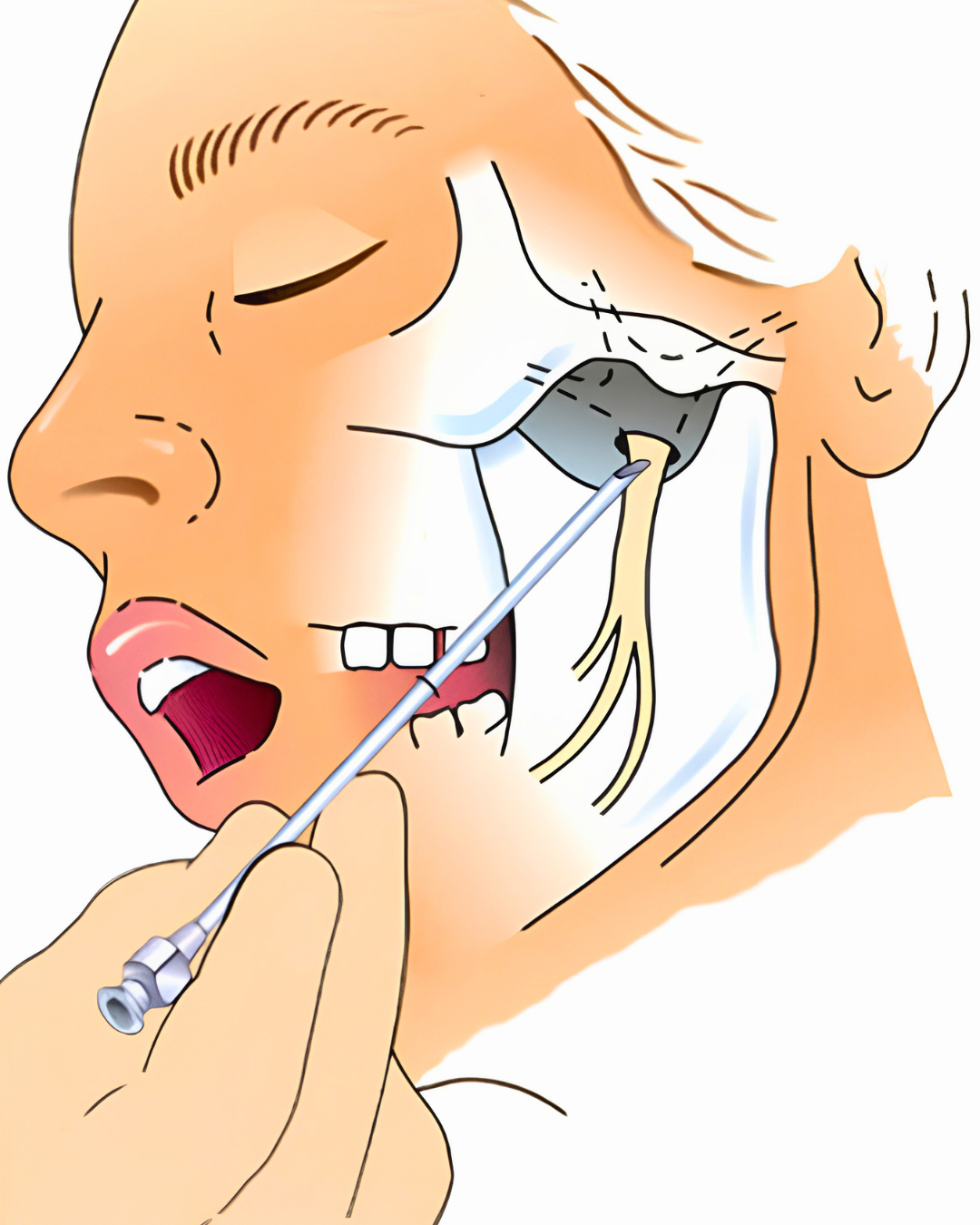
I used to think my anxiety was making my migraines worse. A neurologist pulled up my chart and explained it was the opposite. Like most of you reading this, I'd been on the full migraine treatment carousel. Excedrin, 4 to 5 times a week. Until the rebound headaches set in. Then Topamax. Forgot words mid-sentence. My coworkers thought something was wrong. Still had the migraines. Then Propranolol. Dropped my blood pressure so low I fainted in a CVS. Then Amitriptyline. Gained 24 pounds. Triptans worked for a season and then stopped. Botox — 31 injection sites across my forehead, temples and neck every twelve weeks, five rounds, nothing changed. And alongside all of that, because my primary care doctor said my anxiety was "probably making the migraines worse," I was also on Lexapro. 10mg, then 20mg, then switched to Zoloft when the Lexapro stopped helping, then switched back. Plus a standing Klonopin prescription for the "acute panic episodes" — the 30-minute windows before the pain where I was convinced I was having a stroke. Two separate specialist protocols. Two separate sets of prescriptions. And neither specialist could tell me why I was still, eleven years in, checking the ceiling every morning with my eyes closed to see if today was a migraine day. The appointment that reorganized everything I changed neurologists last March. My new one was a woman named Dr. Fiora Laurent who gets migraines herself. She took a 45-minute history — which no neurologist had ever done in all my years of care — and when I finished, she put her pen down and said something that has changed the way I understand my own body. "Allison, you don't have two conditions. You have one nervous system doing two things." She pulled up a diagram on her tablet. The trigeminal nerve — the largest nerve in the head, running from the brainstem out through the temples, behind the ears, down to the base of the skull, into the jaw. In migraine sufferers, this nerve is chronically hypersensitive. It fires on inputs a normal nervous system absorbs without noticing. A barometric shift. A missed meal. A glass of wine. A fluorescent light. A bad night of sleep. When it fires, she explained, it doesn't just produce pain. It hijacks the autonomic nervous system — the part of you that regulates fight-or-flight versus rest-and-recover. A migraine attack pushes the nervous system hard into the sympathetic branch, the fight-or-flight mode. That is what produces the tingling, the racing heart, the clenched jaw, the dread, the intrusive thoughts, the catastrophic "I am dying" loop. "The anxiety you feel before a migraine isn't a separate psychiatric condition. It's the first wave of the attack. The cascade is already firing. You're just feeling it in your body before you feel it in your head. The intrusive thoughts during the attack aren't you. They're your sympathetic system in full alarm. The two-day depression after the attack is your autonomic nervous system crashing from the fight-or-flight state into full parasympathetic exhaustion. All of it — the pre-dread, the during-panic, the after-fog — is one cascade. One nerve. One nervous system, stuck." The vicious cycle I'd been living in Here's the part that broke my heart to hear and also, somehow, finally gave me permission to stop blaming myself. When your trigeminal nerve is chronically sensitized, it fires more often. When it fires, it activates your sympathetic nervous system. When your sympathetic nervous system is activated often enough, it stays activated — a low-grade hum of fight-or-flight that never fully switches off, even on days you're not actively in a migraine. That low-grade hum is the baseline anxiety you feel between attacks. The bracing. The "I can't fully relax because I don't know when the next one is coming" feeling. The guilt when you cancel dinner. The shame when your kid says Mom, you're always sick. And here's the cruelest part of it — a nervous system stuck in sympathetic dominance is more likely to fire the trigeminal nerve. So the anxiety you feel between attacks is making the next attack more likely. Which will fire the nerve. Which will hijack the autonomic system. Which will produce more anxiety. Which will sensitize the nerve further. Eleven years. One loop. And every medication I'd been given was trying to treat one point on the loop — the pain, or the panic, or the mood — without ever touching the nerve that was driving all three. The Lexapro couldn't reach the trigeminal nerve, because the trigeminal nerve sits in the peripheral nervous system, outside the blood-brain barrier the SSRI crosses. The Klonopin sedated everything, which blunted the panic but also blunted me. The triptans arrived 45 minutes after the cascade had already fully fired. The Botox addressed one muscular layer of the attack but never touched the nerve firing underneath. Nothing I'd been given was designed to calm the nerve itself. What Dr. Laurent built Dr. Laurent spent ten years watching this exact pattern in her practice before she finally built a tool for it. She called it Florus. It's a topical roll-on. You apply it to the three locations where the trigeminal nerve runs closest to the surface of your skin — your temples, behind your ears, and the base of your skull. It doesn't enter your bloodstream. It doesn't cross your blood-brain barrier. It doesn't interact with your SSRI, your benzo, your triptan, your Botox, or anything else you're on. It sits directly on the nerve, in seconds, at the point on your body where the cascade is actually firing. The formula is built around five compounds, each with a specific job. Magnesium glycinate — the mineral your autonomic nervous system literally uses to switch from sympathetic (fight-or-flight) to parasympathetic (rest-and-recover) mode. Up to 70 percent of migraine sufferers are deficient. Applied transdermally, it down-regulates nerve excitability directly at the contact point. Wild peppermint — contains menthol, which activates TRPM8 cooling receptors on the trigeminal nerve. The brain cannot transmit a pain signal and a cooling signal at full intensity simultaneously. The cooling signal wins, and the cascade breaks. Menthol crystals — a concentrated TRPM8 activator, for faster onset. Feverfew extract — the oldest documented botanical in migraine prevention, used clinically in European practice for decades to reduce trigeminal reactivity over time. Chamomile — calms the occipital muscles at the base of the skull, which spasm reflexively during a cascade and feed the anxiety loop further. Five compounds. One nerve. One nervous system that finally gets the signal to stand down. What happened to me I got the bottle on a Tuesday. The first prodrome hit on the following Sunday — that familiar tingle, the rise of dread, the something is wrong voice starting up — and instead of reaching for Klonopin and an Excedrin the way I had 1,460 times before, I rolled Florus across my temples, behind my ears, and down the back of my neck. The cooling hit first. Within a minute, something I had never experienced in eleven years of treatment: the cascade stopping. Not medicated through. Not white-knuckled through. Stopping. The tingle faded. The dread dissolved. The voice in the back of my head went quiet. I sat on my couch for twenty more minutes waiting for it to come back. It didn't. That was the first thing that changed. But the second thing that changed was the thing I hadn't dared to hope for. Week by week Week 1: I caught three prodromes at the first sign. All three stayed below what I'd call a 3. None of them locked in as full migraines. Week 2: The between-episode bracing started to fade. After eleven years of my nervous system living in a low hum of sympathetic activation, the hum started to quiet. My sleep improved. My shoulders dropped. I went to a concert with my husband and didn't spend the whole night scanning for exits in case the next attack hit. Week 4: I caught a prodrome on a work call. I applied Florus without leaving my chair. The cascade broke. The intrusive thought loop — you're going to pass out on camera, you're going to lose this client, you're going to embarrass yourself — never fully started, because the autonomic system never fully fired. Week 6: I noticed I wasn't waking up bracing anymore. Eleven years of opening my eyes and immediately running the check — is it there? — had become a reflex so deep I hadn't realized it was a reflex until it stopped. Week 8: I called my psychiatrist to talk about tapering the Klonopin. Not the Lexapro — we agreed that was doing real work on my general baseline — but the Klonopin, which had always been treating the autonomic storm the Florus was now catching upstream. Week 12: My daughter, who is nine years old, looked at me on the drive home from her soccer game and said, "Mom, you've been at two of my games in a row." I had to pull over because I couldn't see through my tears. I'm not cured. I still have migraines. I will probably always have migraines. What I don't have anymore is the passenger. If this is you You may have been told, for years, that you have migraines and anxiety, and that these are two different conditions you have to treat with two different specialists and two different sets of medications. I want you to hear this from someone who spent 11 years believing exactly that and being wrong: Your migraines and your anxiety are not separate. They are the same nerve, the same nervous system, the same cascade, experienced in different parts of the same attack. The dread you feel before the pain is the first wave of the cascade. The intrusive thoughts during the pain are the autonomic system in full alarm. The heavy fog for two days after is the crash. The low-grade bracing between attacks is the system never fully switching off. You don't need a different SSRI. You don't need a stronger benzo. You don't need to try yet another preventative. You don't need to "manage your stress better" or "learn to meditate" or cut one more food group out of your diet. You need the one tool that addresses the one nerve every other treatment has missed. Florus is topical. Non-invasive. Ten seconds to apply. Doesn't replace anything you're already on. Doesn't interact with anything. Works in seconds instead of 45 minutes. Built by a neurologist who has migraines herself. Over 7,405 people have left five-star reviews. 90-day money-back guarantee — feel relief, or it's free. You've spent years treating a migraine problem and an anxiety problem. Try the thing that treats the one nerve underneath both. → If any of this sounds like your life, click below to read the full breakdown from a Neurologist herself. (There are cheap imitation roll-ons popping up on Amazon that use synthetic peppermint and no real feverfew. The real Florus is only at their official site. Link below.) P.S. If the thing that scares you most about your migraines isn't the pain but the panic that comes with them — the stroke thoughts, the intrusive spirals, the 30 minutes of dread before the first pulse — please consider that the panic is part of the migraine, not a separate problem. You're not a hypochondriac. You're a migraine sufferer whose nervous system is doing exactly what a migraine-sensitized nervous system does. P.P.S. If you've been told your stress is triggering your migraines, and you've tried for years to "reduce your stress" and the migraines kept coming — the relationship runs the other direction. The cascade is triggering the stress response, not the reverse. You were never the problem. Your nervous system is. And there is, finally, a tool built for it.
The Part Of My Migraine Nobody Warned Me About
It wasn't the pain. It was the 30 minutes of dread before it and the fog of depression for two days after. A migraine coach explains what was actually happening.
LEARN MORELike this ad? Make it yours.
Crush rebuilds this exact creative around your product — your brand, your colors, your offer — in about a minute.