Dr. James Kreischer - Trichologist, MD
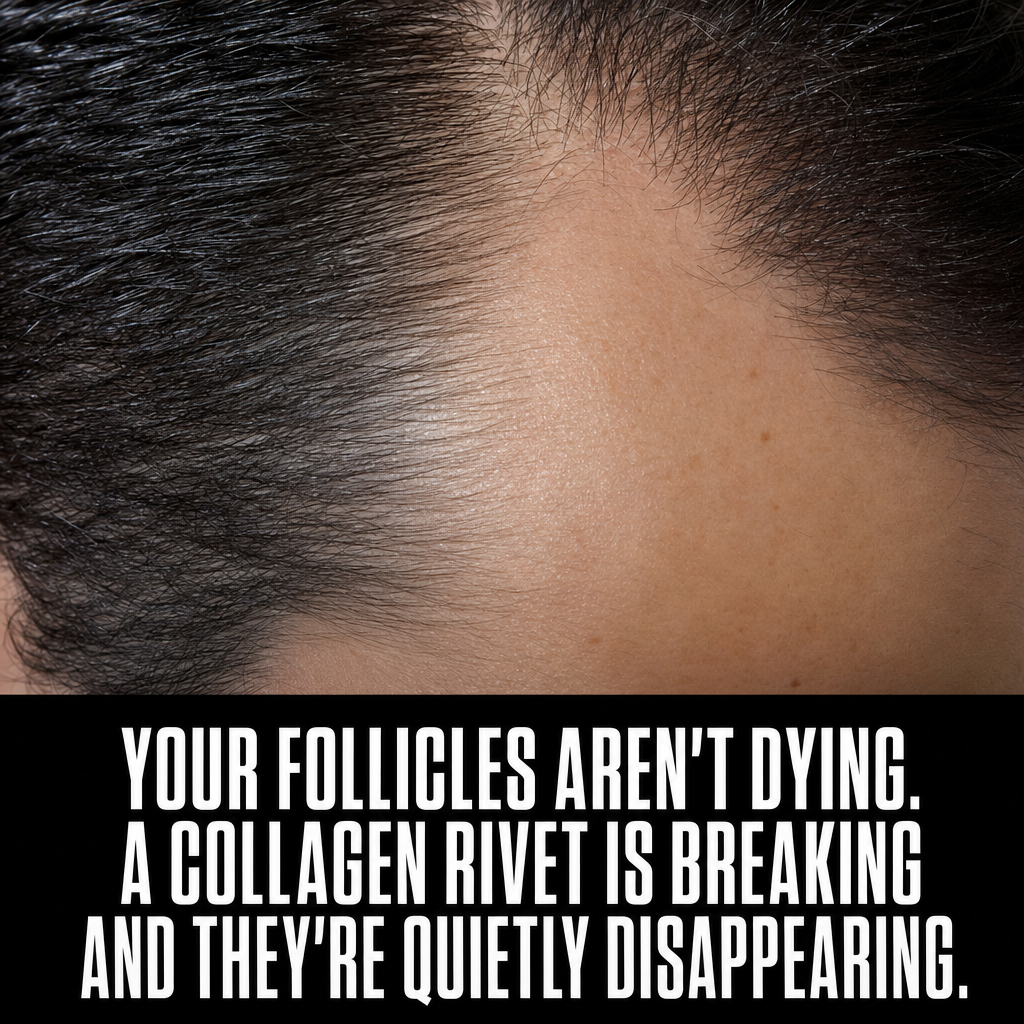
Dr. James Kreischer - Trichologist, MD Facebook ad: “Dermatologist Discovers Peptide Breakthrough That…”
Ran for 25 days, from May 30 to June 24, 2026, the last day Crush saw it.
Run by Dr. James Kreischer - Trichologist, MD on Facebook. Crush is not the advertiser and does not verify its claims. See this ad in Meta's Ad Library(opens in a new tab)
Want an ad like this for your product?
Crush makes new ad images for your product from this ad: your logo, your product photo, your offer.
Trials from $19.95 USD, then $79.95 USD a month. Cancel anytime.
About this ad
- Meta Ad Library ID
- 919034977853349
- Platforms
- Facebook, Instagram, Audience Network, Messenger and Threads
- Relaunches
- 0
Ad text
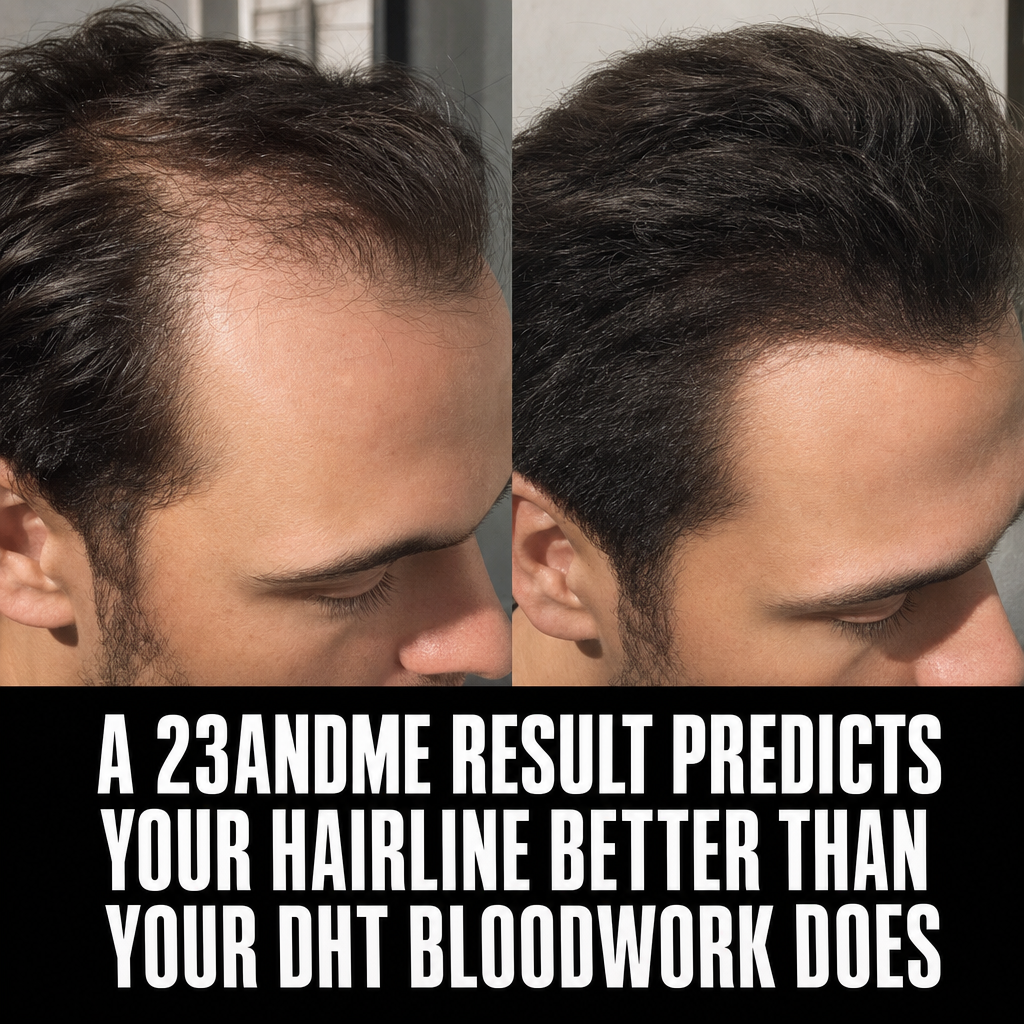
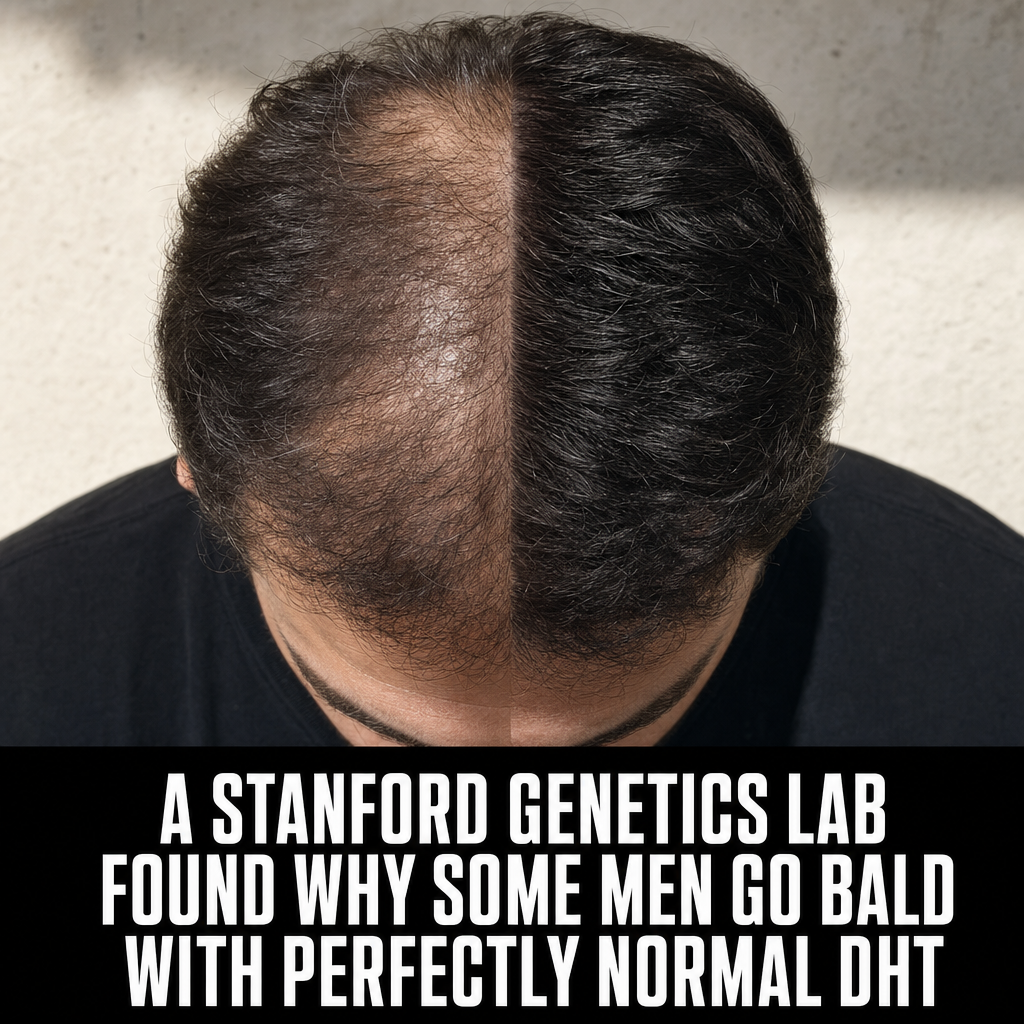
If your hair keeps thinning, you feel like you're doing everything right, you've thrown money at every pill and foam there is, and your derm keeps shrugging at you — pull up a chair, because I'm about to tell you why. And by the end of this, you're going to be a little angry. Because there are three things happening right now: One — your follicles aren't being killed by DHT directly; they're being evicted, stem cell by stem cell, because the anchor that holds those cells in place is being cut. Two — the people you're paying for answers keep blaming your genes and refusing to look past the hormone. Three — there's a multi-billion-dollar industry that profits every single month you stay on a treatment that only lowers the hormone and never protects the anchor that's actually being lost. So let me tell you what happened with my younger brother, because his story is going to change how you look at your own hairline. For years — and I mean four straight years — my brother watched his hair quietly disappear. Not dramatic overnight balding. The slow kind. The kind where the crown widens a little more every season, the hairline creeps back another millimeter, and one day you realize the guy in your phone's selfie camera isn't the one you remember. And the thing that drove him crazy was that he was doing everything right. Clean diet. Lifting. Sleeping. On the pills. And still, in every photo under any kind of overhead light, the scalp under his hair looked thinner than the month before. He's 29 years old and he started parting his hair to the side to cover the thin spots, angling every photo, wearing hats indoors, and noticing one thing that scared him more than the shedding — the skin on his crown was going smooth. Not thinning. Smooth. Shiny, poreless, like the follicles had simply moved out. So obviously, he does the responsible thing. He goes to the doctors. Dermatologists. A trichologist. We're talking thousands of dollars in consults, bloodwork, scalp checks, the whole circuit. And you know what every single one of them told him? “It's male pattern baldness.” “It's DHT. It's genetic.” “Get on finasteride and minoxidil and stay on them forever.” “Where it's gone smooth, the follicles are dead. There's nothing more to do.” So he did everything they said. Finasteride daily. Minoxidil twice a day. Religiously. And here's where it gets worse — and this is the part that made me start digging. His hormones were handled on paper. His bloodwork was “normal.” His DHT was suppressed. And the smooth zone on his crown kept spreading anyway. Month after month. Doing everything right and still losing ground. A year of this. Then closer to two. Same routine, same disappointing photos, same slow fade. He started to believe what they'd told him — that the smooth patches were dead and gone, that his genetics had decided, that he just had to accept it. So at this point I'm frustrated for him. Because I'm watching my brother do everything by the book — taking the prescriptions, spending the money, never missing a dose — and getting nowhere. And that's when I started asking the questions nobody wants you to ask: If DHT is the whole story, why does fin lower DHT to almost nothing and the crown still keeps going smooth? Why does a balding scalp turn poreless and shiny — where do the follicle openings physically go? And why do so many men who are doing absolutely everything right still lose their hair? So I went down a rabbit hole. A deep one. I started reading the actual research on what happens to a follicle as it miniaturizes and disappears — not the hormone story, the cell-biology story — and what I found was something the mainstream conversation almost never mentions. The follicle doesn't just shrink. It loses its stem cells. And it loses them because their anchor gets cut. Now pause for a second. We've all been taught the hormone story. DHT shrinks the follicle, block DHT, done. That's the whole conversation. But nobody — and I mean nobody — ever told us that the follicle keeps a reserve of stem cells riveted into place, and that aging baldness is those rivets being cut and the stem cells being thrown out of the skin. Here's what's actually happening up there. Every follicle has a bulge where it stores its stem cells — the cells that rebuild the hair from scratch each cycle. Those cells are bolted to their home base, the basement membrane, by a specific anchoring collagen called Type-XVII collagen, or COL17A1. Think of it as the rivet that holds the stem cell in its niche. In a landmark 2016 study published in the journal Science, researchers proved what happens with age and androgenetic stress: DNA damage inside those stem cells switches on enzymes that cut COL17A1. Once the rivet is cut, the stem cell can't hold its position. It gets pushed upward, forced to turn into an ordinary skin cell, and is shed right off the surface of your scalp. They called it transepidermal elimination — the follicle literally evicting its own stem cells through the skin. And every stem cell lost means the next hair is smaller. The follicle miniaturizes step by step, and eventually it flattens out flush with the skin — which is exactly why a bald scalp goes smooth and poreless. The follicle didn't die in place. It was emptied out and closed up. The same study showed this process is associated with androgenetic alopecia, and that forcing the follicle to hold onto COL17A1 prevented the miniaturization entirely in mice. And here's the kicker: finasteride lowers DHT, which lowers some of the stress driving this. But fin does not re-rivet the basement membrane, it does not re-anchor stem cells that have already been pushed out, and it does nothing to stop the enzymes already cutting COL17A1 in the follicles you still have. The eviction is already underway; lowering the hormone doesn't put the tenants back. That was the lightbulb. That's why my brother could handle his hormones on paper and still watch his crown go smooth. Fin was working on one upstream input while the actual structural failure — the anchor being cut and the stem cells being lost — kept going, and nothing in the standard protocol protects that anchor. You can't grow hair from a follicle that's already handed its stem cells to the surface. And it made a strange kind of sense. Think about the way a bald scalp looks — smooth, shiny, no pores. That's not a follicle that's merely shrunk; that's a follicle that's been emptied and sealed. Think about the crown going first — that's exactly where the androgen-driven stress on the stem cells is highest. Think about the donor rim on the back and sides staying full — that's the zone where the stem-cell anchor holds, the rivets stay intact, and the follicles keep their cells. It also explained the things that didn't fit the simple hormone story. Why two men with the same DHT levels can have opposite hairlines. Why some guys lose hair on fin while their bloodwork looks perfect. Why the men who plateau on fin don't get rescued by going harder upstream — adding dut, going oral, doubling the min — because all of that still doesn't protect the anchor or wake the stem cells that are left. And here's the part that made my blood pressure spike: This research has been published since 2016 in one of the most respected journals on earth. The mechanism is well-described. But there's no blockbuster pill in telling you the real problem is a structural anchor being cut. There IS a fortune in keeping you on a hormone pill and a foam for the rest of your life — handling one input while the follicles quietly empty out. See how that works? So I kept researching. Studies now. Ingredient papers. Talking to formulators. And I found there's an actual approach for protecting the anchor and restarting the stem cells a follicle still has — using four specific peptide and botanical actives that rebuild the niche and wake the cells before they're lost. One — sh-Polypeptide-1 and sh-Polypeptide-11. Signaling peptides that talk directly to the follicle stem cells still sitting in the bulge, pushing them back into a real growth cycle. Your stem cells aren't all gone. The ones still anchored have gone quiet. These wake them up. Two — sh-Oligopeptide-2 and sh-Oligopeptide-10. These support the basement membrane and the anchoring structure COL17A1 forms — rebuilding the home base so the stem cells have something solid to hold onto instead of being pushed toward the surface. Three — Arginine. The amino acid your body uses to make nitric oxide. Nitric oxide opens scalp blood flow and feeds the dermal papilla, so the niche gets the oxygen and nutrients it needs to keep its cells anchored and cycling. Four — Botanical Anti-Inflammatory Extracts. These quench the oxidative stress and DNA damage that switch on the COL17A1-cutting enzymes in the first place, so the eviction slows down at its source. Together, these four work as a system. The peptides wake the stem cells. The peptides also rebuild the anchor those cells hold onto. The arginine feeds the niche. The botanicals shut off the damage that's been cutting the rivets. You protect what you have and restart what's dormant. Now here's where it gets practical. You can buy these ingredients separately. A clean sh-Polypeptide blend will run you about $90 a month. Pure sh-Oligopeptides another $70. A pharmaceutical-grade Arginine topical, maybe $40. A real botanical anti-inflammatory blend at the right potency, easily $60. That's $260 a month for the full stack — and that's IF you can find clean versions, IF you measure correctly, IF you layer them right, and IF you remember to apply four serums every day. Most guys can't sustain that. Most guys don't want to. So they take the prescription, give up on the rest, and watch their crown go smooth by the month. That's where the brand I want to tell you about comes in. It's called FST-5 Peptide Complex, by a company called Richvell. They were a small peptide-research team that took over a hair brand called Keapers, brought their actual science with them, and built a single serum that combines all five of these actives at clinical concentrations. And the price isn't $260 a month. It's a fraction of that. We're talking about replacing four products with one bottle. My brother started using it on a whim. He'd given up on the whole space and just figured he'd give the peptide angle one honest shot. Three weeks in, the shedding in the shower started to thin out. The hairs that did come loose weren't the wispy little ones anymore. By one month, the smooth edge on his crown stopped creeping outward — the first time in three years it hadn't gotten a little worse. He sent me a photo with the caption “is it just me or…” and the front of the crown looked less see-through. By two months, there was real stubble coming back along the part — fine at first, but dark and growing, in skin that had been smooth and bare. His hair held a style for the first time in three years. People started telling him he looked good without being able to say why. He stopped wearing a hat indoors. He started letting people photograph him from the side again. He stopped doing the side-part comb-over thing. His confidence quietly came back, and you could see it in the way he carried himself when we met up for dinner last month. And here's the funny part — he's still on finasteride. He just finally added the missing piece. The hormone got handled. The anchor got protected too. Two different problems, both treated, and the results compound when you stop ignoring the structural half. He told me he wishes he'd known this five years ago. He wishes someone — any of the four specialists he saw — had spent ten seconds looking past the hormone and asking what was actually happening to the stem cells. He's not bitter about the doctors anymore. He just doesn't trust them as the only voice in the room. Now, a heads up. FST-5 Peptide Complex isn't sold in pharmacies and they keep the stock tight on purpose so they don't dilute the formulation by mass-producing it. When I checked yesterday they were running a 30% off launch promo on the multi-bottle pack, which makes the per-month price genuinely silly compared to the $260-a-month stack version. I don't know how long that runs. It comes with a 100-day money-back guarantee. If it doesn't work, you don't pay. They eat the bottle. If your hair has been thinning despite “doing everything right,” if your crown keeps going smooth on fin, if you've been watching poreless skin spread where hair used to be and wondering if it's gone for good — try it. The worst case is you get your money back. Click below to check it out. 👉 https://richvell.com/pages/fst5
Where the ad sends people
richvell.com
Dermatologist Discovers Peptide Breakthrough That Reactivates Hair Growth Like You're 17 Again
Richvell FST-5 Peptide Complex helps support thicker-looking hair, reduced shedding, and a healthier scalp with advanced peptide-powered hair care.
Shop now: richvell.com(opens in a new tab)