

Key Takeaways
- 1Manual interest targeting is failing due to iOS14 signal loss
- 2Advantage+ campaigns use predictive AI to outperform manual segmentation
- 3Creative is the new primary lever for targeting in the Black Box era
- 4First-party data is essential for training Meta's AI algorithm
- 5AI-native campaigns are antifragile and improve with market volatility
Signal loss has crippled manual targeting. Meta's Advantage+ and AI tools are the new standard for scaling. Learn why sticking to manual controls is a "tax" on performance and how to pivot to an AI-first strategy.
Have you noticed that your Interest Targeting isn't working as well as it used to?
You used to be able to target "Dog Lovers" and get cheap sales. Now, that same audience is expensive and inconsistent. You might think the algorithm is broken, but it’s not broken. It’s changing.
Meta (formerly Facebook) is subtly, and sometimes not so subtly, telling you to stop driving the car. They want you to take your hands off the wheel.
The future of Facebook advertising is 100% automated. And if you insist on driving manually, you are going to crash.
The Signal Loss Crisis: Meta's AI Solution
When Apple released iOS14, advertisers lost a huge amount of data. We couldn't track users as easily, and the "Sniper Rifle" of manual targeting became a blunt object. We lost the ability to see who clicked, who bought, and who bounced with perfect clarity.
Predictive AI Models: The New Meta Standard
Meta's response was to go all-in on AI.
They built AI Meta Ads tools like Advantage+ Shopping Campaigns (ASC). These tools don't rely on tracking pixels as much as they rely on predictive modeling.
The AI looks at the context of the user to predict if they will buy. It analyzes factors like what they are reading, what they are watching, time of day, device battery level, and scrolling speed.
This predictive model works better when you give it broad freedom. When you add manual constraints (like "only target people aged 25-34" or "exclude past purchasers"), you are actually hurting the AI's ability to find buyers. You are forcing it to look in a smaller room when the customer might be just outside the door.
Advantage+ Shopping Campaigns: The Engine of Meta Ads
Advantage+ is not just a feature. It is the new operating system of Meta Ads.
In a traditional campaign, you segment everything into distinct buckets:
- Prospecting Campaigns: Finding net-new customers.
- Retargeting Campaigns: Re-engaging website visitors.
- Retention Campaigns: Upselling existing buyers.
In an Advantage+ campaign, you have one single bucket.
You throw all your creative and all your budget into this one bucket. The AI decides in real-time who gets served a "prospecting" ad and who gets served a "retargeting" ad. It blurs the lines because the lines don't matter to the machine; only the outcome matters.
Advertisers who fight this automated structure are seeing their costs rise. Advertisers who embrace it and feed it with high-quality creative are seeing their costs drop.
For instance, our data on profitable advertisement makeup campaigns reveals exactly how specific creative inputs and calls-to-action drive consistent sales in an automated environment. This aligns closely with what we've discovered analyzing profitable coffee advertisements, where winning campaign structures prioritize strong hooks and creative lifespans over manual audience tinkering.
Why Manual Meta Ad Campaigns Are Fragile
A manual campaign is fragile because it relies on specific conditions to work.
If the "Yoga" interest group gets saturated, the campaign dies. If the creative fatigues, the campaign dies. You have to constantly babysit it by:
- Refreshing exhausted audiences
- Duplicating ad sets to force spend
- Tweaking manual bids
The Antifragile AI Media Buyer
An AI campaign is antifragile. It gets stronger with volatility.
If one audience dies, the AI automatically shifts budget to another one. If one creative dies, the AI rotates in a new one. It is entirely self-healing.
The more data it gets, the smarter it becomes. A manual buyer gets tired after analyzing 1,000 impressions. An autonomous AI media buying agent gets smarter after analyzing 1,000 impressions.
First-Party Data: Feeding the Meta AI Engine
Since Meta can't rely on third-party cookies anymore, it relies heavily on First-Party Data.
This means the proprietary data you give directly to the platform, such as:
- Your customer and purchaser lists
- Your email and SMS subscribers
- Your server-side Conversions API events
The future of AI Facebook Ads is about feeding the beast. The brands that win will be the ones that have the cleanest, most robust data pipelines feeding back into Meta's brain.
If you are still relying on the browser pixel alone, you are feeding the AI junk food. You need to feed it steak.
Embracing the "Black Box" Era of AI Ads
Advertisers hate giving up control. We want to know exactly who saw our ad and exactly why they clicked. But that era is over. We are entering the "Black Box" era.
You put money and creative in one end, and sales come out the other end. You don't get to see the gears turning inside. This is scary, but it is also liberating.
It means you can stop worrying about the technical settings inside the Black Box (bids, placements, attribution windows) and start focusing on the input: The Creative.
Just like we have seen in recent fragrance advertising data, long-term success requires strong direct-response creative over high-budget aesthetic commercials.

The Impending "Manual Tax" on Facebook Ads
I believe that within two years, Meta will start charging a tax on manual campaigns.
Not a literal tax, but a performance tax. Manual campaigns will simply have higher CPMs and receive lower quality traffic.
Meta wants to prove that their AI is superior. They will heavily incentivize advertisers to use their automated tools. If you stick to the old ways, you will be fighting an uphill battle against the platform itself.
They are already hiding manual targeting options deep in the settings menu, and soon, they might remove them entirely.
Conclusion: The AI Advertising Train is Leaving
The transition to AI Facebook Ads is not a trend; it is a fundamental restructuring of the ad ecosystem.
You can stand on the tracks and try to stop the train, or you can get on board.
The manual media buyer is rapidly becoming a relic of the past. The future belongs to the AI-native brand that understands how to feed the algorithm, not fight it.
It’s time to let go of the wheel.
Frequently Asked Questions
Common questions about this topic
1Why is Facebook interest targeting not working anymore?
2What is the difference between manual and Advantage+ campaigns?
3Does AI targeting work better than manual targeting on Meta?
Written by

Rokas Steponavičius
Founder, CEORokas is the Founder and CEO of TryCrush.ai, an ex-IBM professional turned entrepreneur focused on building AI-driven growth platforms. With a strong background in ecommerce, performance marketing, media buying, and artificial intelligence, Rokas specializes in creating scalable, data-led systems that drive measurable revenue. His mission is to help modern businesses leverage AI to optimize acquisition, conversions, and long-term profitability.
Stop Guessing.
Start Crushing.
AI Ad Manager trained by world-class media buyers to generate your creatives and optimize your ads 24/7.
Learn more
Related articles
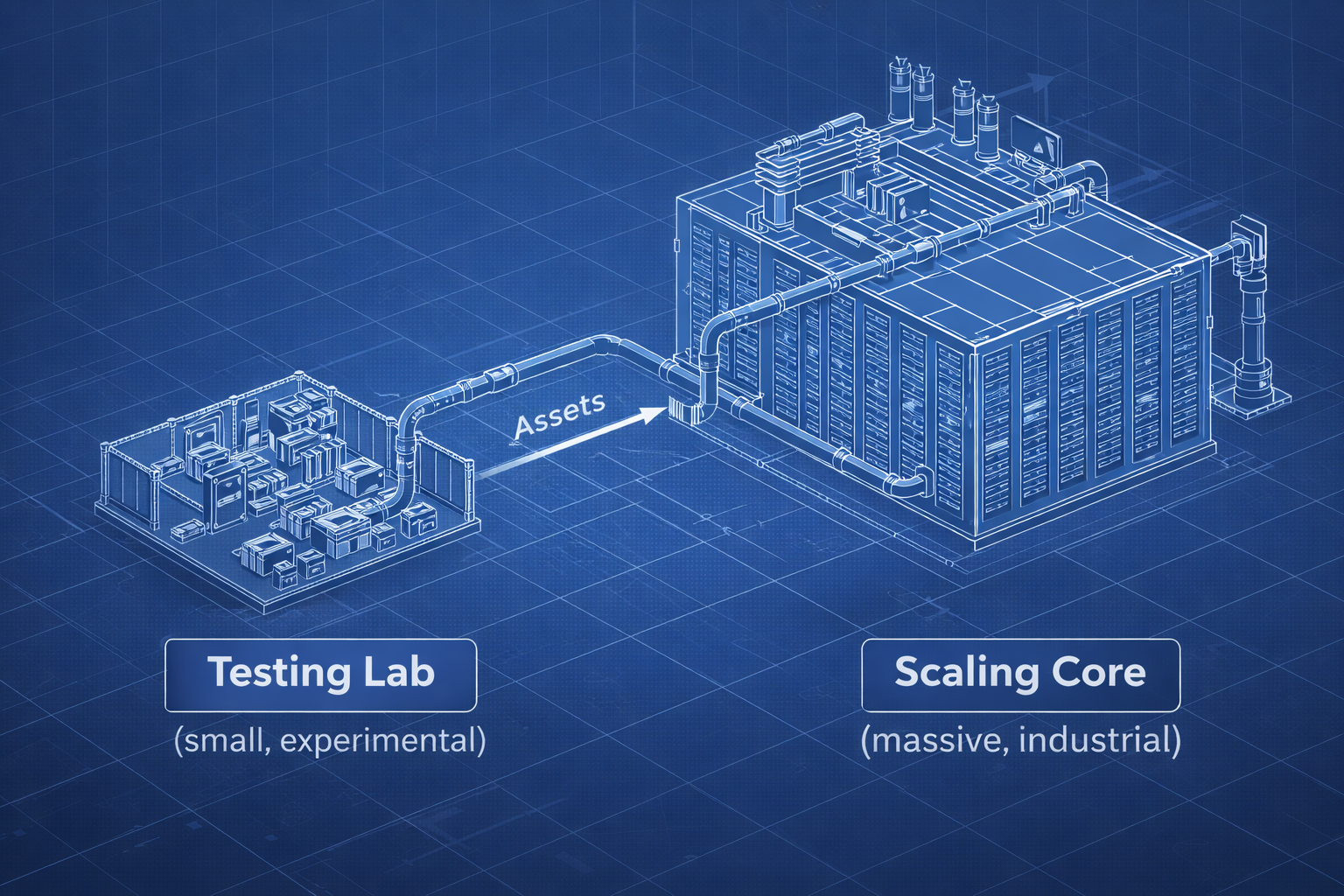
How to Structure Your Facebook Ad Account for Predictable Growth
Messy ad accounts produce messy results. Discover the "Sandbox" philosophy that separates experiments from revenue. This guide reveals the only three campaigns you need to scale your Facebook Ads to seven figures.
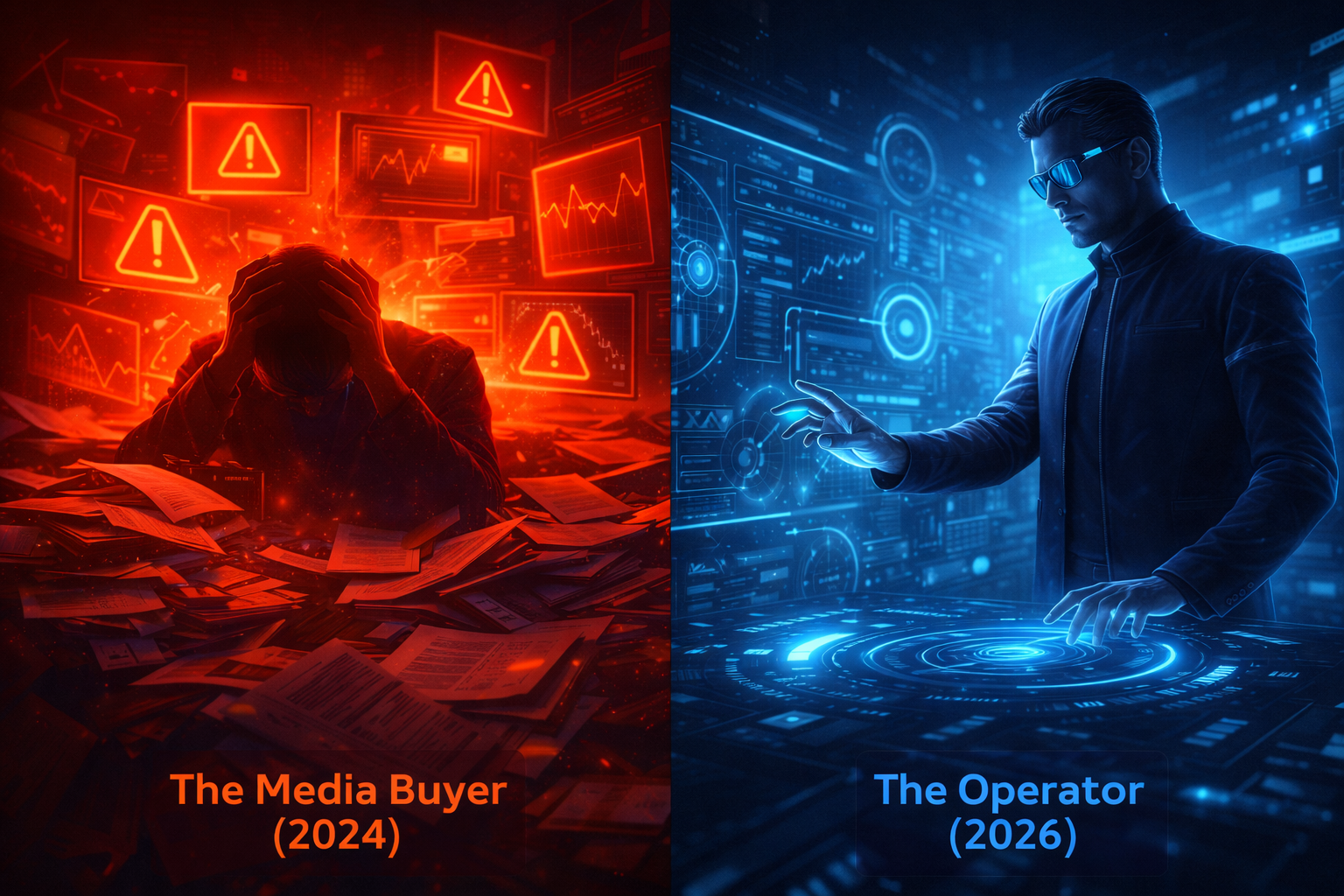
The "Media Buyer" is Dead. Long Live the Operator
Manual media buying is obsolete. Meta's AI algorithms now outperform human technicians. Learn how to escape the "Technician's Trap" and become a strategic Operator who leverages automation for massive scale.

Facebook Keywords & Search Targeting Explained
Google uses explicit keywords; Facebook uses implicit interests. This guide reveals how to target behaviors, leverage the hidden "Search Results" placement, and use your ad creative as the ultimate targeting tool.

The Truth About Facebook Media Buyers (And Why You Don't Need One)
The era of the "button-pusher" is over. Meta's Advantage+ tools have automated targeting, making traditional media buyers obsolete. Learn why you should shift your budget to Creative Strategists and AI automation.