
Key Takeaways
- 1AI Ads slash campaign setup time from hours to just 15 minutes
- 2Automated agents optimize bids every second, 24/7/365
- 3Scale ad spend to $10k/day without losing cost efficiency
- 4Generative AI allows testing 50+ creative variations simultaneously
- 5Transition media buyers into strategic AI Architects
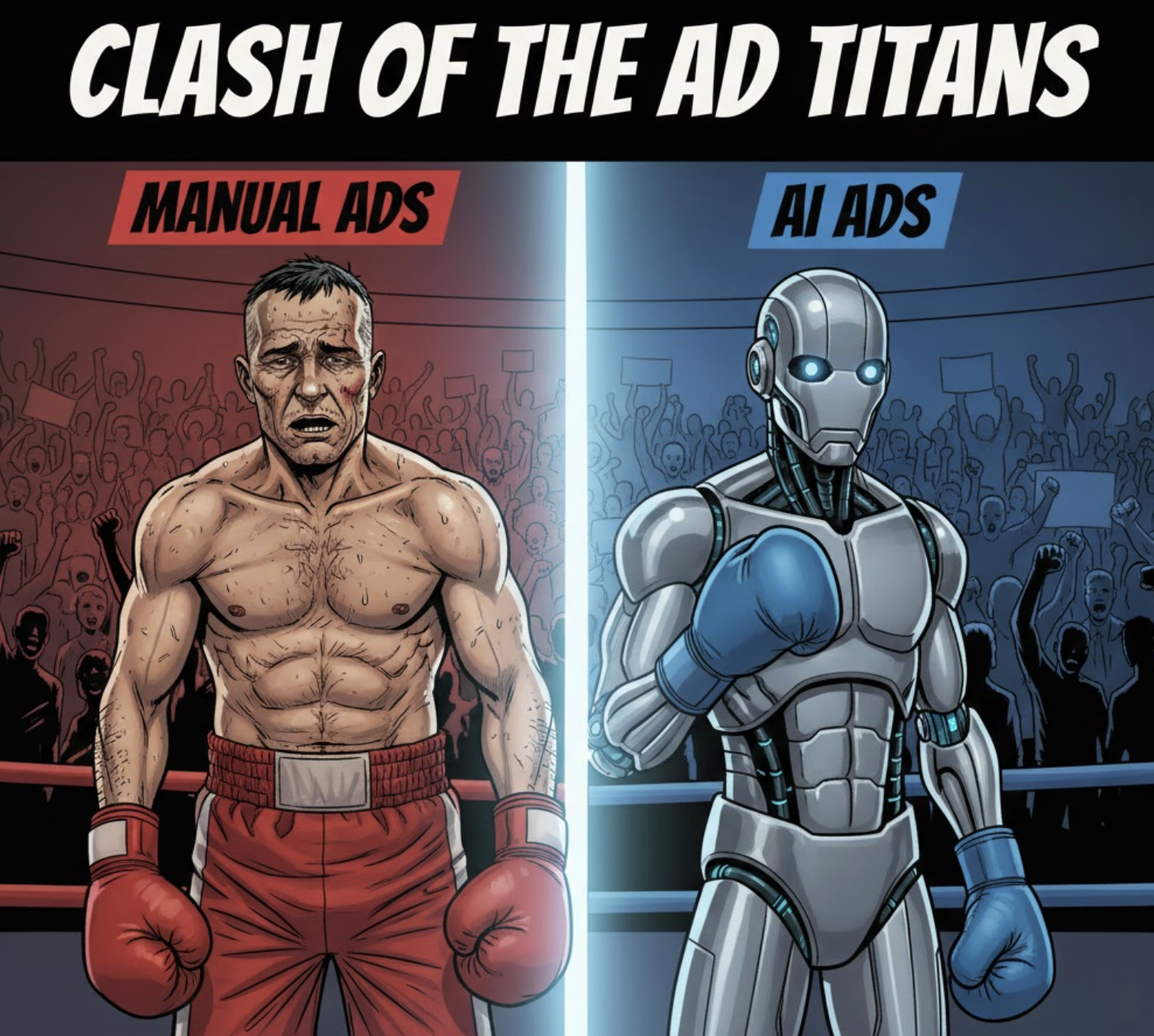
Manual media buying is dead. We pit traditional Facebook Ads against the new wave of AI Ads in a 5-round battle covering setup time, optimization, and scalability. Discover why autonomous agents are the future of advertising.
For the last decade, "Facebook Ads" meant one thing: A human sitting at a computer, manually setting up campaigns, manually targeting audiences, and manually testing creative.
But recently, a new challenger has entered the ring. We call them "AI Ads."
This isn't just a buzzword. It's a fundamentally different way of buying media. It's the difference between driving a manual transmission car and riding in a self-driving Tesla.
In this showdown, we are going to pit traditional manual Facebook Ads against the new wave of automated AI Ads to see which one actually delivers better results for your business.
We are going to evaluate five distinct rounds: Setup Time, Optimization Speed, Creative Output, Cost Efficiency, and Scalability.
Round 1: Ad Campaign Setup Time
Facebook Ads (Manual)
You have a new product launch. The manual checklist is exhausting:
- You need to create 5 ad sets.
- You need to upload 10 creatives.
- You need to write 5 headlines.
- You need to set up exclusions.
- You need to check your pixel events.
Total time: 4-6 hours of clicking, copy-pasting, and double-checking settings to make sure you didn't accidentally set a $5,000 budget instead of $50.
AI Ads (Automated)
You log into an AI advertising platform like Crush AI. You upload your raw assets, set your goal (e.g., "Maximize Conversions"), and click "Launch."
The autonomous agent builds the campaign structure for you. It names the ads correctly based on a consistent taxonomy and sets the tracking parameters automatically.
Total time: 15 minutes.
Winner: AI Ads (By a landslide)
Round 2: Algorithmic Optimization Speed
Facebook Ads (Manual)
You launch your ads on Monday. On Tuesday morning, you check the results. You see that Ad A is doing well and Ad B is failing. You turn off Ad B and increase the budget on Ad A.
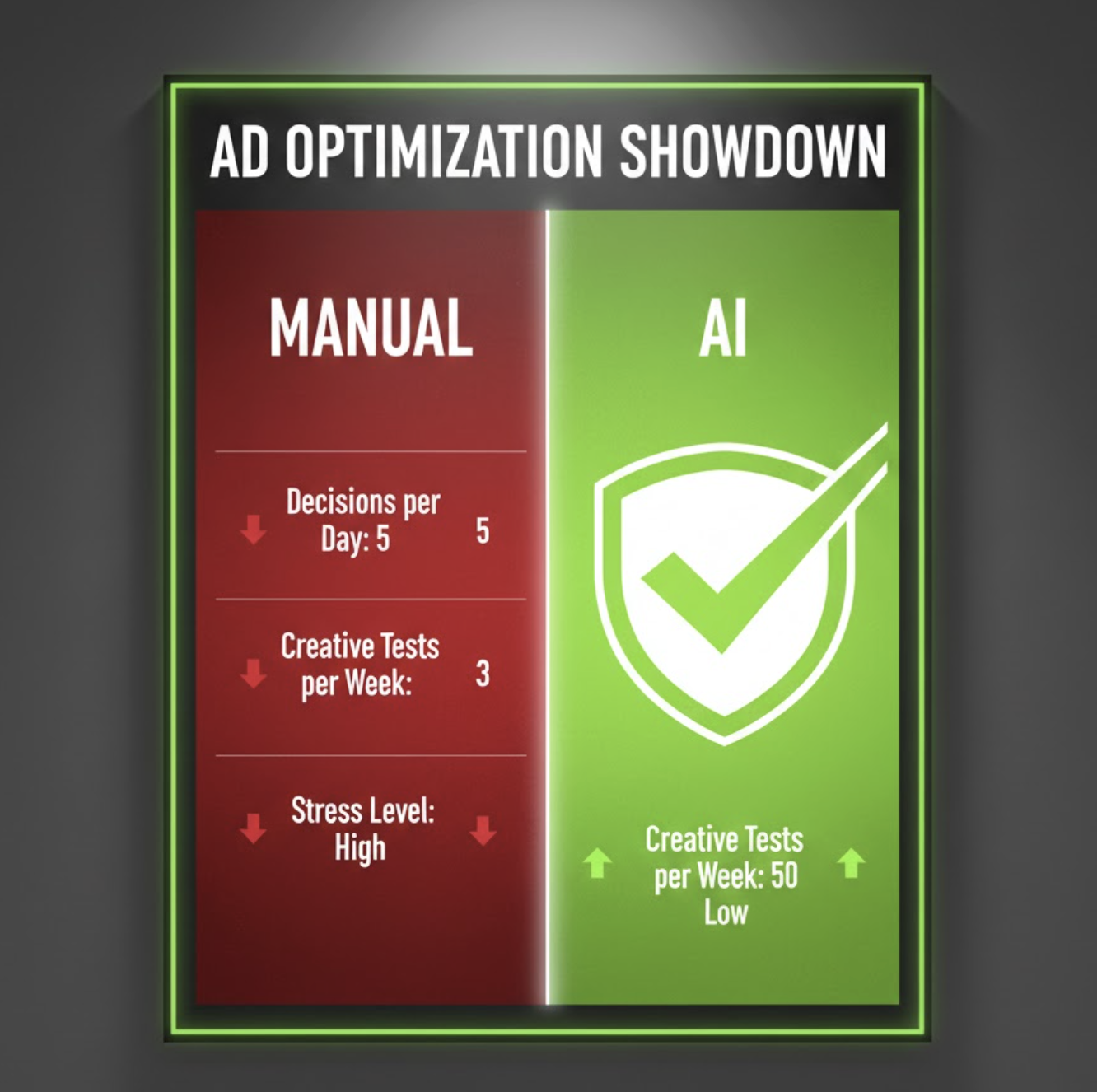
You are making decisions once every 24 hours. If an ad breaks at 2 PM on Monday, you won't know until Tuesday at 9 AM. That represents 19 hours of wasted ad spend.
AI Ads (Automated)
The AI launches the ads. Ten minutes later, it notices that Ad B has a high CPM (Cost Per Mille) and lowers the bid. An hour later, it notices Ad A has a high Click-Through Rate (CTR) and increases the bid.
The AI media buyer is making decisions once every second.
While you are sleeping, the AI is optimizing. While you are eating lunch, the AI is optimizing. It reacts to market conditions in real-time, functioning like the 24/7 employee capturing opportunities that a human would miss.
Winner: AI Ads (Speed kills)
Round 3: Ad Creative Output and Testing
Facebook Ads (Manual)
You hire a designer. You wait 3 days for them to make 5 static images. You run them. They experience ad fatigue in a week. You repeat the cycle.
Your creative throughput is limited by human bandwidth. You can only produce as fast as your designer can work.
AI Ads (Automated)
You use generative AI tools to test variations of your product shot. By utilizing an AI creative studio, you can analyze ad data and rapidly generate 50 distinct formats, testing them all simultaneously.
The algorithm quickly finds the one weird variation that no human would have designed, but which converts at 3x the average. For instance, when building profitable advertisement makeup campaigns, AI instantly identifies which calls to action drive the most sales and exactly how long winning ads should run before experiencing fatigue.
Your creative throughput is limited only by your imagination. You can confidently test 100 ads a week instead of 5.
Winner: AI Ads (Volume wins)
Round 4: Cost Efficiency (CPA & Target ROAS)
Facebook Ads (Manual)
Manual media buyers often "over-optimize." They constantly tinker with the ads, resetting the learning phase. This directly leads to unstable CPAs.
Also, humans are emotional. We hold onto losing ads because we "like" them, and we turn off winning ads because we are scared they will crash.
AI Ads (Automated)
AI has no ego. It doesn't care if an ad took 10 hours to make or 10 seconds. If it doesn't convert, it dies.
This ruthless efficiency means that every dollar is spent on the highest-probability outcome. The AI constantly shifts budget to the best-performing assets, squeezing every drop of Return on Ad Spend (ROAS) out of the campaign.
Winner: AI Ads (Ruthless efficiency)
Round 5: Campaign Scalability
Facebook Ads (Manual)
Scaling is scary. When you increase budget, efficiency usually drops. A manual buyer hits a ceiling around $1k-$5k/day where they simply can't manage the complexity anymore.
More spend equals more problems: more ads to check, more comments to moderate, and more fires to put out.
AI Ads (Automated)
AI loves scale. The more ad data you feed it, the smarter it gets. If you are focused on scaling dropshipping Shopify stores, going from $1k/day to $10k/day is just a math problem for an AI.
It automatically segments audiences, spins up new creative variations, and manages the bid pressure across thousands of ad auctions simultaneously.
Winner: AI Ads (Infinite scale)
The Verdict: It's Not Even Close
If this were a boxing match, the referee would have stopped it in the first round.
Traditional manual Facebook ads simply cannot compete with the speed, scale, and precision of automated AI ads.
The manual buyer is playing checkers. The autonomous AI agent is playing 4D chess.
The Transition Plan: How to Upgrade to AI Ads
So, you are convinced. You want to switch to AI Ads. How do you do it? You don't have to fire your team tomorrow. You need to transition them smoothly.
- Audit your current setup: Look at how much time your team spends on "button pushing" vs. "strategy."
- Adopt an AI Platform: Start moving your campaigns to an autonomous agent like Crush AI. Begin with one account to test the waters.
- Retrain your team: Teach your media buyers to become "AI Architects" or upskill them to act as a creative strategist. Their job is no longer to manually bid; it is to feed the machine with better creative assets and strategic offers.
This doesn't mean humans are obsolete. It means humans need to upgrade their role.
You shouldn't be the one throwing the punches in the ring. You should be the manager in the corner, providing the winning strategy to the fighter.
The future belongs to those who adopt the machine, not those who fight against it. It's time to upgrade your media buying operating system.
Frequently Asked Questions
Common questions about this topic
1What is the difference between manual Facebook Ads and AI Ads?
2Why are AI Ads considered better than manual Facebook Ads?
3How does AI affect ad creative testing?
Written by
Albertas Pocius
Co-founder, CMOAlbertas is the Co-Founder and CMO of TryCrush.ai, bringing elite-level performance marketing expertise to the platform. With over $50M+ in combined Facebook and TikTok ad spend, Albertas has launched and scaled dozens of projects from zero, driven by a deep obsession with data and experimentation. He has trained 20+ media buyers, consulted 100+ companies, and is widely recognized as one of Europe’s early TikTok pioneers, likely the first to scale campaigns beyond $100K per day. Today, he also teaches advertising strategy at two colleges, shaping the next generation of media buyers.
Stop Guessing.
Start Crushing.
AI Ad Manager trained by world-class media buyers to generate your creatives and optimize your ads 24/7.
Learn more
Related articles
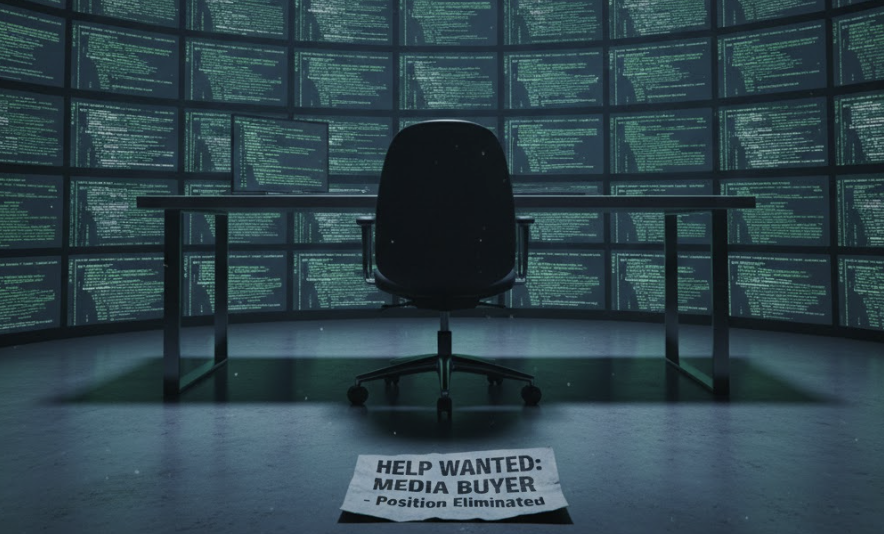
The Truth About Facebook Media Buyers (And Why You Don't Need One)
The era of the "button-pusher" is over. Meta's Advantage+ tools have automated targeting, making traditional media buyers obsolete. Learn why you should shift your budget to Creative Strategists and AI automation.
The "Media Buyer" is Dead. Long Live the Operator
Manual media buying is obsolete. Meta's AI algorithms now outperform human technicians. Learn how to escape the "Technician's Trap" and become a strategic Operator who leverages automation for massive scale.
How to Profit from Ads AI: The Ultimate Guide to Scaling in 2026
Stop using AI just to cut costs. Learn how to transform an AI ads generator into a profit-generating machine. Master high-velocity testing, ruthless kill switches, and dynamic scaling to maximize your ROAS in 2026.

The Silent Takeover: How AI Advertising is Replacing Agencies
The Mad Men era is over. Welcome to the Math Men era, where AI advertising is rapidly replacing traditional agencies. Discover how algorithms are driving higher ROAS, testing hundreds of creatives, and transforming the future of digital marketing.