
Inactive· since Jul 6, 2026
- 72
- days it ran
- 0
- relaunches
Ad copy
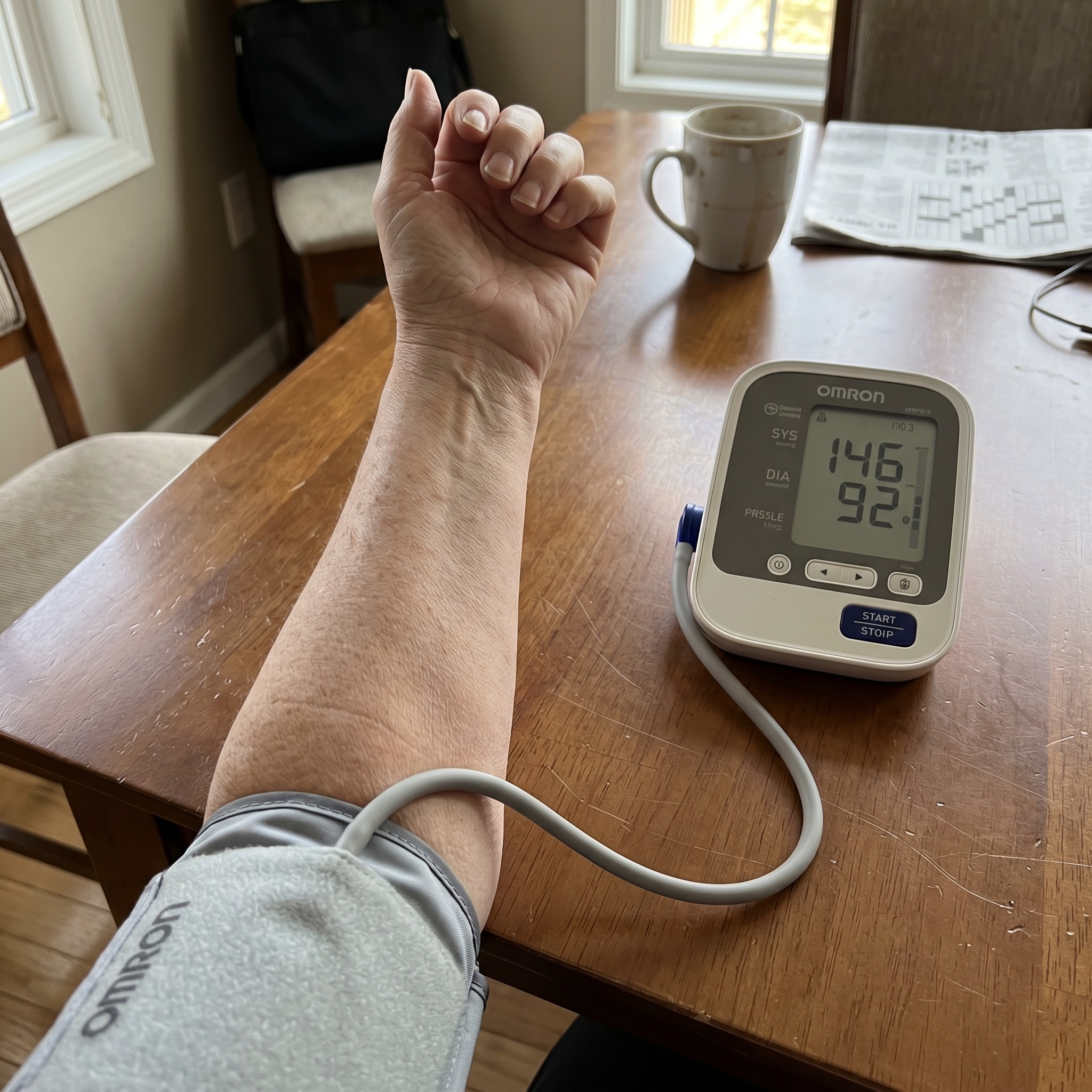
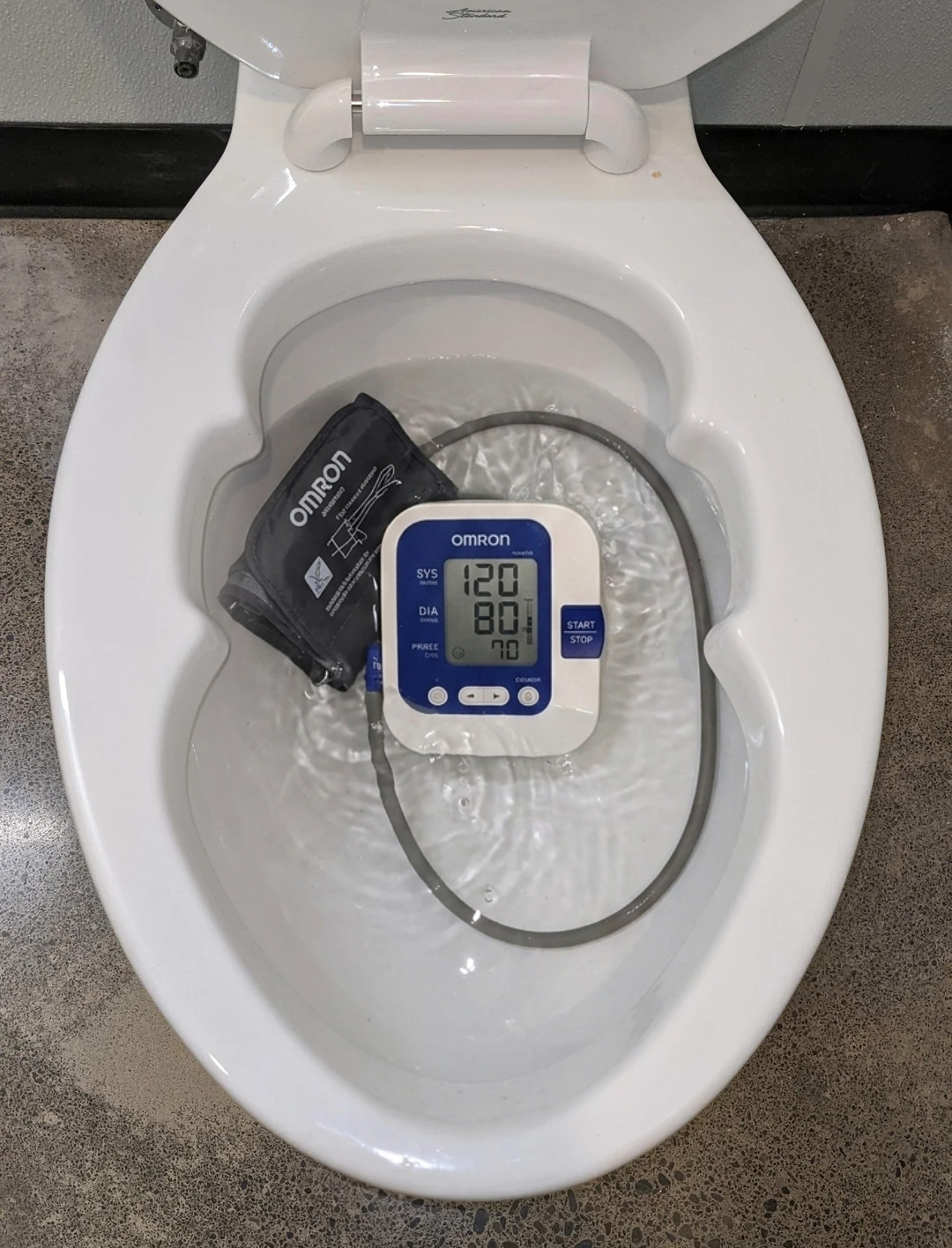
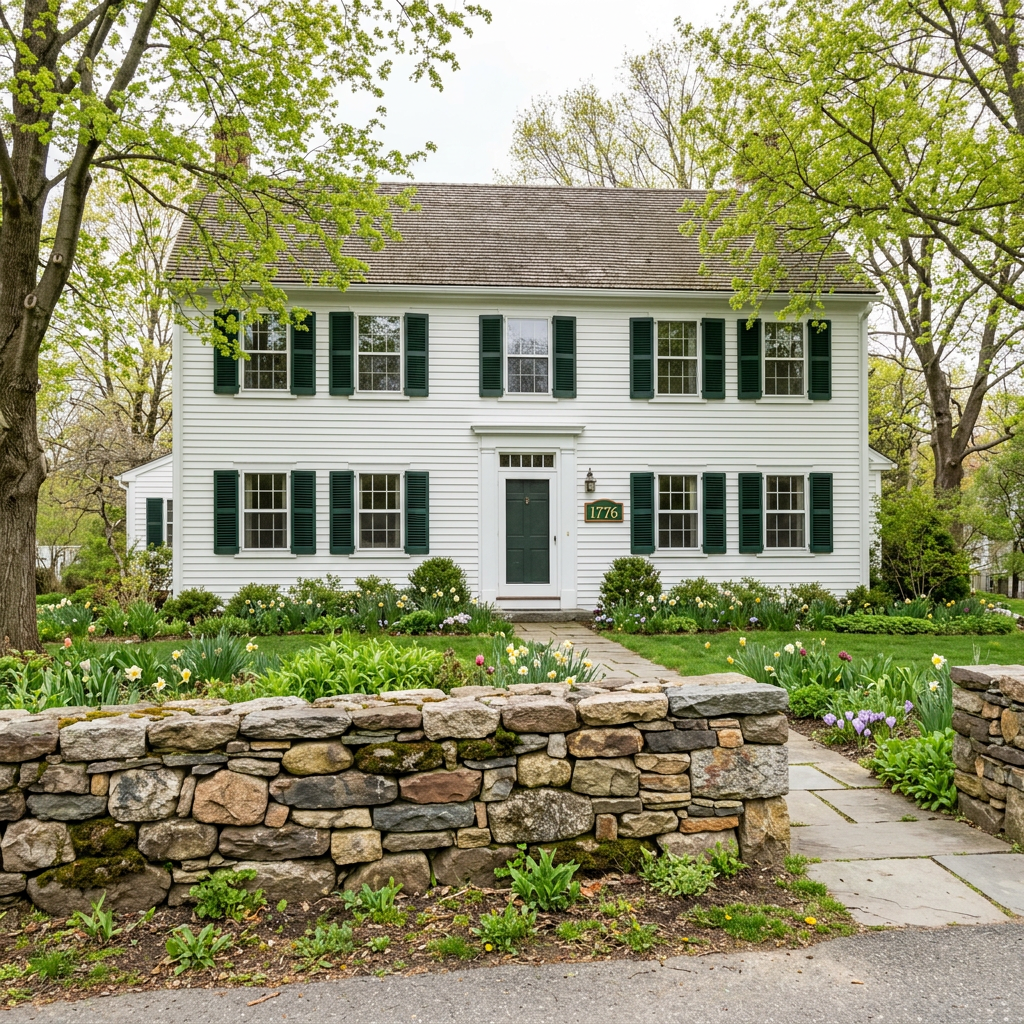
I had a stretch of three good days in a row last spring and I almost forgot what was wrong with me. That's the part nobody warns you about. Not the bad days. The good ones. Because the good ones lie to you. They tell you maybe it's gone. Maybe you imagined it. Maybe you're fine. And then a labradoodle pulls you down a sidewalk in Fairfield, Connecticut and you sit on a stranger's stone wall for 22 minutes trying not to die, and you remember. My name is Maureen. I'm 58. I live alone in a two bedroom on Beach Road, about a mile from the Sound, with a back porch that needs repainting and a kitchen window that looks out at a hydrangea I've been trying to kill for six years that refuses to die. My husband Pete passed in 2019. Heart. Sudden. He was eating a turkey sandwich at the kitchen counter and just sat down on the floor. The paramedics said he was gone before he hit the linoleum. I keep the spot where he sat covered with a small braided rug now because I couldn't stand looking at it bare. I work part time at the library on Old Post Road. I do programming for the kids. Story hour on Tuesdays. I run the summer reading club. I knit. I garden when my back lets me. I have one sister, Donna, who lives in Westport with her husband Glenn, and I have her dog Charlie about four times a year when they fly down to see Glenn's mother in Naples. Charlie is a labradoodle. Cream colored, 62 pounds, four years old, the absolute sweetest animal you've ever met and dumb as a bag of doorknobs. This story is about Charlie. And it's about a stone wall I sat on for 22 minutes in front of a house I'd never been to before. And it's about what I learned in those 22 minutes that I think saved my life. But I'm getting ahead of myself. Let me back up. I started feeling weird about three years ago. Nothing dramatic. Just little things. I'd stand up too fast and the room would tilt for a second. I'd carry groceries in from the car and have to lean against the fridge before putting them away. I'd be at the library shelving picture books and feel my heart kind of flutter and pause, like a moth bumping into a window. I went to my doctor. Dr. Halpern. He's been my doctor since Pete and I moved up here from Stamford in 2008. Nice man. Nearing retirement. Reads the chart, listens, runs the labs, sends you home. He took my pressure at that first visit. 142 over 88. He said, "Well, that's a little elevated. Could be the visit. White coat thing. Let's check it again in three months." I said okay. Three months later it was 146 over 90. He said, "Stage 1. Nothing to panic about. A lot of women your age. Let's watch it." I said okay. Three months after that, 148 over 92. He said, "Are you exercising? Cutting salt?" I said yes to both. He said, "Stress?" I said, "I'm a 56 year old widow who works at a library. My biggest stressor this week was a six year old who threw up on a copy of The Very Hungry Caterpillar." He laughed. He didn't put me on anything. He said let's keep watching. Watching. That's what they do. They watch. While the number creeps up half a point at a time and you start feeling like a kettle that's been left on the back burner too long. I want to tell you what was happening to my body during those years of "watching," because nobody at the doctor's office ever asked me. They asked about the number. They never asked what it felt like to be the person attached to the number. It felt like I was running on a treadmill that nobody else could see. I'd wake up tired. Not regular tired, the kind of tired where you open your eyes at 6:30 in the morning and your chest is already working too hard. I'd put on the coffee and feel my heart catch, just for a second, like it forgot the rhythm. I'd take the trash out to the curb on Tuesday morning and have to stop at the mailbox and pretend to look at something so the neighbor across the street wouldn't see me catching my breath. I started avoiding the stairs at the library. We have an elevator for the kids' wing and I started taking it. I told myself it was because of my knee. It wasn't. I stopped meeting Donna at the diner on Saturdays for breakfast because the parking lot was a hill and walking up it made my temples pound. I stopped doing the garden in front of the porch. Just let it go. Weeds came in. Hydrangea took over. I told myself I'd get to it next year. I gained nine pounds without changing a thing about how I ate. And the whole time, every three months, I'd sit in Dr. Halpern's office and he'd take the cuff off and write something down and say, "Still elevated. Let's keep watching." I started to think maybe I was crazy. Maybe this was what 56 felt like. Maybe everybody felt this way and nobody talked about it. Maybe Donna felt this way. Maybe the woman ahead of me at Stop and Shop felt this way. Maybe we were all just walking around like overheated kettles, smiling at each other, pretending the steam wasn't there. I want to tell you about the day with Charlie now. Because it's important. Donna called me on a Sunday in late April last year. She and Glenn were flying to Florida that Friday. Glenn's mother had a cataract surgery and they were going to be down there for nine days. Could I take Charlie? I said yes. Of course. I always said yes. I drove up to Westport on the Friday morning, picked up Charlie and his bed and his food bag and his ridiculous little raincoat, and I brought him home. Charlie is the sweetest dog on earth and also a complete idiot. He pulls on the leash like he's being chased. He barks at squirrels he can't see. He once ate a whole sleeve of saltines off my counter and looked at me afterward like he didn't know how it happened. The first three days went fine. I walked him in the morning around the neighborhood, did a short loop, came home, sat on the porch with my coffee. He was happy. I was happy. Day four was a Tuesday. April 23rd. I remember the date because it was supposed to be the day I went back to Dr. Halpern for my three month check. I'd canceled it because of the dog. It was warmer than it should have been for April. Maybe 74 degrees. Sticky. The kind of day that feels like the air has weight. I clipped Charlie's leash on around 10:30 in the morning. We started up Beach Road like we always did. He did his usual sniffing routine for the first quarter mile. Then he saw the cat. I don't know whose cat it was. Orange tabby. Sitting on a porch railing about 60 feet up the road on the left. Charlie went from a walk to a full sprint in a half second. He's 62 pounds. I'm 137. The leash was wrapped around my left wrist twice because I'd been switching hands. I went with him. I didn't fall, exactly. But my body did something I can only describe as launching. My arm yanked forward, my chest jolted, my feet stumbled, and I half ran half stumbled about 30 feet up the sidewalk before I managed to plant myself and yank him back. I got him stopped. He was still barking. The cat was unbothered. And then I felt it. It started in my temples. A pressure. Like somebody had wrapped a wet towel around my head and was tightening it slow. Then my chest got heavy. Not sharp. Heavy. Like something was sitting on it. Then my vision went funny. Not black. Spotty. Little gray dots floating across whatever I was looking at, and the edges of everything got soft. And then my legs. My legs went rubber. I didn't fall. I made it about ten more feet to a stone wall in front of a white colonial with green shutters and a hand painted address sign that said 47. I sat down on it. Hard. Charlie sat down next to me on the sidewalk and looked at me like he couldn't figure out why we'd stopped. I sat on that wall for 22 minutes. I know it was 22 minutes because I kept checking my phone, hoping every time I looked that more time had passed. The first ten minutes I was scared. I thought I was having a stroke. My chest hurt. My head was pounding. My ears were ringing. I tried to take deep breaths. I tried to count to ten. I tried to remember the symptoms of a stroke from the poster at the library, the FAST one, face arm speech time, and I couldn't remember which letters meant what. The next ten minutes I started crying. Not sobbing. Just leaking. The kind of crying where you don't make any noise and you don't realize it until something drips onto your shirt. The last two minutes I just sat there with Charlie's head on my knee, looking at a hydrangea on the other side of the street, thinking about Pete. About how Pete just sat down on the kitchen floor. About how he didn't know it was coming. About how I'd been telling myself my body was fine for three years while it had been screaming at me the whole time. A woman came out of the white colonial at some point. I don't know exactly when. I remember her standing at the screen door first, watching. Then she came down the steps with a glass of water. She was maybe 65. White hair pulled back. Glasses. Soft pink cardigan. She handed me the water without saying anything and sat down on the wall next to me. We sat there for a few minutes. Charlie put his head in her lap. She finally said, "How long have you been having those?" I said, "Having what?" She said, "Whatever just happened to you. I watched you walking up the road. I saw your color change before you sat down." I started crying again. I told her everything. I don't know why. I'd never met her. Her name was Elaine. She'd lived in that house since 1987. Her husband Bob had passed four years before from a heart attack at 64. She was retired from teaching middle school science. I told her about Pete. About Dr. Halpern. About the watching. About the kettle on the back burner. About how I'd been pretending for three years that this wasn't happening. She listened to all of it. She didn't say anything for a long time after I finished. Then she said, "Can I tell you something? And you don't have to take it as advice. You can take it as a story." I said okay. She said, "After Bob died, I went into a tailspin. My pressure was bad. I knew it was bad. The doctor knew it was bad. He gave me a pill. The pill made me dizzy and tired and I felt like I was walking through wet sand. So I stopped taking it, which I shouldn't have done, but I did. And for about a year I just sat in this house feeling my heart bang around in my chest and waiting for whatever happened to Bob to happen to me." She looked at Charlie. "Then my niece, who lives in Pittsburgh, sent me a bottle of something in the mail. She'd read about it somewhere. She'd started taking it after her own scare. She didn't even tell me what it was supposed to do. She just said, 'Aunt El, I want you to try this for two months. If you hate it, throw it out.'" I said, "What was it?" She said, "Amla." I'd never heard the word. She spelled it out for me on her phone. A M L A. She showed me a picture of the fruit. A small pale green berry, kind of translucent, growing on a tree. She said it was Indian gooseberry. She said her niece called it the most studied fruit in the world that nobody in America has ever heard of. She told me she'd been taking it for 14 months when I met her on her wall. I asked her how she felt. She thought for a minute. Then she said, "Like I'm not waiting for the other shoe to drop anymore." That sentence went into me like a hook. Because that's what I'd been doing for three years. Waiting for the other shoe to drop. Waiting to be the next Pete. Waiting to sit down on the kitchen floor at 60 years old. I went home that afternoon. I put Charlie in his crate. I sat down at my laptop and I went down a rabbit hole. I'm going to tell you what I learned, because nobody at Dr. Halpern's office ever told me any of this and I think it matters. The thing they don't tell you about blood pressure is that the number is a symptom. It's not the disease. It's the smoke. The fire is somewhere else. The fire is mostly in two places. Your blood vessels and the cells that line them. The vessels are supposed to be soft and stretchy. Like a fresh garden hose. They're supposed to widen when your blood needs to move faster, and narrow when it needs to slow. They're supposed to flex with every beat. That flexing is part of how the pressure stays in a healthy range, even when you're sprinting after a labradoodle who saw a cat. The lining of those vessels, called the endothelium, makes a tiny molecule called nitric oxide. Nitric oxide is what tells the vessel to relax. To soften. To open up. It's the thing that takes the pressure off. When you're young, your body makes plenty of it. The vessels relax on demand. The pressure stays where it should be. As you age, two things happen. First, your body starts making less nitric oxide. Second, the inside of your vessels takes a beating. From sugar in your diet. From inflammation. From oxidative stress, which is just a fancy way of saying your cells are getting rusted on the inside, like a wheel well in a Connecticut winter. That oxidation damages the lining. Damaged lining can't make nitric oxide properly. Damaged lining gets stiff. Stiff vessels can't flex. And when vessels can't flex, the pressure has nowhere to go. It just keeps climbing. You can take a pill that forces the vessels open. That's what most blood pressure medication does. It works. Sort of. But it doesn't fix the rust. It doesn't fix the inflammation. It doesn't help your endothelium make more nitric oxide. It just papers over the symptom while the underlying damage keeps happening underneath. Amla, the little green berry Elaine was taking, does something very different. It's been studied for a long time, mostly in India, where it's been used in traditional medicine for thousands of years. The research suggests it has one of the highest natural antioxidant loads of any fruit on earth. It's loaded with vitamin C, polyphenols, and a group of compounds called tannins that are particularly good at quieting oxidative stress in the cardiovascular system. What that means in plain English is that Amla has been linked to supporting the lining of your blood vessels. The endothelium. The very part that makes nitric oxide. The very part that lets your vessels flex. The part that's been getting rusted while you've been told to keep watching. Amla has been associated with helping support healthy blood pressure already in the normal range. Not by forcing anything. By supporting the system that's supposed to do the job naturally. It's also been linked to supporting healthy cholesterol levels, healthy blood sugar, and healthy inflammatory response. All of which are tied to vascular health. All of which feed into what your blood pressure is doing. I read for hours that afternoon. Charlie slept on my feet. I want to be clear about something. I'm not a doctor. I'm a librarian who reads too much. But the thing that struck me was that none of this was hidden. None of it was a secret. There were dozens of studies. Mainstream medical journals. Real research. The information was just sitting there, and nobody had ever told me about it. Not Dr. Halpern. Not the cardiologist he sent me to once for a stress test. Not the pharmacist. Nobody. Three days after I met Elaine, I ordered a bottle of Alevia Amla. I picked Alevia because the bottle I read about online was sourced and tested in the U.S., and because the company offered a 90 day money back guarantee. I figured if it didn't do anything, I'd send it back. I didn't have to. Two capsules a day. With breakfast. That was it. The first week, nothing dramatic. I felt a little less foggy in the afternoons. That was about it. I almost talked myself out of taking it. The second week, something shifted. I noticed it on a Wednesday, walking from my car to the library entrance. There's a small slope from the parking lot up to the front doors. Maybe 30 feet. I'd been avoiding the front doors for almost a year and using the side entrance instead, because the slope made my chest tight. That Wednesday I walked up the slope without thinking about it. I got to the doors and stopped. Turned around. Looked at the slope. Walked back down. Walked back up. Then I stood there in the foyer with my keys in my hand and I started laughing. Out loud. By myself. Like a crazy woman. Three weeks in, I started taking the stairs at the library again. Five weeks in, I started gardening in front of the porch. Pulled out the dead branches. Cut the hydrangea back. My back didn't quit on me halfway through. Seven weeks in, I drove up to Donna's house and we walked from her driveway down to the beach. Half a mile. Mostly downhill but uphill on the way back. I made it both ways without stopping. Donna noticed. She didn't say anything for the first two visits. The third time we walked down to the beach together, she stopped on the sidewalk and looked at me and said, "What are you doing different?" I told her about Amla. About Elaine. About the wall. She said, "Send me the link." She's been on it for four months now. Her pressure was 138 over 86 in March. She had it checked at the pharmacy last week. 122 over 78. She cried in the car when she told me. I went back to Dr. Halpern in August. He took my pressure twice. The first time he frowned at the cuff like it was broken. He took it again on the other arm. 124 over 80. He said, "What did you do?" I told him. He didn't write anything down. He didn't say anything for a minute. Then he said, "Well. Whatever it is. Keep doing it." I keep doing it. I want to tell you the thing about Pete I haven't told you. The day he died, the day he sat down on the kitchen floor with the turkey sandwich, he'd been at the doctor three weeks before. His pressure was 138 over 88. The doctor said, "A little high. Let's keep watching." We were watching. Watching is what they call it when nobody does anything. I think about Pete all the time. I think about him sitting at that counter. I think about whether his vessels were rusted on the inside. Whether his endothelium had been begging for help for years and nobody listened. Whether something as simple as a small green berry could have given him another decade. I'll never know. But I know this. I sat on a stone wall in front of 47 Beach Road with a labradoodle's head on my knee and I thought I was going to die. And a stranger came out of her house with a glass of water and told me about a fruit her niece sent her in the mail. And eight months later I walked from the parking lot to the library doors without thinking about it. If you've been watching your number creep up half a point at a time for years, and your doctor keeps telling you to keep watching, and you're tired of feeling like a kettle on the back burner, I want you to know there's another way to think about this. Your blood pressure is not the disease. It's the smoke. The fire is in the lining of your vessels and the cells that have been getting rusted for years while nobody mentioned it. Alevia Amla supports the lining. Supports the system that's supposed to take care of itself. Supports the body's own ability to keep pressure where it should be. It's two capsules a day. 90 day money back guarantee. If it doesn't do anything for you, you send it back and you don't pay for it. That's it. I'm not a doctor. I'm a 58 year old widow who got pulled down a sidewalk by a labradoodle and ended up sitting next to a science teacher named Elaine on a stone wall. I'm telling you the same thing she told me. You don't have to wait for the other shoe to drop. 👉 alevia.com/amla/33 P.S. Elaine still lives at 47 Beach Road. I walk Charlie past her house every time Donna goes to Florida. We sit on her wall and have iced tea. Last time I was there she told me her pressure had been steady at 118 over 76 for over a year. She's 67. She's planning a trip to Ireland in the spring with her sister. She told me the trip is the first thing she's planned for herself since Bob died. She didn't think she'd live to take it. She's taking it. P.P.S. The 90 day money back guarantee is the part I want you to think about. When Pete went on his pressure medication for the six weeks before he died, nobody offered him a refund. When my doctor told me to keep watching for three years, nobody offered to refund the years I lost feeling like a kettle. The guarantee is Alevia's way of saying they'll stand behind what they sell. Try it for two months. If your body doesn't tell you something is different, send the bottle back. You're risking nothing. I risked three years of my life pretending the number on the cuff didn't matter. Don't do what I did. P.P.P.S. If your husband is in the recliner more than he used to be, if your sister is canceling plans, if your mother is taking the elevator she used to skip, if you yourself have been quietly avoiding hills, slopes, stairs, sidewalks, and you've been telling yourself this is what 50 something feels like, this is not what it feels like. This is what oxidative damage to your vessels feels like. This is what a body running out of nitric oxide feels like. This is what a kettle on the back burner feels like. There is another way. Two capsules. 90 days. A glass of water. A stone wall. A stranger named Elaine. A small green berry from a tree on the other side of the world. 👉 alevia.com/amla/33
Like this ad? Make it yours.
Crush rebuilds this exact creative around your product — your brand, your colors, your offer — in about a minute.