
Inactive· since Aug 4, 2026
- 17
- days it ran
- 0
- relaunches
Ad copy
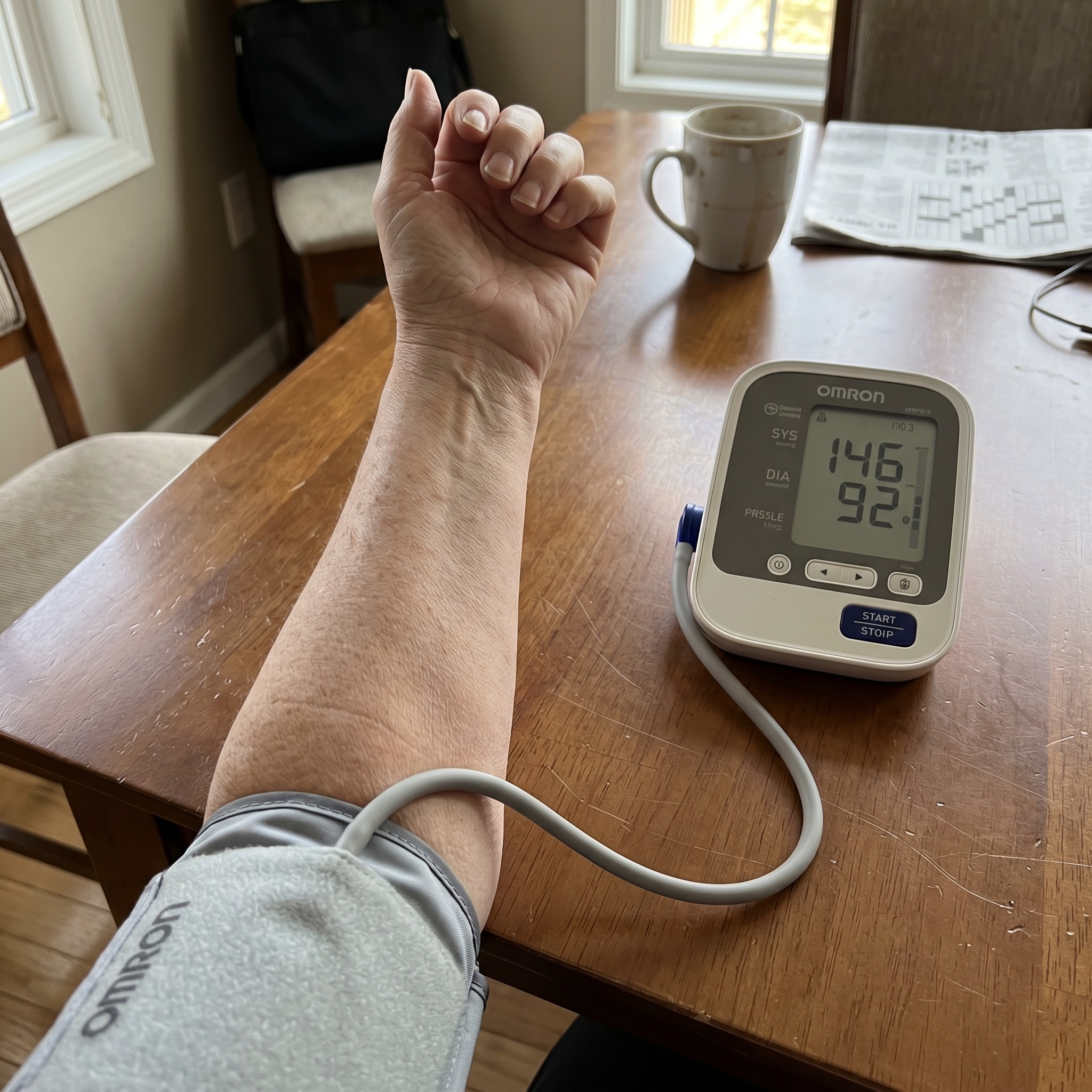
My sister sat in the First Baptist parking lot in Tupelo on Easter morning with her choir robe folded on the passenger seat and watched everyone else walk inside without her. She'd been the alto soloist at that church since 1991. 35 years. She was 19 the first time Pastor Brennan handed her the sheet music for Were You There. She's sung the Easter solo every year since, except for 2020 when nobody sang anything. This year she didn't get out of the car. She'd told me on the phone two nights before that she wasn't going to do it. Her blood pressure had been climbing again and her doctor at the clinic in Saltillo had told her not to do anything that would "get her worked up." Those were his exact words. Like singing was the same as running a marathon. She said she was fine with it. She wasn't fine with it. I've known her my whole life and I know the difference between Marlene fine and Marlene saying she's fine. Easter morning I called her at 8:15. She picked up on the second ring. "Where are you?" I said. "I'm here," she said. "I just can't make myself walk in." That's when I knew something had to change. I'm Cheryl. I'm 57 and I live three streets over from my sister in a little ranch house on Joyner Avenue that my husband Roy and I have been in since 1994. Marlene is two years younger than me. Wayne is her husband. Roy is mine. The two of them have been fishing together at Pickwick once a month since the Reagan administration and our kids grew up like cousins even though they're technically just cousins because we're sisters and they're our kids. You know what I mean. Marlene has the voice in the family. Always has. I can hold a note but I can't soar. She can soar. When we were little, she'd stand on the brick hearth in our parents' den and sing How Great Thou Art with our daddy on guitar and our mama in the kitchen wiping her eyes with a dish towel. By the time she was 13 she was singing at funerals around Lee County. By 19 she was the alto soloist at First Baptist. By 27 she was the woman everybody wanted to sing at their wedding and the woman everybody wanted to sing at their granny's burial. She sang at our daddy's funeral in 2011. He's Just a Prayer Away. She didn't crack once. I don't know how she did it. I was a puddle in the front row. Now she couldn't get out of her car. The blood pressure thing started 6 years ago. At first it was just a number on a chart. 142 over 89. Her doctor said let's watch it. Three months later, 148 over 92. He started her on a pill. A little white one. Lisinopril. 10 milligrams. 6 months later he doubled it. A year later he added a second one. Some kind of water pill. Then a third. Then something for her potassium because the second one was messing with it. By last fall she had 4 bottles lined up on the kitchen windowsill in her house on Cliff Gookin and a Sunday morning routine that involved pouring them into her hand like jellybeans and washing them down with sweet tea. And her numbers still weren't good. That was the part that broke her. She was taking everything they told her to take. She was eating the salads. She was walking on her treadmill in the spare bedroom. She'd cut out the bacon she loved, and Marlene loves bacon the way some people love their grandchildren. And the cuff still showed 152 over 94 at her last appointment. Her doctor at the clinic in Saltillo, a nice enough man named Dr. Pell who's been her doctor since 2008, told her they'd need to add a 4th medication. He also told her to start "watching her stress." Like stress was a magazine subscription she could cancel. When Marlene got home that day, she sat at her kitchen table and called me. Said the words I never thought I'd hear her say. "Cheryl, I don't think I can sing Easter." That was 11 weeks before Easter. She was scared. That's what it came down to. Her best friend from high school, Roxanne, had a stroke in 2022 while she was loading her car at the Kroger in Tupelo. She was 56. She lived but she never came all the way back. Roxanne's husband still wheels her into church on Sundays. She can sing the hymns but she can't say good morning. Something in her brain doesn't connect the right wires anymore. Marlene watched that happen and started reading things on her phone in bed at night. Things she shouldn't have been reading. Stroke statistics. Heart attack risk calculators. Articles about silent heart damage from uncontrolled blood pressure. She got herself worked up about getting worked up. That's the trap. She told Wayne she didn't want to sing the Easter solo because she didn't trust herself to do it without her heart pounding. And she didn't trust her heart pounding. Solo is exposure. Solo is standing alone in front of 340 people. Solo is the choir behind you and the spotlight on your face and the breath you have to take before the high note at the end of He Lives. Wayne told her to do whatever the doctor said. He didn't know what else to tell her. He's a good man, Wayne. He works at the Cooper Tire plant on the south side of town and he loves my sister and he was scared too. He just didn't have the words. So she called Phyllis Ann at the church. Phyllis Ann is the choir director and she's been running that choir since Reagan's second term. Marlene told her she couldn't do the solo. Phyllis Ann was kind about it. Said she'd find someone else. Maybe LaToya from the Wednesday night ensemble. That phone call took my sister apart. She told me later that she cried for 40 minutes after she hung up. Not because LaToya wasn't a beautiful singer. LaToya is a beautiful singer. She cried because for 35 years, being the Easter soloist was who she was. The Easter solo was her identity. It was the one Sunday a year she got to do the thing God put her on this earth to do. And her body had quit on her. Bethany came to dinner at our house the Thursday before Easter. Bethany is married to Cole. Cole is Marlene and Wayne's only son, 31 years old, works for the city water department in Tupelo. Bethany is in her last semester at Itawamba Community College, finishing up her nursing degree. She's 27. She has the kind of energy that walks into a room and makes the room a little brighter, and she has a notebook for everything. Everything. She writes down recipes. She writes down birthdays. She writes down questions she wants to ask her professors. Cole says she's going to be the best nurse in north Mississippi by the time she's 30. I'd invited her and Cole and Marlene and Wayne over for an early Easter supper because I knew Marlene wasn't going to want to do the big Sunday lunch this year. I made a ham and a corn casserole and Bethany brought a strawberry pretzel salad in a glass dish. We were all sitting around my dining room table and Marlene was being too quiet. She'd pushed her ham around her plate for 20 minutes. Wayne kept giving her these little glances that meant he was worried. Bethany noticed. Of course she noticed. She notices everything. She put down her fork and looked at her mother in law and said "Marlene, are you okay?" Marlene didn't answer right away. Then she said "I'm not singing Easter, honey." Bethany got quiet. Cole reached over and put his hand on his mother's wrist. Marlene told her about the blood pressure. About Dr. Pell. About the 4th medication. About Roxanne. About being scared to take a breath deep enough to hit the high note at the end of He Lives because she didn't know what her heart would do. Bethany listened. She didn't interrupt. Her notebook was sitting on my dining room table next to her water glass and at one point she opened it and started flipping through pages. When Marlene finished, Bethany said something I'll never forget. She said "Marlene, can I tell you something I learned at school last month that I haven't been able to stop thinking about?" Bethany said her cardiovascular professor at ICC had spent an entire lecture talking about something most people, even people on blood pressure medication, don't know. The inside of your blood vessels isn't just a tube. It's lined with a living wall. A thin layer of cells called the endothelium. And that wall does something important. It makes a molecule called nitric oxide. Nitric oxide is what tells your blood vessels to relax. To open up. To let the blood flow through without pressure. When you're young, that wall is healthy and it makes plenty of nitric oxide. Your vessels relax. Your pressure stays low. Your body does what it knows how to do. But years of inflammation, stress, processed food, just plain getting older, all of that wears the wall down. Over time the wall stops making as much nitric oxide. Your vessels stay tight. Blood has to force its way through. And the pressure on the wall keeps getting worse, which damages it more, which makes it produce less nitric oxide, which makes the pressure worse. It's a cycle. And once it starts, it tends to feed itself. "That's the part that messed me up," Bethany said. "I asked Professor Hyatt, well what about all the pills? Don't they fix the wall?" She said he just shook his head. The pills force the vessels open. They don't touch the wall. They don't help it make nitric oxide again. They make the number look better on the cuff while the wall keeps wearing down underneath. That's why people keep needing more pills, she said. The wall is still deteriorating. The cycle is still spinning. The medication is just pushing back against it. Marlene was leaning forward in her chair. Wayne had his elbows on the table. I'd stopped chewing. Bethany said her professor had mentioned something she'd written in her notebook because it surprised her. There's a small green fruit that's been studied for decades. A fruit called amla. Indian gooseberry. It contains compounds called emblicanins. And research suggests emblicanins can help support that inner wall. When the wall is better supported, it can start producing more of its own nitric oxide again. The way it used to. The way your body already knows how to do. The vessels can relax more naturally. The blood can flow more freely. The pressure on the walls can ease. And when the pressure eases, the wall isn't under the same constant stress. The cycle can start to break. Not because something forced it. Because the wall finally has what it needs to do its job. Marlene was quiet for a long time after Bethany finished. Then she said "Why has nobody ever told me about this?" Bethany said "Because nobody makes money telling you about a berry." Bethany pulled up her phone right there at my dining room table. She found a brand her professor had mentioned. A company called Alevia. Their version is called Alevia Amla. It's a concentrated extract of the Indian gooseberry, made into capsules, sourced from the same fruit that's been used in traditional medicine for thousands of years. She showed Marlene the website on her phone. Marlene read the whole thing while her ham went cold. Wayne read it over her shoulder. The bottle has a 30 day supply. 2 capsules a day. Manufactured in the USA. Comes with a 90 day money back guarantee. Just return the bottle if it doesn't work for you and you get your money back. That was the part that got Marlene. The guarantee. She said "If it doesn't work I'm out what, the shipping?" Bethany said "You're out nothing." Marlene ordered 2 bottles right there at my table. The URL is alevia.com/amla/33 It showed up at her house on Saturday. The day before Easter. The day she didn't sing. She took the first 2 capsules Easter Sunday afternoon. After she'd sat in the church parking lot. After she'd driven home. After she'd taken her choir robe off the passenger seat and hung it in the hall closet next to her winter coat. She didn't expect anything to happen. She told me later she expected the same thing every other supplement had given her, which was nothing. Maybe a little stomach ache. Week 1 she didn't notice much. Her pressure cuff still read in the high 140s most mornings. Wayne checked it for her at 6:30 AM the way he always did. He'd write the numbers on the little pad next to the coffee maker. She kept taking the capsules. 2 a day. Morning, with breakfast. Week 2 the numbers started moving. Not a lot. Not dramatic. Just a few points at a time. The kind of slow movement you almost don't trust because you've been waiting on it for so long. She called me Wednesday of that week. Her voice sounded different. Lighter. "Cheryl, I sat in the choir loft at practice last night." "You went to practice?" "Phyllis Ann asked me to come even if I wasn't soloing. I just sat in the alto section and sang with the group." "How'd it feel?" She paused. Then she said "I forgot what it felt like to just sing." Week 3 her hands stopped feeling cold all the time. She'd been wearing little gloves in the house even in March because her fingers wouldn't warm up. The gloves went back in the drawer. Then the ringing in her right ear stopped. She'd had a low hum in that ear for 2 years that she just thought was part of getting older. One morning she stood at the kitchen sink and realized she could hear the refrigerator hum and not her own ear hum. She mentioned it to me on the phone and I almost dropped my coffee. Then her sleep changed. She'd been waking up at 3:15 every morning for years and lying there until 5. That week she slept through to 6. Wayne told me he'd watched her sing along to a hymn in the car. Just There Is a Fountain playing on the gospel station. She was holding notes she hadn't held in over a year. Sustaining them. Not running out of breath in the middle. He said it made him want to cry but he kept his eyes on the road. Week 4 was the part I won't forget for the rest of my life. Phyllis Ann called Marlene on a Tuesday afternoon. The Mother's Day service was coming up. They needed a soloist. Would Marlene think about it. Marlene sat with that question for 2 days. She called me Thursday night. "I'm going to do it." "Marlene, are you sure?" "Cheryl, I sang the whole alto part at practice last week and didn't feel my pulse the whole time. I didn't even think about my pulse. I just sang." She went back to Dr. Pell two weeks later. New cuff reading at the office. He looked at it. Looked at her. Asked what she'd changed. She told him. He didn't say much. He's a careful man. He said "let's keep watching it. Don't change anything else for now." She took that as a green light. She sang on Mother's Day. I sat in the third row on the left. Wayne sat next to me. Cole and Bethany were two rows behind us. My husband Roy was on my other side and he was already crying before the music started because Roy cries at everything, even car commercials. The song was How Great Thou Art. The one she used to sing on our daddy's brick hearth when she was 7. She came out of the choir loft in her black robe with the burgundy stole. She walked to the microphone the way she's been walking to that microphone for 35 years. She looked at Phyllis Ann at the piano. Phyllis Ann gave her the little nod. And my sister opened her mouth. The first note was so clean it made the hairs on my arm stand up. By the second verse the whole sanctuary was leaning forward in their pews. By the third verse Mrs. Crowder in the row in front of me had her hand over her mouth. By the bridge, Roy was full crying and trying not to make noise about it. When she hit the high note at the end, the one that goes "How great Thou art," the one she'd been scared to take a breath deep enough to hit, she didn't just hit it. She held it. She held it the way she used to hold notes when she was 23 and the world hadn't started telling her she was getting old yet. She held it and the whole sanctuary held its breath with her. And then she let it go. I sat there in my pew and looked at my baby sister, and I thought about an Easter morning a couple months earlier where she sat in her car in this exact parking lot with her robe folded next to her, and I cried so hard I couldn't see the bulletin in my lap. She's back. My sister is back. If you're reading this and you know somebody whose pressure has been climbing for years. If you're watching your husband or your wife or your mother or your sister add another pill to the line on the windowsill, and the cuff still says what it said before, and the doctor still doesn't have a real answer for them. If you've watched a person you love give up something they used to love because they're scared their body can't handle it anymore. I'm not telling you Alevia Amla is medicine. I'm not promising you anything. I'm telling you what happened in my sister's life. There is a wall on the inside of your blood vessels and that wall makes the molecule that relaxes them and that wall can be supported. Amla has been studied for supporting it. And my sister, who couldn't get out of her car on Easter morning, sang How Great Thou Art on Mother's Day and held the high note like it was 1991. If that means something to you, here's the website. P.S. The first thing Marlene noticed wasn't her cuff reading. It was that her ears stopped ringing. Then her cold hands warmed up. Then she started sleeping through the night. None of that was what she was trying to fix. But when the inside of your vessels starts working better, blood gets to places it hadn't been getting to. That's how she described it. "Blood's getting to places again." P.P.S. Alevia Amla has a 90 day money back guarantee. 90 days. 3 full months. If your numbers don't move, if you don't feel anything, if your husband says it's making no difference, mail the bottle back and they refund you. Every penny. Think about how many things you've bought in the last 5 years that came with a 90 day guarantee. The lisinopril doesn't. The water pill doesn't. The 4th medication Dr. Pell wanted to add doesn't. The pharmacy doesn't refund you when the pill doesn't bring your pressure down. They just write you another script. Alevia stands behind their bottle. That tells you something about who's confident in what they sell and who's just confident in your habit of buying it. P.P.P.S. Alevia is not a huge company. They sell out of stock. I learned this the hard way when Marlene tried to reorder her 3rd bottle and it took 8 days to get to her because they were waiting on a fresh production run. I've got 2 bottles in my pantry now. Roy is going to start taking it next month. His numbers have been creeping up too and I don't want to be writing this story about him in 2 years. If you've been thinking about it, if somebody you love is on 3 or 4 pills and still not under control, the worst thing you can do is wait. The cuff doesn't get better on its own. Every month the wall keeps wearing down. Order the bottle. Try it for 90 days. If it doesn't do anything, you've lost nothing. If it does what it did for my sister, you've gotten back something you didn't know you could get back. P.P.P.P.S. Don't forget about the 90 day money back guarantee. I mean it. That's the whole reason any of this works. You're risking nothing. 👉 alevia.com/amla/33
Like this ad? Make it yours.
Crush rebuilds this exact creative around your product — your brand, your colors, your offer — in about a minute.