Key Takeaways
- 1Master the 3-layer AI stack covering Visuals, Copy, and Layout generation
- 2Use the 'Token Framework' to engineer prompts that stop the scroll
- 3Scale winning concepts by auto-generating 20+ creative variations
- 4Avoid the 'Uncanny Valley' by utilizing hybrid AI-assisted workflows
- 5Leverage video generators like Sora to outperform static image ads
Generative AI is changing Facebook advertising. Stop creating robotic garbage and learn the hybrid workflow used by top media buyers. This guide covers the essential 2026 AI stack including Midjourney, Sora, and prompt engineering strategies to scale your ad creatives.
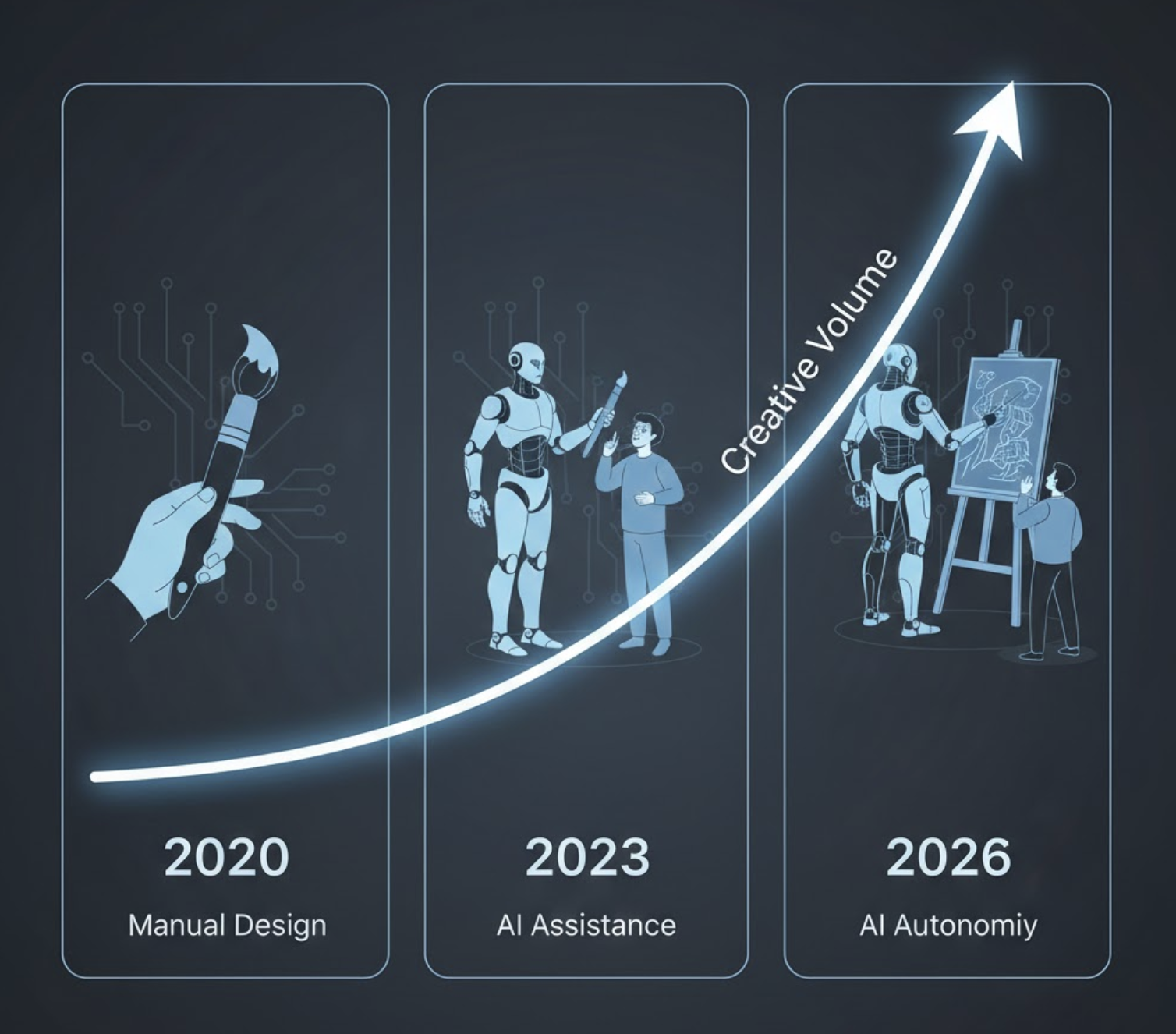
Three years ago, if you wanted a video ad, you needed a script, a camera, a lighting kit, an actor, and an editor. It cost $2,000 and took two weeks.
Today, you can type a sentence into a box, and 30 seconds later, you have a video.
This is the promise of Generative AI for Facebook Ads. But promises are cheap. The reality is that most people are using these tools wrong. They are creating generic, robotic garbage that consumers scroll past instantly.
To win with AI generated ads, you don't just need the tools. You need a completely new workflow.
What Are AI Generated Ads in Facebook Advertising?
It’s important to clarify what we mean. We aren't just talking about generating a static image of a cat in sunglasses.
In the context of Facebook ads advertising, Generative AI covers three distinct layers:
- Visual Generation: Creating images and videos from scratch using tools like Midjourney, Sora, and Runway.
- Copy Generation: Writing high-converting headlines, primary text, and scripts with GPT-4 or Claude.
- Layout Generation: Assembling these individual elements into a properly formatted ad via Canva AI or Crush AI.
The real magic happens when you combine all three layers into one seamless process.
The Essential AI Tech Stack for Facebook Advertisers
You can't build a house without a hammer. Here are the essential AI tools every modern marketer needs in their tech stack.
1. The Brain (LLMs for Strategy & Copy)
You need a Large Language Model (LLM) for strategy and copy. We recommend Claude 3.5 Sonnet or GPT-4o. These models understand nuance and can write copy that doesn't sound like a robot.
Use them for angle generation, script writing, and deep customer research.
2. The Painter (AI Image Generators)
Midjourney v6 is currently the king of realism. It can create photorealistic product shots that are indistinguishable from a $5,000 photoshoot.
DALL-E 3 is great for text integration but often produces a more "digital" look.
3. The Director (AI Video Generators)
Runway Gen-3 and Sora are leading the pack. They can take a static image and turn it into a 4-second video clip.
This is crucial for Facebook, as video ads almost always outperform static images.
4. The Assembler (Automated Ad Builders)
This is where tools like Crush AI come in. They take the copy from the Brain and the image from the Painter, then assemble them into a compliant Facebook Ad format, ready to launch.
By leveraging an AI creative studio, media buyers can connect ad data directly to format generation, testing and scaling campaigns faster than ever.
Step-by-Step: How to Generate Ads with AI the Right Way
Step 1: Ideation (The Angle)
Don't start with "Make me an ad." Start with the marketing angle.
Ask the AI: "I am selling a posture corrector. Give me 10 different psychological angles to sell this product. One should be fear-based, one should be vanity-based, one should be comfort-based."
Now you have a solid strategy. This is essentially acting as a creative strategist, bridging the gap between raw media buying data and compelling ad design.
Step 2: Visual Creation (The Scroll Stopper)
Take your best angle (let's say "Vanity") and generate the visual to stop the scroll.
Don't ask for "a photo of a posture corrector." Instead, ask for: "A side-by-side comparison of a person slouching looking unconfident vs. standing tall looking powerful. Cinematic lighting. High contrast."
Remember, you always want to sell the result, not the product itself.
Step 3: Variation (The Scale)
This is where Generative AI truly crushes human capabilities.
Once you have one winning concept, tell the AI: "Generate 20 variations of this image. Change the background setting (office, gym, home). Change the model demographics. Change the lighting."
Now you have 20 unique AI Facebook ads ready to test. Whether you are selling health products or scaling profitable advertisement makeup campaigns, this rapid iteration is the only way to beat creative fatigue effectively.
Prompt Engineering Masterclass: Speaking Robot
The quality of your output depends 100% on the quality of your input.
Most people write lazy prompts like "Woman drinking coffee," which forces the AI to give you a generic stock photo.
To get a high-converting ad, you need to use "The Token Framework":
- [Subject] + [Action] + [Setting] + [Lighting] + [Style] + [Camera Angle]
Example Prompt: "A stressed young mother [Subject] drinking cold coffee [Action] in a messy kitchen with toys on the floor [Setting], harsh morning sunlight [Lighting], hyper-realistic, shot on 35mm film [Style], close-up dutch angle [Camera Angle]."
This prompt tells a story. It creates emotion. And ultimately, emotion stops the scroll.
Avoiding The Uncanny Valley Trap
A quick warning: Consumers are getting smart. They can spot a "bad" AI image from a mile away: the overly smooth skin, the weird fingers, the dead eyes.
If your ad sets off the "AI Detector" in a user's brain, brand trust is destroyed instantly.
The goal is not to be 100% AI. The goal is to be AI-Assisted.
- Use AI to generate the background, but composite a real photo of your product into it.
- Use AI to write the script, but have a real human read it (or use an ultra-realistic voice clone).
The absolute best AI generated ads are hybrids.
The Future: Real-Time Personalized Video
Where is this technology going?
Imagine this: A user is scrolling Facebook. They see an ad for your coffee brand.
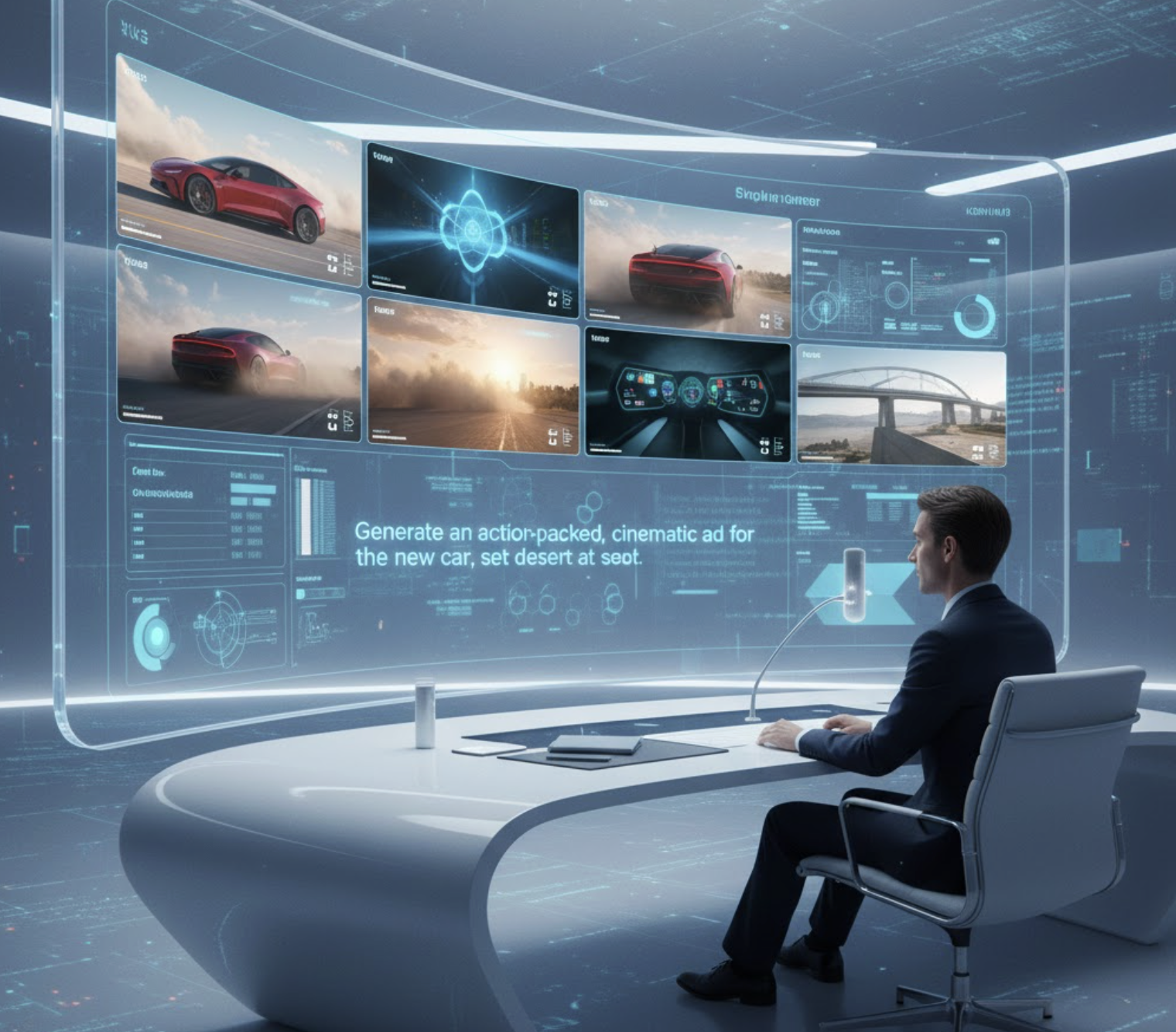
The video ad says: "Hey [User's Name], I saw you were looking for a dark roast. Since it's raining in [User's City] today, this is the perfect brew to stay warm."
This isn't sci-fi. This is the reality over the next 12 months.
To generate ads with AI will soon mean creating a unique, personalized video for every single impression.
Adapt or Die: The Future of AI Ads
You don't have to adopt Generative AI today. You can keep doing things the manual way.
You can keep paying expensive photographers, waiting weeks for video edits, and running the same three ads until they burn out.
But you will be competing against brands that are moving 100 times faster than you.
They will test more angles in a single day than you test in a year. And eventually, they will win.
The revolution is creative. And the creative is automated.
Frequently Asked Questions
Common questions about this topic
1What tools are needed for AI generated ads?
2What is the Token Framework for prompt engineering?
3Why do some AI ads perform poorly?
Written by
Rokas Steponavičius
Founder, CEORokas is the Founder and CEO of TryCrush.ai, an ex-IBM professional turned entrepreneur focused on building AI-driven growth platforms. With a strong background in ecommerce, performance marketing, media buying, and artificial intelligence, Rokas specializes in creating scalable, data-led systems that drive measurable revenue. His mission is to help modern businesses leverage AI to optimize acquisition, conversions, and long-term profitability.
Stop Guessing.
Start Crushing.
AI Ad Manager trained by world-class media buyers to generate your creatives and optimize your ads 24/7.
Learn more
Related articles
Why Your Creative Testing is Burning 60% of Your Budget (And How to Fix It)
Most advertisers use the "Spaghetti Method," letting Facebook's algorithm starve potential winners. Discover why CBO fails at testing and how the Scientific ABO Protocol forces fair spend to uncover your actual top-performing ads.
Facebook Ads vs. AI Ads: The 2026 Showdown
Manual media buying is dead. We pit traditional Facebook Ads against the new wave of AI Ads in a 5-round battle covering setup time, optimization, and scalability. Discover why autonomous agents are the future of advertising.
Kling AI vs TryCrush: The Ultimate Showdown for Advertisers
While Kling AI creates stunning cinematic videos, TryCrush builds profitable ad campaigns. Discover the key differences between generative video models and performance-first AI systems, and learn which tool media buyers need to lower CAC and scale revenue.

The 3-Click Rule: How to Launch 50 Ads Before Breakfast
Manual ad launching is killing your creativity and scaling potential. Learn how the "3-Click Rule" helps you launch 50 ads in the time it takes to brew coffee, turning your ad account into a winning machine.